Karl Edwards presents Working Matters

Blog

  • Who Is Struggling in Your Circles?

    What am I going to do?It is one thing to be alive during one of the most protracted economic slumps in American history. It is quite another to know someone who has been struggling economically for a protracted period of time.

    It is one thing to count one’s blessings when so many are out of work or dramatically underemployed. It is another to hear a friend beg for work, ask for another connection, solicit you for a new idea… anything to bring some money in.

    The end of the year is traditionally a time of exceptional generosity. Some of it is the holiday season of giving gifts. Some of it relates to expressions of various spiritual traditions. Some of it has to do with tax planning.

    As this year comes to a close, let us consider those who have been struggling to find work in this stingy, fearful economy.

    Let us not simply wish them well, but let’s find a way to get them a job.

    We inadvertently keep our struggling friends at arm’s length because it feels overwhelming to consider ourselves a part of the solution. So we try not to think about it at all. We stay immersed in our own work, our own responsibilities, and our own problems.

    Not this year.

    This year we (I) will take concrete steps to come alongside at least one friend and help them get on their feet vocationally and economically.

    We (I) don’t need to provide the entire solution, but we (I) need to be actively involved, unflinchingly connected, and fundamentally practical.

    One concrete action is better than a thousand warm thoughts.

    Join me.

    Who is struggling in your circles?

  • Quote to Consider: On Being Hopeful

    quote-to-consider“Hope is a condition of the soul, not a response to circumstances.”

    Vaclav Havel

  • Quote to Consider: Hard Won Learning

    quote-to-consider“The truth is that our finest moments are most likely to occur when we are feeling deeply uncomfortable, unhappy, or unfulfilled. For it is only in such moments, propelled by our discomfort, that we are likely to step out of our ruts and start searching for different ways or truer answers.” M. Scott Peck

  • Unexpected Change: The Hidden Opportunity

    Change can be unexpected, disruptive, and beyond our control.


    Change can be difficult to cope with, experienced as loss, or trigger disappointment.

    I‘d like to suggest—without dismissing or minimizing any of the above—that unexpected, disruptive, disappointing change can also present an opportunity.

    Change presents the opportunity to rethink, reorient, and reinvent ourselves.

    It’s a silent presentation, though.

    No bells and whistles. No announcements. No embossed invitation.

    Easy to overlook. We find it easier to focus on the loss of what we had before.

    While the road ahead looks at first blush like a dead end, a closed door, or an insurmountable series of obstacles, it might also be a fortuitous detour, an unanticipated change of address, or a free training course that prepares you for a future challenge. 

    The key lies in how we choose to react to the change.

    If we focus on what we have lost, we will react differently than if we focus on what opportunity might now present itself.

    We can choose a loss experience, or we can choose an adjusting experience.

    Stay tuned for the next installment on Unexpected Change: The Hidden Opportunity, where we will unpack what it means to “rethink, reorient, and reinvent” ourselves.

    On your side,

    – Karl Edwards

  • Loving Monday: One Monkey at a Time

    loving_mondayWe all know the feeling.

    The feeling of the monkey on our back.

    It’s not a good feeling. That one annoying chore yet to be completed. The difficult phone call yet to be made. That perpetually postponed decision still to be made.

    I just got rid of one of the monkeys on my back.

    It feels great.

    I didn’t get rid of them all. Just one. And still I feel lighter. Buoyant might be overstating it, but there’s a smile on my face nonetheless.

    One monkey. Try it.

    Try taking care of just one monkey that’s been hanging on your back. Get rid of it. Do your part and give it to someone else.

    You’ll start your week lighter. You’ll start your week with a satisfying win.

    Got monkeys on your back? We all do.

    The key is taking on one monkey at a time.

    Just one.

    Which one will you choose?

    On your side,

    – Karl Edwards

    Loving Monday is a weekly column designed to encourage us to step into our weeks with an intention to show up authentically, engage fully, and choose to make it a good week for ourselves. Explore past columns here.
  • Karl Shares Six Words… #75


    Endless meeting reversed hard won momentum.


    Karl Edwards

  • Quote to Consider: Boundaries Create More Space

    quote-to-consider“The more I considered Christianity, the more I found that while it has established a rule and order, the chief aim of that order was to give room for good things to run wild.”

    G.K. Chesterton

  • Even Olympians Respond To Pressure Differently

    The Olympics is a fascinating study in performing under pressure.


    Here we have the most highly trained athletes in the world doing in one moment of time what they have done thousands of time before.

    No problem, right?!

    But the Olympic moment is a different sort of moment.

    The entire world is watching. The performance will be meticulously judged and graded. Their only chance for a medal depends on this one, single performance.

    Pressure.

    Even highly trained Olympians vary in how they respond to pressure.

    Some experience the pressure negatively.

    They have to calm their nerves. They need to intentionally focus. They can become uptight, self-conscious, and over-think their performance. And they can make mistakes as a result.

    Some athletes experience the pressure positively.

    Their energy level rises. They rise to the moment as if it were a great adventure. All the attention, all the eyes watching are gifts of encouragement. And they often perform better than ever before.

    Aly Raisman (pictured) was a key example in her gold medal floor exercise. While almost every other gymnast who preceded her had one error lead to another as their spirits deflated, Aly chose to lead out with the most complicated series she knew. A run that she had been eliminating up until that moment due to a disastrous landing in practice.

    But when her gold medal opportunity was on the line, she embraced it, went for it, put everything into it, and performed it flawlessly.

    What about you? Do you experience pressure negatively or positively? Is pressure a gift or a curse?

    If you experience pressure negatively, what positive interpretations can you come up with that would be equally (if not more) valid than your current negative ones?

    How might the pressure be a gift? How might the pressure be an opportunity? How might the pressure be a tool?

    Watch the athletes closely as the games come to their conclusion. Compare their responses to the pressure. Compare their abilities to perform. See if you observe any correlation.

    On your side,

    – Karl Edwards

  • Listen In -> Employees… What Are They Good For? #4: The Problem of Poor Employee Performance

    I’d venture that for 90% of employee performance problems, supervisors focus their solution efforts on the problem employee.

    Helping the employee change. Demanding that the employee change. Talking to the employee. Writing up the employee. Training the employee. Disciplining the employee.

    What if, though, the employee was not the problem?

    What if problems elsewhere in the company were creating a situation in which no employee would look good?

    What if their negative attitude was a self-protective response to your harsh, arbitrary and/or imperious leadership style?

    What if their uncooperativeness was a response to the competitive bonus program in your compensation structure?

    In this week’s podcast discussion, Claudia and I take a closer look at the problem of poor employee performance.

    When acceptable performance becomes a problem, are we jumping too quickly to blame and punishment?

    Could there be aspects of your corporate structure, culture, or your own leadership methods that might be setting the stage for poor performance?

    Listen in.

    Just now joining the conversation? Catch up on the entire series here.
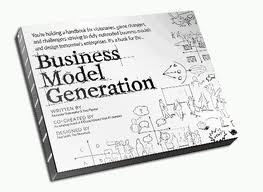
  • Karl’s Library: Business Model Generation by Osterwalder and Pigneur

    Some books are as fun to read as they are helpful.

    Laid out visually, Business Model Generation: A Handbook for Visionaries, Game Changers, and Challengers by Alexander Osterwalder and Yves Pigneur is just such a treat.

    Instead of long, winding verbiage filled with technical jargon that no one (not even academics) understand, Business Model Generation stays grounded, simple, and practical.

    The book is divided into five sections that outline the process of business model generation:
    Canvas -> Patterns -> Design -> Strategy -> Process

    They offer nine helpful building blocks of a healthy business model:

    1. Customer segments
    2. Value Propositions
    3. Channels
    4. Customer Relationships
    5. Revenue Streams
    6. Key Resources
    7. Key Activities
    8. Key Partnerships
    9. Cost Structure 

    If it’s beginning to feel a bit overwhelming, you need to flip through a copy of the book itself.

    It is fun. It is visual. Brief, articulate explanations. Structured around the process itself.

    I think you will find it an empowering tool for you and your partners.

    Click here to see its Amazon.com page.

    Karl’s Library is a weekly column highlighting my favorites from my professional development library. “Always learning” is one of the pillars of my personal mission statement. Explore past columns here.


    If you’re a Kindle fan like I am, it is available for the Kindle.

    Don’t have a Kindle? Get one! You’ll love it.