
Karl Edwards presents Working Matters

Category: Audio Downloads

  • Listen In -> Why We Hate Meetings #4: Not Resourced by Participation

    There is a lot of knowledge, experience and skills in the room when you gather the team for a meeting.

    Why then do so many of us leave it all untapped by doing all the talking ourselves?

    In this week’s show, Claudia and I discuss the most valuable resource a leader has… their staff.

    Oddly enough our silly leadership paradigms lead us to believe that we must know more than everyone on the team if we have the position of leader. Therefore, a meeting must where I gather the team to listen to me.

    FAIL.

    Meetings take off, go somewhere, get things done, discover new opportunities, solve intractable problems, and build passionate cohesiveness when everyone on the team participates.

    An important mentor of mine kept a plaque on his desk that read, “On this team everyone plays.”

    Find out what participation can do for your meeting.

    Listen in.

    Just now joining the conversation? Catch up on the entire series here.
  • Listen In -> Why We Hate Meetings #3: Not Focused toward Outcomes

    Some issues come up in meetings week after week. The discussion picks up where it left off and no resolution or decision ever gets made.

    And again you want to kill yourself (or at least the leader). Because again you are not busy doing the many important tasks waiting for you at your desk in order to be at this meeting. This meeting that is rehashing and rethinking and repeating what has been discussed on many previous occasions.

    Open discussions are a good thing. Hearing all sides to a complex issue is a good thing. Playing out various scenarios is, yes, a good thing.

    But when these thinking exercises have served their purpose, there needs to be movement toward a decision, toward a plan, or toward an clearly identified outcome.

    We waste our own and everyone else’s time when we discuss for discussion’s sake. We must discuss for the sake of making the best possible decision. We must think together for the sake of achieving the optimum plan of action.

    We hate meetings when they are missing a clear trajectory toward particular decisions and concrete action.

    Find out what a simple set of expected outcomes can do for your meeting.

    Listen in.

    We have a tool that can help. Check out our Meeting Planner, a simple, professional workbook for planning meetings that focus discussions, increase team buy-in, and get things done. (Click here for more information.)
    Just now joining the conversation? Catch up on the entire series here.
  • Listen In -> Why We Hate Meetings #2: Not Guided by an Agenda

    Don’t do it! Come back in off the ledge! Think of the kids. It’s not worth jumping.

    Leader monologues, dominating whiners, lost time to secondary issues, and meetings that go on forever make us want to kill ourselves sometimes.

    In this week’s discussion, Claudia and I look at what a waste of time most people feel meetings are.

    We’ve got a lot to do, and meetings feel like a mind-numbing and meaningless interruption. We are somehow responsible for indulging our leader’s sense of self-importance by listening to them ramble on and on.

    Or what about the complainers who take up half the meeting whining about their unfair parking spot, the stench of burnt popcorn in the lunch room, or the poor attitude in the mail room?!

    It doesn’t need to be this way. Find out what a simple agenda can do for your meeting.

    Listen in.

    Just now joining the conversation? Catch up on the entire series here.
  • Listen In -> Why We Hate Meetings #1: Death by Drivel

    How can an opportunity so important be so regularly squandered?

    Boring, unplanned, endless and usually pointless, meetings have become a stereotypical waste of time and resources.

    Sometimes it’s an insecure leader who, any time someone else begins to speak, hurriedly repeats everything they just said because obviously if there is a question, objection or different perspective, further elaboration on their part is needed.

    Sometimes it is watching the valuable time inadvertently spent discussing minutiae or pet peeves while the most important issues get squeezed into the last five minutes.

    We feel our time is being unfairly wasted by those who will eventually be holding us accountable for what we weren’t able to accomplish because we were tied up in the meeting they called.

    Join Claudia and I as we launch a new discussion series on Why We Hate Meetings. Not only will we be poking fun at the silly ways we waste these regular gatherings, but we will offer simple tips for bringing focus, direction, participation and results to your meetings.

    Find out how easily a few adjustments can turn this around for the meetings you lead.

    Why We Hate Meetings
    Week #1: Death by Drivel
    Week #2: Not Guided by an Agenda
    Week #3: Not Focused toward Outcomes
    Week #4: Not Resourced by Participation
    Week #5: Not Acted On through Follow-Up

    Don’t forget to check out our Meeting Planner. A simple workbook for planning meetings that make a difference!

    Listen in.

    Just now joining the conversation? Catch up on the entire series here.
  • Listen In -> Paying Attention to Attentiveness #5: Attentive to Ideas and Trends

    You remember the LP? The cassette? The 8-track tape? The compact disc?

    What if your entire business model was structured around a 10-year plan that included one of those now sidelined technologies? What if it was six years into that plan that the iPod emerged and your entire industry almost or completely disappeared?

    The speed with which fashions, fads, and technologies come and go is dizzying. Which brings us to this week’s show.

    Five and ten-year plans cannot be made—much less implemented—without paying attention to ideas and trends.

    How many leading industries did not even exist ten years ago? How many have disappeared altogether in the same period?

    How do you pay attention to ideas and trends? Your viability as a business may depend on it.

    Listen in.

    Just now joining the conversation? Catch up on the entire series here.
  • Listen In -> Paying Attention to Attentiveness #4: Attentive to People

    People change. It’s the first rule of working with others.

    People change from moment to moment depending on mood, attitude, and circumstance. People change over time as a part of growing up, maturing and developing.

    Professionally, when people develop their skills and grow in their interests and capabilities their jobs, roles and responsibilities need to change as well.

    If we assume that the people who work for us do not change and we are not paying attention, we risk losing these valuable assets.

    Do people have a way to grow and mature in their roles where you work? Is anyone paying attention to how people are behaving, engaging and/or changing both in the short term and the longer term?

    If not you could be in for more than a few rude surprises!

    Listen in.

    Just now joining the conversation? Catch up on the entire series here.
  • Listen In -> Paying Attention to Attentiveness #3: Attentive to Problems

    Problems crop up when we least expect them. Problems break through where we least expect them. Problems don’t time themselves well, don’t identify themselves forthrightly, and don’t come with solutions printed in the back of the book.

    Not only are problems difficult to anticipate, if they are not spotted early on, they can spread like a cancer.

    In this week’s show, Claudia and I discuss attentiveness to problems.

    Paying attention becomes a crucial skill when it comes to spotting problems early on. Earlier than later. Early, while there is still time to take decisive and corrective action before extensive damage is done.

    Listen in.

    Just now joining the conversation? Catch up on the entire series here.
  • Listen In -> Paying Attention to Attentiveness #2: Attentive to Changes

    Imagine being in the vinyl records business and being caught off-guard by the advent of compact disks. Or being in the compact disk business and being caught off-guard by the mp3 player.

    If you weren’t paying attention, you’d simply be out of business now. In the first case, literally out of business because the vinyl record business has all but disappeared.

    In this week’s show, Claudia and I discuss the crucial importance of paying attention to change.

    You’ve heard the saying, “Change is the new constant.” When change is always happening, only the alert can adjust in a timely manner.

    Keep doing your 5- and 10-year planning, but by all means don’t ignore what going on around you in the mean time! Your may succeed in building a video rental store in every neighborhood right when someone else succeeded in connecting television sets directly to the internet.

    Listen in.

    Just now joining the conversation? Catch up on the entire series here.
  • Listen In -> Paying Attention to Attentiveness #1: The Neglected Leadership Skill

    Paying attention is a skill first introduced to us in kindergarten. A room full of energetic and curious 5-year olds without any capacity for self-control or responsibility needs to be taught how to pay attention.

    Pay attention!” The teacher is about to say something. Some words are about to come flying at you, and you will be better off if you are prepared and able to catch them. Those words may be instructions. They may be stories. They may be questions. They may be explanations.
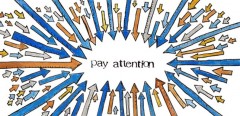
    You won’t be able to recognize what is coming at you unless you are paying attention. And if you don’t recognize what is coming at you, you won’t be able to respond appropriately.

    We need to be able to pay attention at work more than we think we do. In a fast-paced world like ours, paying attention is a skill that needs to be recovered. Much comes flying at us all the time. If we want to respond appropriately, then we need to be paying attention.

    This week Claudia and I begin a new audio series entitled, “Paying Attention to Attentiveness.”

    Paying Attention to Attentiveness
    Week #1: The Neglected Leadership Skill
    Week #2: Attentive to Changes
    Week #3: Attentive to Problems
    Week #4: Attentive to People
    Week #5: Attentive to Ideas and Trends

    As vital as our proactive leadership practices like strategic thinking, goal setting, and planning are, we need to be alert to what is coming at us as well. We need to be able to react calmly, promptly, and cleverly.

    Like the tennis player who needs to aggressively carry out their own game plan, they must also be able to react instantly and repeatedly to whatever is coming at them.

    How well do you react to the unexpected, continuous change, emergencies, or economic turmoil?

    Listen in.

  • Listen In -> Lies and Myths We Believe About Work #5: Making Waves is Making Trouble

    Fear is a tricky foe.

    Fear often fools us into keeping to ourselves valuable information that might help the team as a whole because it is difficult information for some.

    In order to protect ourselves from the fall-out that any difficult information would ignite, we withhold the information altogether. The result is that the team does not benefit from our contribution, insight, and/or perspective.

    Pointing out what is not working well is more commonly known as “making waves.” It gets this derogatory name in order to intimidate us away from getting involved.

    Insecure leaders views all forms of feedback (however constructive) as negative judgment on their competence. If they can create an even more negative perception of those who offer alternatives (make waves) then many of us will withhold our feedback. We don’t want to be perceived negatively, after all!

    In this week’s show, Claudia and I discuss this twisted and counter-productive logic, better known as, “making waves.”

    Listen in.

    Just now joining the conversation? Catch up on the entire series here.