Karl Edwards presents Working Matters

Author: Karl Edwards

  • Clippings from Don: The Many Powers of Maybe

    Elizabeth Bernstein in Tuesday’s Wall Street Journal offers a pithy and insightful look at the growing practice of answering “yes-or-no” questions with a “maybe.”

    I‘ve long interpreted “maybe” as a polite “no.” My experience in my circles has been there are only two answers people give, “yes” and “maybe.” But evidently there are as many definitions and uses of the word as there are socially indirect communicators.

    After offering a variety of reasons why a person might respond to a question with an answer that is not an answer at all, Bernstein does a nice job of alerting us to awkward, insensitive and unhelpful impact our “maybe” has on the questioner.

    While interesting to read the reasons (excuses?) people opt for the non-response of “maybe,”  the insight is small consolation. That’s like asking an abused spouse to be more understanding of why her or his spouse is so violent.

    The person needing the counseling is the perpetrator not the victim.

    This is where Bernstein’s insights about the negative impact of a “maybe” response are worth their weight in gold to the discerning reader. If a few more of us find more direct ways to communicate our situations, then the word, “maybe” wouldn’t have to do so much more work than it really can.

    Take a look at the article here. How often do you find yourself using “maybe” as a response? How do you feel when you receive “maybe” as a response to your invitations?

    On your side,

    – Karl Edwards
    Voracious reader friend Don Silver always has an eye out for what interests me. Clippings from Don is a column where I pass on some of these articles, stories and resources to you.
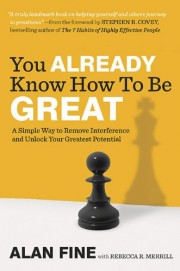
  • You Already Know How to Be Great by Alan Fine with Rebecca Merrill

    I do?

    The assumption Alan Fine’s title makes, You Already Know How to be Great, catches me off guard. And again I ask, “I do?” Because right now there’s a big disconnect between what I’m being told I know and what is actually true of my experience.

    Then comes the subtitle, “A Simple Way to Remove Interference and Unlock Your Greatest Potential.” Ah, so there is something blocking the way that needs removing, and there’s something locked away that needs releasing. Now I’m interested.

    Thus we find our way into a wonderful new resource by Alan Fine and Rebecca Merrill.

    Those of you who know me know I have little patience for coaches and “experts” who claim to have the formula for success. The line of thinking goes something like this, “If only you were different than you are, then you would be successful. We can help you become this entirely other person than you actually are.”

    Even if no consultant is so crass to verbalize it that way, that is the message nonetheless. “You are not enough, and you need our help to become someone else.”

    Enter Fine and Merrill who assert that you are indeed enough. In fact, the way forward has nothing to do with learning to be other than you are, but to be more (more…)

  • Thought Leaders Unpacked -> The Soul of a Leader #9: Finding Spiritual Guidance

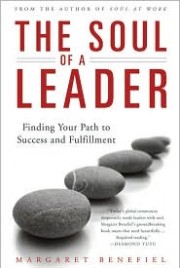
    thought-leadersIt’s always difficult to conclude a series. Especially a series as rich as this one. Margaret Benefiel has given us a great gift with her book, The Soul of a Leader.

    She concludes by addressing one of the primary dysfunctions of leadership in America. I call it the myth of the strong, competent, and isolated leader.

    Unlike athletes, for example, leaders seem to believe that their work must be done alone in order to qualify as legitimate leadership. An athlete surrounds her or himself with coaches, doctors, advice, and support of all sorts. Athletes know they cannot learn, succeed or even survive on their own.

    Leaders, on the other hand, seem possessed by a demon that is ever threatening to expose them for the frauds they are afraid they might be. Consequently they direct all their energies to proving that they are completely competent, sufficiently strong and absolutely independent in their role.

    When Benefiel asserts that spiritual guidance is a crucial form of support for leaders in today’s business world I have to cheer.

    We need another set of eyes and ears in our life. We cannot remain focused, keep things in perspective, plan for the future, address emergencies, build enterprising teams, and sustain the energy, enthusiasm and spirit required to lead an business on an on-going basis. And that’s only a partial list of a leader’s role!

    The key in considering spiritual direction is believing that having someone else watching and listening with you will be of value. The spiritual dimension of life in (more…)

  • Question of the Week #20

    What new information do you have that has not yet been communicated to someone who needs it?

    The Question of the Week is offered to increase awareness of one’s personal leadership practices and encourage experimentation with creative alternatives.
  • Loving Monday: Not the “Yes” But the “No”

    loving_mondayWe come into work with a multitude of projects, deadlines, people and tasks competing for our attention. In order to say, “Yes” to the one thing we are going to tackle next, we need to be able to say, “No” to everything else.


    Therein lies the trouble for most of us.

    Not the “Yes,” but the “No.”

    The difficulty arises because all the “No’s” will eventually need to become “Yes’s.”

    It would be easy to say “No” to bad things, wasteful things, useless things, ineffective things, destructive things. The challenge, though, is that in order to focus on one good thing, we need to say “No” to many other good things. Things to which we eventually will need to say “Yes.”

    Once we succeed in selecting the priority that will receive our undivided attention, the battle does not stop there. We find our minds continually justifying our decision to the voices of the “rejected” (i.e. postponed) options.

    All this thinking and rethinking is enough to drive a person crazy.

    I am one of those people who tends to rethink and over-think decisions that I’ve made. Interestingly enough, all the extra processing is not doing me any good. Instead of resulting in better decisions or timely adjustments in my decisions, the extra thinking is merely a stress-inducing and time-consuming distraction.

    Focus is the skill by which we not only learn to concentrate on one thing, but learn to tune out everything else.

    The ability to set other important matters aside in order to give one’s full attention to the matter at hand is no mean achievement and does not come naturally to most of us.

    Helpful to me has been to remind myself that I am saying “No” to so many things in order to get to them sooner. But I will never get to them if I am battling myself all the time. Therefore I clear my desk of everything else in order to have a better chance of eventually addressing everything else.

    We need to stop battling ourselves. We need to learn how to focus and push.

    Try clearing your desk of everything except the one item on which you’ve decided to focus. Use the uncluttered space as a training tool to help you concentrate. One thing on your mind… one thing on the desk.

    When finished pull out the next thing.

    Watch as all those “No’s” transform into “Yes’s… one by one.

    How do you deal with the competing voices calling for your attention? Leave a comment. Give me a call.

    I’m on your side,

    – Karl Edwards

    Loving Monday is a weekly column designed to encourage us to step into our weeks with an intention to show up authentically, engage fully, and choose to make it a good week for ourselves. Explore past columns here.
  • Quote to Consider: Your Will or Your Won’t?

    quote-to-consider“The difference between perseverance and obstinacy is that one often comes from a strong will, and the other from a strong won’t.”


    Henry Ward Beecher

  • New Leadership Blog from Bob Logan

    Bob Logan has been resourcing leaders in the Christian community for years. Hundreds of business executives, church planters, non-profit administrators, pastors, and university professors have benefitted from his teaching, resources and advice.

    I wanted to let you know that he’s blogging now, and you need to be taking advantage of this free access to this great guy.

    Logan Leadership is sure to become a valuable gathering place to discuss the state of the art in leadership practices, develop practical resources for enhancing personal effectiveness, and for thinking creatively and critically about the future of the Christian community.

    I have both worked alongside Bob in education and retained his coaching expertise for my own business. He is refreshingly direct, practical and fully focused on you and your pressing issues, concerns and directions.

    I‘m excited that of the many ways he is actively sharing his breadth of knowledge, he has added the social web as one of the places where we can easily find, learn and interact with him.

    Click on over to Logan Leadership and make Bob a regular part of your on-going leadership development efforts. You won’t be disappointed.

    On your side,

    – Karl Edwards

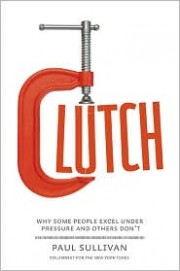
  • Clutch: Why Some People Excel Under Pressure and Others Don’t

    I heard Paul Sullivan speak yesterday at the Milken Institute in Santa Monica. The subject, of course was his book, Clutch: Why Some People Excel Under Pressure and Others Don’t.

    While much of the audience wanted to cling to a romantic definition of “clutch” that was significantly different than Sullivan’s, I thought he did a great job of carving out a specific angle that both set the stage for his research into extraordinary performers as well as make “clutch” performance attainable for anyone.

    Specifically, he is examining how some people can continue to do what they are capable of doing on an ordinary basis under pressure. The key being, “do what they are capable of doing on an ordinary basis.” This is not a book on heroics, luck or extraordinary achievements.

    I’ve already purchased my copy and am considering using Clutch for my next “Thought Leaders Unpacked” series so that we can think through Sullivans observations together.

    He works his way through five characteristics of “clutch” performers.

    1. Focus
    2. Discipline
    3. Adaptability
    4. Being Present
    5. Fear and Desire

    He also offers three reason why others do not perform well under pressure.

    1. Failure to take responsibility
    2. Overthinking decisions
    3. Overconfidence

    Keep your eyes and ears open for my decision about the next book we study together in “Thought Leaders Unpacked.” Clutch looks like an interesting, practical, and encouraging option.

    If you are in Los Angeles and not attending the Milken Institute’s free forums, you are missing out on a great resource. They invite extremely interesting people to introduce their latest books in the context of an open forum. There is time for Q & A and always a book signing.
    Thought Leaders Unpacked” is a regular column on this blog where we read a key book together, and I post my reflections on one chapter each week. My reflections are my own and are intended to generate conversation, catalyze additional thinking and encourage mutual learning.
  • Keeping It Real: Dying to Live Up to Expectations

    Up to whose expectations am I trying to live?

    The too-easy answer for a person with a Christian spirituality like myself is God’s.

    That’s the “right” answer. The textbook answer. In light of the goodness and power and perfection of God, how could any other set of expectations be considered?

    image credit to Unnikrishna Menon DamodaranThe problem with the “right” answer is that truncates our thinking about the issue before it even begins. We know that God never expects humans to be less than human. So free and responsible thinkers we must continue to be.

    The “good boy/good girl” answer is to cooperate with those under whose authority we work. Our job is to meet the expectations of our boss. This option seems reasonable at first blush… that is until we experience our first supervisor whose expectations are not so reasonable.

    The problem with the “good boy/good girl” answer is that, again, we find ourselves checking our brains, our skills and our experience at the door in deference, in this case, to the brain, skills and experience sitting higher on the organizational chart.

    This is a child’s response to expectations. “You’ll do it because I said so.” The rationale is simply a passive submission to authority. No (more…)

  • Thought Leaders Unpacked -> The Soul of a Leader #8: Persevering to the End

    thought-leadersWhen consistently engaging in practices of human wholeness and integrity something “subtle” takes place. Transformation.

    This has been my favorite and most challenging chapter of this book. I am still wrestling with the notion that the “dark night of the soul” has an impact on one’s business life as well as one’s spirituality.

    Of course, you say. Of course, I say!

    A big mistake of modernity has been to compartmentalize spirituality away from other categories of work, life and relationships.

    Of course one’s journey of personal maturity includes and impacts all areas of life. Even work. Especially work.

    Benefiel courageously takes on perseverance in light of those tumultuous, disorienting seasons of life when the assumptions that have guided us to date collide with a deeper, richer, larger reality.

    A medieval scholar, St. John of the Cross, is most famous for observing and describing how the spiritual journey includes seasons of such enormous disorientation that all ways seem dark, lonely, and impassable.

    But we live busy lives of work, family, community involvement, political activism, etc. How do we accommodate an extended season of difficult (more…)