Karl Edwards presents Working Matters

Author: Karl Edwards

  • Loving Monday: Whose Opinion Matters Most

    loving_mondayHaunted by your co-worker’s recent withering and hurtful jibe at you?

    Callously insulted, we want to rise above the name-calling and ignore the petty blasts of the immature. Yet we struggle against the sneaky suspicion that there might be a kernel of truth to the slam.

    Why we give others’ opinions so much weight is probably a mystery for the ages. (Or at least for your therapist.)

    What matters most, though, is our opinion of ourselves.

    When we are overly disturbed or hurt by the jibe of another, it is usually because the words tap into something we believe about ourselves.

    While we can avoid negative people to a certain degree, a more effective way forward is to root and establish a healthy estimation of ourselves.

    When we are grounded in an accurate assessment of our own strengths and weaknesses, the words of others hold less power when they suggest something different.

    When we are secure in our strengths, then any accusations to the contrary roll more easily off our backs.

    When we are aware of our weaknesses, then hearing them echoed by others is nothing more than a restatement of reality. While never fun to come face to face with one’s less developed aspects, the twin stings of insult and injury are removed.

    Being comfortable in your own skin is no mean achievement. But it is worth the effort. Instead of your state of mind being controlled by others, your opinion of yourself rules the day.

    You can begin this week sincerely believing that there’s no one you’d rather go to work with today than you.

    If you’d like some help getting a clear, grounded assessment of yourself, give me a call today or sign up for a free 30-minute consultation.

    On your side,

    – Karl Edwards

    Loving Monday is a weekly column designed to encourage us to step into our weeks with an intention to show up authentically, engage fully, and choose to make it a good week for ourselves. Explore past columns here.
  • Quote to Consider: Before Pointing the Finger

    quote-to-consider“It seems to me probably that any one who has a series of intolerable positions to put up with must have been responsible for them to some extent… they have contributed to it by impatience or intolerance, or brusqueness, or some provocation.”


    Robert Hugh Benson

  • BlogWorld 2010 -> 7 Ways to Take Action Now

    BlogWorld BadgeThe largest Blogworld yet is behind us.

    What now?

    The hours of helpful (and not so helpful) seminars, the miles we walked on the trade floor, the networking parties, and the innumerable conversations with vendors, future partners and potential customers. We are hopefully inspired. We might be overwhelmed. We are definitely exhausted.

    We came away with many new ideas. Maybe too many! Maybe just enough so that once we get back into the grind of our busy lives, we don’t find our way to act on any of these great ideas.

    It is too easy to leave all those great ideas in that closed notebook on the desk. Too often we never get around to sifting through the computer files where we stored those ingenious tidbits that were going to transform our business.

    Here are 7 trajectories of action that you can use to guide your after-the-show efforts.

    1. Attitude Boost

    Participating and persevering in a still-emerging industry during a struggling economy requires courage, passion, and energy.

    Select one source of inspiration from the expo that resonated deeply with the challenges you face. What is one way you can transform that model, story, and/or attitude into a vehicle to recharge your juices, restore your confidence and/or rededicate your efforts?

    Take action to boost and reinforce your attitude for the work ahead.

    2. Personal Branding

    Feeling your blog is lost in a crowded sea of exponentially expanding bloggers, consultants, experts, celebrities and companies?

    Which one or two speakers at BlogWorld do you remember most clearly? Why do you think the memory is so clear? How do they describe themselves in their title, (more…)

  • Loving Monday: Shortcut to an Awful Day… A Crappy Attitude

    loving_mondayThe best case for an attitude adjustment is your own well-being.

    Sure I could go on and on about what practical wonders a good attitude will do for the team, your clients, and your boss.

    Except to do so would be essentially invalidating how frustrated, put upon, and undervalued you actually feel today.

    If you’re going to make a case for acting in any way contrary to how you’re feeling, then the case worth examining is the one related to your own happiness and effectiveness.

    If you want to have a crappy day, then let your attitude sink, wallow and fester. As accurate a reflection of your emotional state as such an indulgence might be, you’re the primary person who suffers.

    The others will simply avoid you. They have a method for reducing the impact you can have on them.

    You, though, have to be with you wherever you go. A fact of life and reality check that you should keep in mind next time you’re thinking of brandishing your mood like a weapon. The only person who has to experience all that darkness, stress and pain every single time is you.

    So do yourself a favor. Choose an attitude that helps you deal with the feelings instead of merely express them. Choose an attitude that confronts the frustration with creative alternatives instead of merely reciting the obvious injustice of it all. Choose an attitude that helps you get some perspective, reframe complexities, and experiment with constructive initiatives.

    Choose an attitude that serves your well-being.

    If you don’t, more than any harm or vengeance you feel your crappy attitude would be deservedly exacting on others, you’ll mostly be harming yourself.

    You’re smarter than that!

    On your side, (even if sometimes you aren’t)

    – Karl Edwards

    Loving Monday is a weekly column designed to encourage us to step into our weeks with an intention to show up authentically, engage fully, and choose to make it a good week for ourselves. Explore past columns here.
  • Quote to Consider: The Greater Compliment

    quote-to-consider“To be trusted is a greater compliment than to be loved.”

    George Macdonald

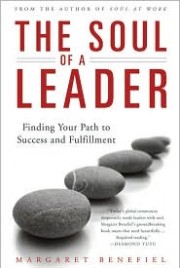
  • Thought Leaders Unpacked -> The Soul of a Leader #7: Breaking the Cycle of Violence

    thought-leaders“The question for leaders is not whether they will encounter violence but how they will encounter it.” (p. 119)

    I was initially caught off-guard that violence would figure so prominently in a leadership book about work, spirituality and “finding your path to success and fulfillment.”

    Unlike most penners of management manifestos, Benefiel courageously addresses a reality that takes many forms in every workplace. I myself am still a stranger to the experience of physical violence in the workplace, so I will let Benefiel’s insights stand on their own.

    But when it comes to other forms of violence: over-working people, under-paying people, belittling people, making people look bad, casting character aspersions, undermining authority, back-stabbing, doing as little as possible, spreading a bad attitude, etc. I have plenty to say.

    Benefiel’s three ways forward raise three challenging conundrums.

    In order to see compassionately, a leader has to understand, value and organize in light of the human factor in the workplace. And yet our culture’s myopic focus on the profitable bottom line divorced from all other factors and measures of success leads many to consider compassion a luxury to be indulged when convenient. In fact, though, we learn that compassion is crucial in order to reframe complex situations, issues and dynamics in more healthy and constructive ways.

    In order to interrupt the cycle, a leader has to be willing to put him or herself in (more…)

  • Loving Monday: Empowered By Identifying The Lies

    loving_mondayWe all believe certain lies. Even lies we know to be lies. Even lies that undermine our well-being. We believe them in spite of ourselves.

    Don’t ask me why. It would probably take years of therapy to uncover why we might internalize as true something so blatantly false.

    One set of lies has to do with the negative names we call ourselves. “I’m a loser.” “I don’t have what it takes.” These non-specific, unverifiable conclusions we draw about ourselves hover as accusing judgments, sabotaging our ability to see much less consider options in which we may thrive.

    Another set of lies has to do with imaginary rules that then become obstacles to us. “You have to earn your stripes first.” “That’s now how it works.” “Who do you think you are?” Before you even begin a conversation, act on an idea, or move toward a dream, you talk yourself out of it because you somehow are not qualified or are not approaching it “correctly” and therefore doomed.

    Whether or not you choose to explore with your therapist why you believe these lies, I want to suggest that you’ve achieved a major feat of self-empowerment merely by identifying them.

    Merely by calling them out for what they are—lies—we disarm much of their power over us.

    For example, it will serve me better to identify that I am afraid of being criticized for my decisions than to bluster and pretend to be more confident that I am. In the first case, I can go ahead and make the best decision possible. In the second case, I end up making lousy decisions because all my attention is diverted to appearing more confident than I am.

    Calling out a lie might go something like this, “That’s a lie! I don’t know why I act as if it were true, but doing so is keeping me from doing what I feel is best. I’m going to take a step toward what I want anyway.”

    Oversimplified to be sure, but what’s the point here? Instead of unconsciously behaving as if the lie were a truth and pretending to know better (an energy consuming process of self-deception), we choose to consciously call out the lie and our mysterious buy-in to it (an energy freeing process of honest self-awareness) so that our behavior can be a deliberate, intentional, and personal choice. Now that’s empowerment!

    What lies do you find yourself believing in spite of yourself? Experiment with identifying those lies and calling them out. I believe you will discover you have a bit more internal space to make better decisions, make more timely decisions, and make more satisfying decisions.

    On your side,

    – Karl Edwards

    Loving Monday is a weekly column designed to encourage us to step into our weeks with an intention to show up authentically, engage fully, and choose to make it a good week for ourselves. Explore past columns here.
  • Quote to Consider: Strong Boss or Weak?

    quote-to-consider“Like all weak men, he laid an exaggerated stress on not changing one’s mind.”

    W. Somerset Maugham

  • Keeping It Real: Attending to Details

    I am not a detail person. Fact.

    Sometimes, though, I need to attend to details. Patiently and painstakingly work my way through every last jot and tittle. Systematically, thoroughly, exhaustively, completely, accurately, timely… you get the idea.

    I’m exhausted just thinking about it.

    Details, for us concept-people, represent a challenge of focus, discipline and perseverance.

    Focus. The sort of attentiveness required to spot and recognize necessary distinctions among the blur and whirl of facts, events and personalities is a capacity we can only dream of. (And we usually call those dreams, “nightmares.”)

    It’s like that children’s game, “Which of these pictures is different than the rest?” Detail-oriented people spot the distinction instantly, while the rest of us look and look and look. Not until we compare each and every feature of each drawing do we discover the difference.

    Discipline. The sort of patience required to look at something from every imaginable angle, follow through on every clue, look under every stone, is both a skill and a character quality that takes years for the uninitiated of us to develop.

    Like a chess game where one is thinking about all the possible future moves. (more…)

  • Thought Leaders Unpacked -> The Soul of a Leader #6: Battling for the Soul

    thought-leaders“When things aren’t going well, the temptation to allow the soul to erode is strong.” (p. 101) Aptly put.

    Considering that all businesses rely on people to get their work done, it always amazes me that so many leaders do not do everything in their power to make sure their teams are playing at the top of their professional games. In fact, many do not even factor the human component into their thinking and planning.

    Soul erosion.

    I have long taught that there are three “hard facts” about working with people that any leader must come to terms with if they want their teams to succeed. One is that people need to contribute and make a difference. Second, people need to grow and develop. And third, people need to connect and belong.

    Ignore any one of these three “hard facts” and you are merely erecting your own obstacles.

    Margaret Benefiel is calling for this sort of honest assessment of one’s commitment to people. It’s not lip service. It’s looking at one’s practices, policies and behaviors, and assessing the effect they have on those in your professional care. If the effect is negative, harmful, or even dismissive, then you are—like it or not—fostering “soul erosion.”

    Fact. People add value when they get to show up as people. Diminish the human (more…)