Karl Edwards presents Working Matters

Tag: leadership

  • Favorite Authors: Robert Quinn

    Robert Quinn is one of my favorite leadership authors.

    He goes to the heart of the matter, that is, the heart of the leader as the starting point for thinking about how one approaches leadership.

    His books are character builders. Learning from the inside out. He is more concerned with what sort of person we are becoming than with the techniques we employ.

    You can find him online at:

    The LIFT Blog

    The Center for Positive Organizational Scholarship

    Must Read Books

    Quinn has written extensively, and everyone of them is worth reading.

    I have listed his major works with links to their Amazon.com pages.

    Deep Change: Discovering the Leader Within

    Building the Bridge As You Walk On It: A Guide for Leading Change

    Change the World : How Ordinary People Can Achieve Extraordinary Results

    Letters to Garrett: Stories of Change, Power and Possibility

    I am excited to offer this new resource of identifying my favorite authors with links to their works. I can think of no better author with whom to begin than Robert Quinn.


    Favorite Authors are those unique writers whom I believe are worth reading everything they have written. Explore all my favorites here.
  • Listen In -> Playing Favorites #2: Favoring Certain People

    You think a certain employee performs amazingly. Everyone else seems to hate them. What gives?

    You may be guilty of playing favorites, and that without even knowing it!

    In this week’s show, Claudia and I take a look at what happens when we play favorites among our team members.

    While rewarding excellence, performance and results is important, some times we favor certain people for their charisma, because we like them, or because we work well together.

    Of course there’s no crime in enjoying working with one person more than another, but what about the unintended consequences to the morale of everyone else?

    Once people form the perception that you are playing favorites, they will begin interpreting your every decision through that lens. And who can blame them?

    It is difficult enough to hear criticism of one’s work when it’s completely warranted, but when we feel that someone else isn’t being held to the same standard, our willingness to improve can evaporate pretty quickly.

    Could you inadvertently be playing favorites?

    Listen in.

    Just now joining the conversation? Catch up on the entire series here.
  • Listen In -> The Hard Facts of Working with People #5: Failure and Taking Risks

    Is it dangerous to make mistakes where you work?

    Many leaders wish their employees would take the initiative more often, contribute new ideas, point out what’s not working well, and go the extra mile for a customer.

    Everyone is happy as long as everything works out.

    BUT

    When a mistake is made, things don’t work out, the customer gets upset, or the idea flops, there is hell to pay.

    All of a sudden, all initiative disappears, no new ideas ever get presented, no critiques are offered, and everyone provides simply the bare bones minimum for customers.

    What happened?

    You punished risk-taking.

    In this week’s episode, Claudia and I discuss building an environment that encourages risk without fear of repercussions. An environment safe enough to put new ideas out on the table without being penalized if they don’t work out.

    If taking the initiative or suggesting an improvement feels like putting one’s neck on the line, then people will keep their ideas to themselves.

    Far from being a disaster, failure can lead to great innovation. Failure, more commonly, leads to learning.

    What about where you work?

    Listen in.

    Just now joining the conversation? Catch up on the entire series here.
  • Listen In -> The Hard Facts of Working with People #1: Replaying a Timely and Helpful Series

    “If I had a nickel for every time someone referred to working with people as “the soft side of business” I’d be a millionaire.”

    What I said several years ago when this podcast first aired still holds today.

    It is precisely because of this disastrous fallacy about working with people that we are replaying this important series during our vacation season at Bold Enterprises.

    Far from being the soft side of business, working with people is filled with hard realities that, unless faced, will undermine even the best laid plans.

    Just because the human element is difficult to quantify and doesn’t show up neat and tidy in the financial reports, doesn’t mean that it isn’t one of the central keys to success in your workplace.

    You invest in state of the art technology. You conduct thorough and ambitious strategic planning. You invest in the best in marketing and sales. You keep a lid on unnecessary costs.

    But too many of us are dismissing, ignoring or overlooking the highest impact investment of all… our people.

    The Hard Facts of Working with People
    Week #1: Facing the Facts about a Timely and Practical Reality
    Week #2: People Need to Contribute and Make a Difference
    Week #3: People Need to Learn and Develop
    Week #4: People Need to Connect and Belong

    Listen in.

    Just now joining the conversation? Catch up on the entire series here.
  • Loving Monday: On Guard!

    loving_monday“Wait a minute! The week hasn’t even begun, and I feel like I’m under seige.”

    There are demands coming from several fronts. There are complaints echoing off the walls. There are attacks spewing from your small and mean-spirited co-workers.

    Before you even have a chance to implement any game plan of your own, you’re knocked off balance and reeling from what feels like an assault on all sides.

    Demands, complaints and attacks are not unusual workplace dynamics. But when they all come at once it can be overwhelming.

    Instead of your usual calm and measured poise, you find yourself angry, defensive, and ready to strike back.

    This is the moment when you need to set down the phone, step outside, and walk around the block three times.

    The first trip around the block is for venting. Wave your arms in the air. Kick a tree or two. Shout out all those colorful adjectives that describe everyone else so (more…)

  • Listen In -> Awkward Communication #4: The Nagger

    Is there anything more annoying than a supervisor that doesn’t trust you? They hover over your shoulders, check in repeatedly, and ask petty follow-up questions so often that there’s hardly time to act upon the previous interruption.

    We call this person the nagger.

    Maybe this person is you!

    The problem is different depending who on the team is the nagger.

    When you are the nagger, you would be well-advised to take another look at its “effectiveness” as a communication approach.

    When your boss or someone else on the team is the nagger, then you have to explore what drives their need to nag. Once you understand where they’re coming from, you’ll be better positioned to communicate why it doesn’t work with you.

    Listen in. (Before you go crazy!)

    Just now joining the conversation? Catch up on the entire series here.
  • Karl Shares Six Words… #22


    Substituting musical chairs for dismissal… again.


    Karl Edwards

  • Loving Monday: Tell Yourself the Truth

    loving_mondayToo many leaders are unable or unwilling to tell people the truth.

    It is sad but true.

    This inability to trust others with the truth covers myriad facets of work life. The truth about company finances, the truth about impending lay-offs, the truth about promotion prospects, the truth about changing deadlines, the truth about management planning… and the list goes on.

    Today I want to focus on the unfortunate reality that so many leaders cannot tell you the truth about you.

    FACT: Everyone has strengths, skills, talents and abilities. Therefore there is always something to affirm, empower and reward about everyone on the team.

    FACT: Everyone is imperfect, learning, makes mistakes, chokes, falters, and fails on occasion. Therefore there is always room for constructive confrontation.

    If leaders could tell people the truth about themselves, they would never be at a loss for extending compliments, expanding responsibilities or extending rewards. At the same time, in the ordinary course of events, leaders would be pointing out (more…)

  • Listen In -> Why We Hate Meetings #2: Not Guided by an Agenda

    Don’t do it! Come back in off the ledge! Think of the kids. It’s not worth jumping.

    Leader monologues, dominating whiners, lost time to secondary issues, and meetings that go on forever make us want to kill ourselves sometimes.

    In this week’s discussion, Claudia and I look at what a waste of time most people feel meetings are.

    We’ve got a lot to do, and meetings feel like a mind-numbing and meaningless interruption. We are somehow responsible for indulging our leader’s sense of self-importance by listening to them ramble on and on.

    Or what about the complainers who take up half the meeting whining about their unfair parking spot, the stench of burnt popcorn in the lunch room, or the poor attitude in the mail room?!

    It doesn’t need to be this way. Find out what a simple agenda can do for your meeting.

    Listen in.

    Just now joining the conversation? Catch up on the entire series here.
  • Listen In -> Paying Attention to Attentiveness #1: The Neglected Leadership Skill

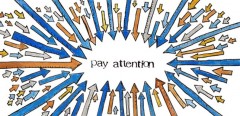
    Paying attention is a skill first introduced to us in kindergarten. A room full of energetic and curious 5-year olds without any capacity for self-control or responsibility needs to be taught how to pay attention.

    Pay attention!” The teacher is about to say something. Some words are about to come flying at you, and you will be better off if you are prepared and able to catch them. Those words may be instructions. They may be stories. They may be questions. They may be explanations.

    You won’t be able to recognize what is coming at you unless you are paying attention. And if you don’t recognize what is coming at you, you won’t be able to respond appropriately.

    We need to be able to pay attention at work more than we think we do. In a fast-paced world like ours, paying attention is a skill that needs to be recovered. Much comes flying at us all the time. If we want to respond appropriately, then we need to be paying attention.

    This week Claudia and I begin a new audio series entitled, “Paying Attention to Attentiveness.”

    Paying Attention to Attentiveness
    Week #1: The Neglected Leadership Skill
    Week #2: Attentive to Changes
    Week #3: Attentive to Problems
    Week #4: Attentive to People
    Week #5: Attentive to Ideas and Trends

    As vital as our proactive leadership practices like strategic thinking, goal setting, and planning are, we need to be alert to what is coming at us as well. We need to be able to react calmly, promptly, and cleverly.

    Like the tennis player who needs to aggressively carry out their own game plan, they must also be able to react instantly and repeatedly to whatever is coming at them.

    How well do you react to the unexpected, continuous change, emergencies, or economic turmoil?

    Listen in.