
Karl Edwards presents Working Matters

Category: Working Matters

  • Thought Leaders Unpacked -> What the Dog Saw #16: Dangerous Minds

    thought-leadersSo much for criminal profiling as a career option.

    I guess it shouldn’t come as too big a surprise that this psychological practice is fraught with hazards, lacks scientific precision and comes up short in overall effectiveness.
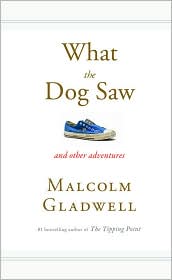
    What-the-Dog-SawWhat the practices loses, though, is not its value altogether, but its precision and reliability.

    We tend to swing between extremes in our culture. Black and white, good and evil, right and wrong, for us or against us, perfectly reliable or not worth even considering.

    Fascinating as discovering the flimsy underpinnings of criminal profiling might be, I’m hard pressed to dismiss the practice altogether. Nor am I hearing Gladwell suggesting such.

    As I reflect on this chapter, though, I can feel the desire to resolve the tension between profiling’s clarity and its fuzziness. Its promise and its deceptiveness.

    It is analogous to raising children. There are certain broad commonalities about child development and growing up that are true for all people. These patterns, processes and stages must not be ignored or contravened.

    On the other hand, each child is a unique individual, and progresses through the stages of maturation in their own way and on their own terms. Where one child needs stern discipline another may only need a gentle rebuke. While encouragement and praise may motivate one, only challenge and goading may get through to another.

    We are mistaken to attempt to resolve the tension between what is common and what is unique about growing up. And so we are mistaken to resolve the tension between the reliability versus the insightfulness of criminal profiling.

    It is possible to receive the profiler’s insights without either embracing them uncritically or ignoring them dismissively. I think the practice of criminal profiling, however inexact, will be around for quite a while.

    What was your main take away from this chapter?

    Each week I post my reflections from one chapter of What the Dog Saw by Malcolm Gladwell. If you are just joining the discussion now, welcome! Catch up on the entire series here.
  • Loving Monday: Rearranging the Furniture

    loving_mondayErgonomics has its place. And that’s all I’m going to say.

    Efficiency is important, and yet it is only one factor among many. Variety is another. Neither is the whole story.

    Today I’m going to suggest that you rearrange the furniture.

    I’m going to suggest that you break out of the stultifying sameness of your static set-up. Give your brain the fun and refreshing challenge of seeing things differently. Of not being able to count on the same-ol’ same-ol’. Of being forced to bring to the conscious level what has been in the background.

    Doing things differently simply because the furniture is on the other side of the room from where it used to be, necessitates new perspectives, takes us to different vantage points and can bring to awareness assumptions about how and why we do certain things the way we do.

    Minimally, you’ll give your brains a visual treat and an energizing exercise. More significantly, you are creating opportunities to stumble upon new and better ways of experiencing work even as you avoid literally stumbling upon your work.

    Let’s start this week off by rearranging the furniture.

    On your side,

    – Karl Edwards

  • Quote to Consider: I Hear a Different Drummer

    quote-to-consider“If a man does not keep pace with his companions, perhaps it is because he hears a different drummer. Let him step to the music which he hears, however measured or far away.”


    Henry David Thoreau

  • Listen In -> Visionary Leadership with Marion Skeete #5: Cultivating a Language for Change

    How does a leader speak boldly without robbing others of their voices?

    Who gets a voice in the conversation of work, leadership, collaboration and the goals of the organization?

    We conclude our series with Marion Skeete of LegacyMakers International with a discussion about how difficult it is for most leaders to surrender their excitement about their own personal ideas in order to pay attention to and incorporate the ideas of the rest of the team.

    How does the leader stand with integrity in the tension between owning their responsibility to show up, engage and lead on the one hand, and showing deep respect for the participation, contribution, and dreams of the wider community on the other?

    Could the leader’s empowerment to lead be woven into how well they empower the community to embrace the stewardship of their own lives?

    How do you view the role of the leader?

    Listen in.

    Just now joining the conversation? Catch up on the entire series here.
  • Angry Conversations with God by Susan Isaacs

    I don’t usually write posts on my personal reading, but I have to give a public nod to comedian Susan Isaacs.

    Anyone with a personal spirituality will love Angry Conversations with God.

    Anyone who’s sworn never to have a personal spirituality will love Angry Conversations with God.

    Creativity kudos for taking God to couples therapy! It’s about time too. (I wouldn’t be surprised if an entirely new genre of therapy emerges out of this.)

    I’m not usually attracted to memoirs (i.e. listening in on someone else’s story.) But Isaacs does such a great job telling her story that I was able to both “feel her pain,” so to speak, on the one hand, as well as connect deeply to my own relationship with God on the other.

    This book is both hilarious and touching. Authentic to her private experience as well as profoundly insightful about what we all experience.

    If you want a good laugh while brushing up against some of life’s most intimate, turbulent, and significant issues, then sit down with Susan Isaacs. You might end up taking God to couples therapy too!

  • Quote to Consider: Destiny is a Choice

    quote-to-consider“The tissue of life to be we weave with colors all our own, And in the field of destiny we reap as we have sown.”

    John Greenleaf Whittier

  • Listen In -> Visionary Leadership with Marion Skeete #4: Respecting and Involving People

    Is the leader so ordained because she is better, smarter, more knowledgeable, better in any way than everyone else on the team or in the community?

    Does following a leader involve turning off our brains and compliantly doing what we are told?

    Is the leader the author of a vision that emerges from his or her own imagination? Or is the leader the servant of a vision that emerges from the unfolding story of the community?

    In week 4 of our series on Visionary Leadership with Marion Skeete our discussion turns to the voices that are and are not included in the conversation about where we are going and how we do things.

    Could it be arrogant and inappropriate for the leader to assume that anyone who cannot get on board with the leader’s vision is better off not being in the community or organization at all?

    If you feel like you’re on the outside of your organization looking in, then this show is for you.

    Listen in.

    Just now joining the conversation? Catch up on the entire series here.
  • Thought Leaders Unpacked -> What the Dog Saw #15: Most Likely to Succeed

    thought-leaders“The school system has a quarterback problem.” And so Malcolm Gladwell draws us into a conundrum that haunts the various interest groups and stakeholders fighting over education in America.

    The perennial fight over scarce resources, institutional power, and job security—all in the name of putting children “first,” of course—overlooks a very interesting problem. We don’t use what we know about what makes a good teacher in our training and choosing of teachers.

    What-the-Dog-Saw

    As being a good quarterback in college football is not, interestingly enough, a good indicator of how well one will play in the pros, so for teachers having the education, credentials and years of experience are not necessarily indicators of being a good teacher.

    And even though we know better, we still base teacher selection, pay and retention on anachronistic metrics such as college degrees received before ever teaching and seniority unrelated to the quality or effectiveness of teaching.

    Fascinating to me is the ability and willingness of the various stakeholders, from unions to school administrators to parents to politicians, to permit their interests to supersede all that is known about what makes a good teacher, what motivates a good teacher and what rewards good teaching.

    Gladwell has several ideas for attracting, training and culling those best suited to teaching children, which you’ll see as you read this chapter. But for my reflection, I’m stuck on the damage we are willing to inflict on those we purport to serve—especially when they are those who cannot defend their own interests—in order to defend our own interests.

    There isn’t really a quarterback problem in teaching. There’s an initial intake and on-going culling problem in teaching. The system is too entrenched to experiment with change, or even to adjust toward what would not be an experiment at all!

    What do you think? What was your main take-away from this chapter?

    Each week I post my reflections from one chapter of What the Dog Saw by Malcolm Gladwell. If you are just joining the discussion now, welcome! Catch up on the entire series here.
  • Loving Monday: From Milestone to Mundane

    loving_mondayReturning to one’s daily routine after a momentous weekend can be anti-climactic… to put it lightly.

    We celebrated a university graduation this weekend. A major milestone in the life of our eldest. A major milestone for my wife and I having an eldest who is celebrating such an achievement!

    Some events are huge, momentous, once-in-a-lifetime and/or dramatic. Most of work is routine, daily, repetitive and/or cyclical.

    The experience of the milestone is usually markedly different than the experience of the mundane.

    Getting back to minutiae after experiencing the momentous can be incredibly difficult.

    Even if we are returning to a relatively good job, it can feel like a big let down.

    It’s quite normal to have the let-down or come-down experience of descending from the mountain top. The valley floor is simply not the mountain top.

    The question, though, is are we bringing others down with us, or are we sabotaging our own re-entry into the routines of work by continually comparing the mundane to the milestone?

    It’s simply not a fair comparison. The mundane will always lose.

    Returning to the routines of work is not a bad thing because it is a disappointing thing. Routines are simply not as sexy or meaningful or intense as our milestone events.

    Let’s cut ourselves some slack here. It is possible to acknowledge the authentic let-down of re-entry without succumbing to the false and extreme conclusion that a bad thing has happened to us having to get back to work.

    A simple tool for making the adjustment back to work is to write a thank-you note to someone from the milestone event. A simple thank you note gives you an opportunity to articulate your gratitude and what you found meaningful from the event.

    Once written, sealing, addressing and posting the letter is a physical way to close the door on a momentous experience. Now you are in a better position to shift your attention to work without making endless and defeating comparisons.

    The mundane and routine can be a good thing again. As work should be… good, that is.

    On your side,

    – Karl Edwards

  • Quote to Consider: Second Thoughts on Friendship

    quote-to-consider“It takes your enemy and your friend, working together to hurt you to the heart; the one to slander you and the other to get the news to you.”

    Mark Twain