Karl Edwards presents Working Matters

Category: Resource Finds!

  • Business Book Awards from 800-CEO-Read

    My reading list just gets longer and longer.

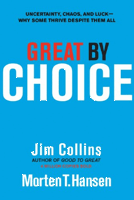
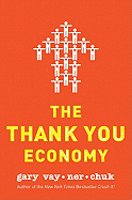
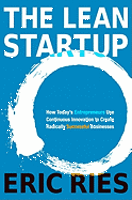
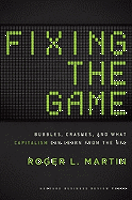
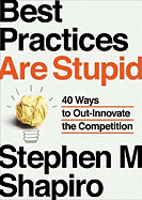
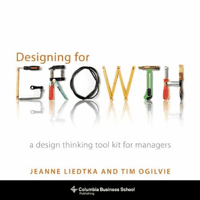
    800-CEO-Read announced their 2011 awards for best business books.

    You can read the entire book summaries on their blog post here.

    The winners are:

    General Business


    Leadership


    Marketing and Sales

    Entrepreneurship


    Personal Development


    Finance & Economics

    Innovation & Creativity


    Management

    Head over to 800-CEO-Read’s website and check out the many resources they make available.

    Enjoy!

  • Sustainable Excellence at Milken Institute Forum

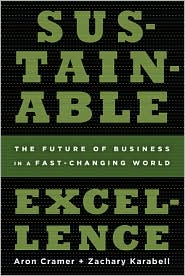
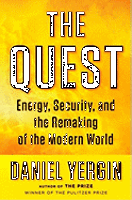
    The Milken Institute Forum last night was excellent. Aron Cramer and Zachary Karabell were there discussing their new book, Sustainable Excellence: The Future of Business in a Fast-Changing World.

    Theirs was not a morality play. That is, they did not discuss sustainability as a moral precept on behalf the planet’s survival, humanity’s future and the kumbaya warmth of being good and doing better. So many activists rely on a liberal pseudo-religious elitism that manipulates conformity to one’s agenda based on threatening to label people something they would find horrible like, “ignorant,” “narrow-minded,” or “greedy.”

    Cramer and Karabell discussed sustainability from a business perspective.

    It makes business sense to integrate issues of sustainability into the heart of one’s business strategy. Good stewardship of one’s business goes hand in hand with good stewardship of our resources.

    While both authors were morally committed to sustainability, they did a good job of describing their research into a phenomenon of the last several years wherein leadership, creativity, and innovation in sustainability is coming from the business world, not the non-profit activist organizations or governments. They also described how they believe business is best positioned to both design and act upon meaningful change in an effective and timely manner.

    I look forward to this read. I have long believed that only the business context has the necessary combination of systemic financial motivations, human and capital resources, and decision-making flexibility to provide the sort of creative leadership necessary to give shape and form to the emerging future.

    Where and to whom do you look for meaningful change?

    On your side,

    – Karl Edwards

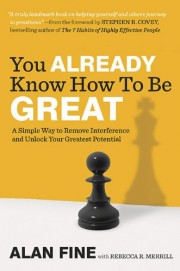
  • You Already Know How to Be Great by Alan Fine with Rebecca Merrill

    I do?

    The assumption Alan Fine’s title makes, You Already Know How to be Great, catches me off guard. And again I ask, “I do?” Because right now there’s a big disconnect between what I’m being told I know and what is actually true of my experience.

    Then comes the subtitle, “A Simple Way to Remove Interference and Unlock Your Greatest Potential.” Ah, so there is something blocking the way that needs removing, and there’s something locked away that needs releasing. Now I’m interested.

    Thus we find our way into a wonderful new resource by Alan Fine and Rebecca Merrill.

    Those of you who know me know I have little patience for coaches and “experts” who claim to have the formula for success. The line of thinking goes something like this, “If only you were different than you are, then you would be successful. We can help you become this entirely other person than you actually are.”

    Even if no consultant is so crass to verbalize it that way, that is the message nonetheless. “You are not enough, and you need our help to become someone else.”

    Enter Fine and Merrill who assert that you are indeed enough. In fact, the way forward has nothing to do with learning to be other than you are, but to be more (more…)

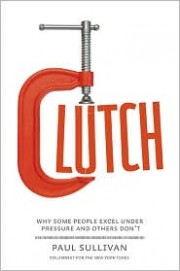
  • Clutch: Why Some People Excel Under Pressure and Others Don’t

    I heard Paul Sullivan speak yesterday at the Milken Institute in Santa Monica. The subject, of course was his book, Clutch: Why Some People Excel Under Pressure and Others Don’t.

    While much of the audience wanted to cling to a romantic definition of “clutch” that was significantly different than Sullivan’s, I thought he did a great job of carving out a specific angle that both set the stage for his research into extraordinary performers as well as make “clutch” performance attainable for anyone.

    Specifically, he is examining how some people can continue to do what they are capable of doing on an ordinary basis under pressure. The key being, “do what they are capable of doing on an ordinary basis.” This is not a book on heroics, luck or extraordinary achievements.

    I’ve already purchased my copy and am considering using Clutch for my next “Thought Leaders Unpacked” series so that we can think through Sullivans observations together.

    He works his way through five characteristics of “clutch” performers.

    1. Focus
    2. Discipline
    3. Adaptability
    4. Being Present
    5. Fear and Desire

    He also offers three reason why others do not perform well under pressure.

    1. Failure to take responsibility
    2. Overthinking decisions
    3. Overconfidence

    Keep your eyes and ears open for my decision about the next book we study together in “Thought Leaders Unpacked.” Clutch looks like an interesting, practical, and encouraging option.

    If you are in Los Angeles and not attending the Milken Institute’s free forums, you are missing out on a great resource. They invite extremely interesting people to introduce their latest books in the context of an open forum. There is time for Q & A and always a book signing.
    Thought Leaders Unpacked” is a regular column on this blog where we read a key book together, and I post my reflections on one chapter each week. My reflections are my own and are intended to generate conversation, catalyze additional thinking and encourage mutual learning.
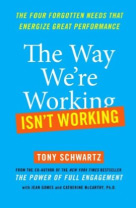
  • The Way We’re Working Isn’t Working

    American managers are in denial about the fact that their teams are comprised of human beings.

    Content with a data-defying strategy of squeezing as much work as possible out of their teams for as little compensation as possible, these self-congratulating fools close their eyes to the facts and resort to childish name-calling (e.g. “soft”) to anyone who dares suggest that human physiology and psychology are important factors in workplace productivity.

    What if there were facts, though, about how people work that could multiply your productivity with only incremental additional costs?

    I’m excited to come across a kindred spirit in Tony Schwartz in his new book, The Way We’re Working Isn’t Working.

    I’ve long advocated that people are an amazing, if complex, asset into which we should invest not a faceless, annoying expense that we should minimize.

    Schwartz provides invaluable insights into how the human beings function and provides the practical means to transform these insights into a more energetic, renewing, and yes, productive workplace.

    Specifically he looks at human physiology, emotions, our minds, and our spirituality. Far from hyping the latest feel-good fad, Schwartz methodically supports his case with data. If you look at the facts, certain things are true about what makes people thrive, commit, care, and work hard. On the downside, certain factors cause people to wear down, avoid risk, blame others and otherwise distance themselves from their work.

    Far from being “soft,” it is those leaders who have the courage, honesty and wisdom to face what I describe as “the hard facts about working with people” who have the mettle it takes to face the complex issues facing business going forward.

    Gone are the days where people can be reduced to inter-changeable commodities to be discarded at the first sign of trouble.

    Tony Schwartz is a must-read resource for any leader hoping to work effectively with people going forward.

    On your side,

    – Karl Edwards
  • Meeting Planner Announcement!

    meeting_plannerThe Meeting Planner is here!

    We’re proud to announce a new tool from Bold Enterprises!

    The Meeting Planner is the practical workbook you’ve been looking for. Designed especially for leaders who want to focus discussions, increase team buy-in, and get things done.

    Transform your experience of meetings

    • Are meetings keeping you and your team OrderNowfrom your work without any discernible benefit?
    • Do your meetings go on and on without accomplishing much?
    • Are your meetings dominated by a talkative individual, high-jacked by a peripheral issue, or wasted by weak planning?

    The Meeting Planner provides a simple process and a helpful work space to:

    Before the meeting: Brainstorm and prioritize agenda items.
    During: Facilitate discussion that moves toward accomplishing outcomes and stays on schedule.
    Afterwards: Follow up on decisions made, tasks assigned and deadlines agreed upon.

    Not too late for Christmas!

    Still looking for a practical stocking stuffer for:

    • your boss
    • a co-worker
    • a valued client?

    Get yours today

    Get your Meeting Planner for only $14.95
    (sales tax and shipping added where applicable.)

    OrderNow

    If you’re local and want to avoid the shipping charge by picking up your copy, then feel free to email or phone your order!

    Bonus!

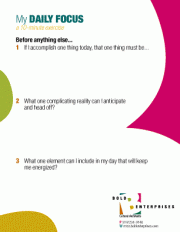
    Daily Focus PadThe first 25 orders will receive a free copy of our Daily Focus Pad.

    Please don’t hesitate to contact me directly with any questions you have.

    I think you’ll be very pleased with this new tool.

    On your side,

    – Karl


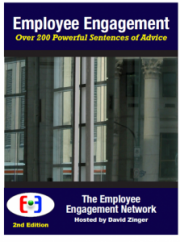
  • Free Resource: Employee Engagement in a Sentence

    Employee-Engagement-E-Book-223x300Check out this great resource from 200 leaders passionate about workplace cultures put together by David Zinger.

    And, of course, don’t miss my contribution!

    It’s not enough for the team merely to be present. It’s when everyone is engaged that work gets done, advances are made, productivity soars, and morale multiplies.

    Get your free copy here. Employee Engagement in a Sentence.

    On your side,

    – Karl

  • N.T. Wright Offers Insight on “Learning the Language of Life” at Fuller Seminary

    nt-wrightFor whom does making complex choices come more naturally, the person who has been practicing ahead in a somewhat unnatural manner, or the person who lives from moment to moment, trusting God to be present and helpful more spontaneously?
    If you want to hear one of the best cases for practicing virtue before you need it, check out this talk N.T. Wright gave at Fuller Seminary on February 27th.

    He is one of my favorite thinkers, and it was a thrill to be present for this presentation.

    It’s an hour long audio presentation, so grab a cup of coffee, sit back and enjoy! (It’s also a big file, so depending on your connection speed it make take a few moments to begin playing.)


  • Resource Find! Concrete Goals Tracker

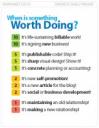
    Concrete Goals TrackerCheck out this Concrete Goals Tracker. David Seah has put together an easy-to-use tool for prioritizing and encouraging progress on the tasks most important to you.

    We’re always looking for ways to move away from overwhelmed busyness and move toward satisfying effectiveness. (Without, of course, needing to be divine first.) I like his priority categories for weighting the value of the various outcomes of our efforts.

    Here is a simple tool I am going to try right away. I thought you’d like to know.

    On your side,

    – Karl