Karl Edwards presents Working Matters

Tag: learning

  • Distinguishing Between Voices

    whisperingFriend or foe?

    Sometimes it’s not so easy to tell. When it comes to voices, some of the most damaging words we hear come from those closest to us. And it isn’t uncommon, on the other hand, for the harsh criticism of those opposed to us to be the most helpful of all.

    Yes, it’s important to distinguish between friend and foe. The acceptance, loyalty, and faithfulness of friends is an irreplaceable foundation for survival, much less success.

    Also important, though, is to be able to distinguish between voices. Even the well-intended input of those most committed to our well-being may be misplaced. Just as the substance underlying the input of our opponents cannot be dismissed or disregarded simply because they have ulterior motives.

    How do you listen for the nuggets of substance hidden within the insecure and harsh attacks of those who do not understand how to wield power?

    How do you hold your ground against the misplaced kindness of those who, while intending good for you, are in fact diminishing, second-guessing and/or undermining you?

    It’s not as black-and-white as trusting the nice people and avoiding the mean people, is it?!

  • Loving Monday: Networking as Refreshment

    loving_mondayI just returned from a networking/learning event in Vegas. Blogworld Expo. A mix of bloggers, podcasters, new media start-ups, advertisers, internet techies, and those who would make their fortune off of us.

    Networking as a marketing strategy is, of course, a must. But for the busy and the more introverted of us, it can be a chore.

    But what about networking as refreshment?

    NetworkingHere’s what I mean… or rather, here’s what I experienced.

    When I travel to an industry event two dynamics take place. One, I get away from my day to day context. And two, I am in the company of those who more easily recognize and appreciate my abilities.

    Getting away from my day to day context enables me to take a step back and get some perspective. Unlike a vacation, though, the different perspectives I encounter at an industry event are within my professional context without being my own context. It’s refreshing and invigorating for me to be challenged by the successes and failures of others. I learn. I reflect. I discover new resources, connections and methods.

    Being in the company of those with similar skill sets boosts my confidence. I don’t get the blank stares. I don’t have to explain what I do. I don’t have to defend my involvement, in this case, with new media. The conversation is energizing and catalytic. Our relational starting point is one of mutual respect, understanding, and support.

    How and when the business benefits of networking manifest themselves will probably always be somewhat of a mystery to me. But the only way to meet the people with whom there may be a valuable business connection, is to meet a lot of people with whom we will never do business.

    Meeting those people can be a chore. Better though is when meeting those people can be a source of refreshment.

    I come to work today refreshed.

  • Listen In -> Performance Management with Jeff Hunt #2: Managing

    Has it been an entire year since you’ve talked with anyone on your team about their job performance?

    Does it feel a bit awkward to bring up that negative encounter nine months ago?

    Did you miss an opportunity to provide needed resources simply because you didn’t know about the need at the time?

    We are in week 2 of our conversation with Jeff Hunt of Goalspan about performance management, and our topic this week is “managing.”

    After establishing expectations for results having planned, our next step is to establish an on-going conversation about how we work together. Instead of performance management being a single annual event, we are going to make it a process.

    Don’t miss Jeff’s insights into the three components of managing job performance:

    1. Coaching and feedback – Establishing the ongoing conversation.
    2. Supporting learning and development – Providing the resources and training.
    3. Proactively addressing issues as they arise instead of waiting 10 months to the next evaluation.

    What is your process? Do you engage early and often? Do your performance evaluations increase or decrease employee morale, motivation and engagement?

    Listen in.

  • Listen In -> Self Care. A Smart Career Move #3: Learning and Developing Yourself

    We are changing, growing, developing beings.

    It’s a fact. It’s a fact we neglect at our own expense.

    To take care of ourselves, we need to keep growing. To stay interested, engaged and feeling alive in our careers we need to keep developing ourselves.

    There’s nothing worse than the suffocating feeling of being stuck, bored or overwhelmed day in and day out, year after year.

    What is the alternative? In this week’s show, Claudia and I discuss becoming a lifelong learner as a smart career move.

    Where is there room to learn something new? You might be able to simplify a complicated procedure. You might work on improving your leadership effectiveness. You might offer to help a respected colleague in order to learn from them.

    Far from being purely self-serving, taking care of oneself by learning and developing benefits everyone.

    Listen in.

  • Thought Leaders Unpacked: Integrity by Henry Cloud

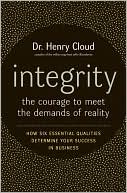
    Integrity, by Henry CloudGiven that denial is one of my favorite coping mechanisms, it might seem odd that I would ever pick up a book about meeting “the demands of reality.”

    But here I am. Again.

    I feel like I’ve been wrestling with this book, Integrity: The Courage to Meet the Demands of Reality, since it first came out in 2006. It seems that when learning needs to go deeper than simply acquiring new competencies, that time (read years) and practice (read many mistakes) are involved.

    Hence the rationale for working through this challenging piece together here on “Thought Leaders Unpacked.”

    For many of us there is an unnoticed disconnect between our job performance and our self-understanding. When we think about work, we think about the tasks, responsibilities, goals, processes, and deadlines involved. We don’t have tools for considering how we ourselves might be a part of the problems we are trying to address.

    When thinking about ways to help our employees work harder and smarter, we seldom include our own behavior in the mix of factors contributing to their shortcomings, challenges, or motivation levels.

    A mirror and a map. Where can we find a mirror that will help us take a look at ourselves? What maps are available to help us navigate a more centered, realistic approach to developing our own character at work?

    Join me in conversation each week as I post my reflections on one chapter of Integrity. There is no learning like learning from each other.

    Integrity: The Courage to Meet the Demands of Reality

    • Introduction: Why Integrity Matters
    • Character Dimension 1: Establishing Trust
    • Character Dimension 2: Oriented Toward Truth
    • Character Dimension 3: Getting Results
    • Character Dimension 4: Embracing the Negative
    • Character Dimension 5: Oriented toward Increase
    • Character Dimension 6: Oriented Toward Transcendence

    Forward this post to someone you think would benefit from our discussion. Every voice matters.

    Each Friday I post my reflections from one chapter of Integrity: The Courage to Meet the Demands of Reality by Henry Cloud.
  • Listen In -> Tangible Accountability #4: Motivators That Build In Lifelong Learning

    Tangible accountability transforms failures into learning opportunities.

    Now that you have structures that build in results and relationships that build in support, you are aware of missed deadlines, errors in judgment, miscalculated budgets, etc. right when they happen.

    For accountability to serve a positive purpose (ensure that your stated intentions are accomplished), these problems need to become possibilities. Instead of failures being the end of the story, they need to be the beginning of a new story from which your team emerges smarter, quicker, and more skilled than they were before.

    In this week’s show, Claudia and I discuss the third component of tangible accountability: Intentionally using problems to create learning opportunities.

    Imagine entire teams and processes improving in real time simply because your accountability structure provided a mechanism for learning.

    Listen in.

  • Listen In -> Tangible Accountability #3: Relationships That Build In Support

    What if accountability were a means of support instead of a means of blame?

    What if leadership meant ensuring the success of your team instead of punishing the failures of your team?

    This week Claudia and I discuss how accountability can be a powerful means to build in the support relationships that check in occasionally, provide needed resources, are available for questions, and are committed to the project’s success.

    Isolation can be a real danger when a lot is going on and people are busy with multiple priorities. Situations can change in ways that affect others or have implications to the schedule or budget. The sooner such changes are communicated, the sooner appropriate and timely adjustments can be made.

    That’s when we’d be better off if those relationships were already in place and built right into the system.

    Listen in.

    If you are joining the conversation mid-topic, you can find the entire series on Tangible Accountability here.
  • Listen In -> Strategic Planning #3: Learning From The Past

    Assess. Adjust. Assess. Adjust. Assess. Adjust.

    In this week’s podcast conversation, we find ourselves hungry to benefit from our past decisions. Instead of a black and white, right or wrong, success or failure, credit or blame mindset, we adopt a stance of attentiveness and action.

    Crucial to effective strategic planning is the capacity to learn from the past.

    We pay attention to what is and is not working and adjust continually. In smaller, more frequent increments, it is easier to learn, change course, recover from mistakes, seize new opportunities, etc.

    But only if the past is a source of rich learning. It’s the difference between knowing more and knowing better, capacity versus capability, facts or wisdom.

    Listen in.

    powered by ODEO

  • Do Your Goals Haunt or Lure?

    Do your goals haunt or lure?

    It’s the difference between having your goals behind you or in front of you.

    Behind you, the best goals can do is accuse you. They can goad you with fear or haunt like some guilting ghoul. From behind you, your goals will send one message, “You are still not there yet. What is your problem?”

    In front of you, goals can serve as an alluring tempter or temptress. They will draw you toward an extremely attractive future. Out in front, your goals will send a message of motivation, “What you want is over here. Achieve and live it. It’s worth the effort.”

    And so back to the original question. Do your goals haunt or lure?

    I believe the distinction lies within two questions. 1) Have you owned each goal as your own? And, 2) Do you interpret missteps as damning failures or learning opportunities?

    For example: What goals were set in your last performance review? Who initiated them, you or your supervisor? If your supervisor, have you made them your own yet? If not, then I’ll bet you’ll feel like the goals are haunting you all year. “Are you there yet?” “Your raise depends on this.” “Don’t mess up now.”

    On the other hand, if you’ve owned the goals as your own, then your motivation comes from within instead of outside of yourself. You want; therefore you work. The achievement is associated with a positive desire (hence “lure”) instead of a negative judgment (aka fear.)

    Regarding the inevitable missteps along the way, if every one feels like a failure to you, then your road to goal achievement is primarily an experience of obstacles and setbacks. Your spirit gets progressively beaten down instead of nourished and energized as it would if you felt you were learning and improving along the way.

    And so we need to deliberately choose to view our errors as gifts. Gifts we open with gratitude and from which we choose to benefit. Benefit by learning: becoming wiser, more skilled and more committed to playing at the top of our professional game.

    For today it is enough to simply pause and reflect on the initial question: Do your goals haunt or lure?

    On your side,

    – Karl

  • If You Resist Making Decisions At All

    “It’s your fault!”

    Whether your own words or words being said about you, they are decision-making killers.

    If failure is a blame opportunity instead of a learning opportunity, then chances are you don’t gravitate toward making identifiable decisions. After all, if it doesn’t work out, then it’s your fault and there will be some sort of blaming consequence or punishment involved. So why bother?

    If that sounds childish, it is. Leaders and teams that blame are using childhood finger-pointing to divert attention.

    The trick is to own one’s decisions and be proud of it. Yes, even if they don’t work out. The difference lies is remaining in on-going decision-making mode and not shifting into conclusion-drawing blaming mode. One is a learning stance. The other is a judgment stance. One is coaching on the playing field. The other is name-calling from the sidelines.

    In learning mode, we are able to adjust right away when a decision doesn’t work out as anticipated. We are motivated to say involved and make any necessary improvements. In blaming mode, time slips by while fault is assigned and consequences meted out. Morale drains away, and we become increasingly gun shy about sticking our necks out with future decisions.

    If you have trouble making decisions at all, try adopting an Own-It, Learn-From-It and Adjust-Quickly approach to decision-making. It will change your life. And you’ll make better decisions along the way!

    (Find the entire podcast/discussion series Decision-Making with Poise here.)