Karl Edwards presents Working Matters

Author: Karl Edwards

  • Who’s Your Private Sounding Board?

    Who’s your private sounding board?

    Or like so many in this culture, are you flying alone?

    Too much politics within the organization. Not enough straight-talking feedback from friends.

    You know me. You know I’m on your side. You know I shoot straight.

    Let’s get together and structure a safe place for you to get the honest feedback you need to function at your best.

    Give me a call today.

    – Karl

  • Why Do We Punish Ourselves?

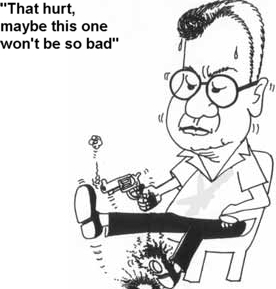
    Why do we do it?

    Go back again and again.

    Our “gift” wasn’t appreciated the first time. Why do we so often insist on giving it repeatedly?

    If you are the type who likes to help by informing others of company rules, boundaries and other policy restrictions, then you are probably no stranger to backlash, isolation, and other forms of resistance.

    As we continue our discussion of this week’s podcast personality, “The Enforcer,” we need to think about the cost to ourselves of our noble advocacy on behalf of the firm.

    While it may benefit the company to experience the one less violation that you just prevented, what has it cost you in the way of trust, credibility, and future communication effectiveness?

    Generally, when it’s not your job to enforce, the information is seldom received well. You can criticize the reactions of those you confront until you’re blue in the face, but if you are chipping away at others’ willingness to listen when you speak, you may be undermining your own ability to be heard on issues more germane to your role and responsibilities.

    The key is to be aware of the impact or effect our confrontations are having. If a particular issue of policy enforcement is neither our job nor likely to be valued by the recipient, we might be the wiser to leave well enough alone.

    What do you think? How do you discern whether to get involved when company policy is being compromised?

    Haven’t yet met The Literalist, The Peacekeeper, or the Silent Achiever? Catch up on the entire podcast series, When Playing By the Rules Backfires.

  • When Playing By the Rules Backfires #4: The Enforcer

    It didn’t have to be this way.

    You were only trying to help.

    But now everyone is avoiding you.

    What went wrong?

    In this week’s podcast conversation, we discuss one of the most misunderstood persons in any company, The Enforcer. This is the person who takes it upon him or herself to enforce company policies and rules.

    From their perspective they care about the company and are trying to inform someone else of a policy, boundary or practice that the other person is violating. From their perspective they are helping.

    Unfortunately, this role is usually not part of their job description and therefore comes as a complete surprise, even an inappropriate and unwelcome surprise, on the part of its recipient.

    Our good intention can backfire on us when it involves serving as the “bad guy” where not expected or requested. Are co-workers clamming up when you enter the room or picking up the phone every time they see you approaching?

    This week’s podcast is for you. Listen in.

  • What is the Difference Between Self-Promotion and Self-Promotion?

    What is the difference between self-promotion and self-promotion?

    Yes, I used the same words. And therein lies the problem.

    All of us who sell professional services must find ways to inform others about the value we have to offer for the dollar exchanged.

    Of course, we each would like that value to be perceived as highly as possible. When that perception gets “enhanced” out of proportion with the underlying value we are able to offer, we are engaging in other forms of self-promotion.

    So back to my question… What is the difference between self-promotion and self-promotion?

  • Tim Ferris and The Entrepreneur’s Rollercoaster

    Insightful Link

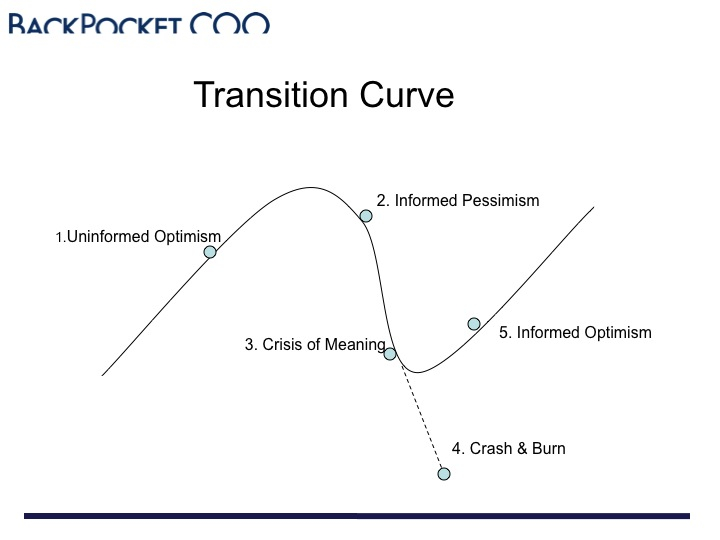
    For my fellow entrepreneurs who also swing between self-worship and self-accusation, I came across this helpful diagram over on Tim Ferris’ blog.

    It comes from the work of Cameron Herold. In this post he describes four stages of an entrepreneur’s “rollercoaster.”

    1. Uninformed Optimism
    2. Informed Pessimism
    3. Crisis of Meaning
    4. Informed Optimism

    It’s a valuable read. Check it out and let me know where you currently fall in your rollercoaster experience. What might be a practical next step for you?

  • Loving Monday: Authentic and Engaged

    Whatever happens this week, you have a choice. You get to choose how you will respond.

    That’s quite a bit of power when you stop to think about it.

    Just knowing we control our own responses is a big relief and a boost of confidence for many of us. It’s a nice reminder to receive every so often.

    So what might that response look like? Some responses are more effective than others. I’m learning that we can experience a certain amount of peace in good circumstances and bad when our responses are authentic and engaged.

    Be ourselves and be involved.

    Sound simple? It is. The situation may not be simple. The series of choices you next need to make may not be simple. But if you can be true to yourself and resist withdrawing, side-stepping or otherwise avoiding the people and challenges that come your way, I promise you will feel much better about both yourself and your work this week.

    On your side,

    – Karl

  • Question of the Week

    How often is your anger an intentional leadership decision made for the benefit of the team, and how often is it a uncontrolled personal reaction benefiting only you?

    The Question of the Week is offered to increase awareness of one’s personal leadership practices and encourage experimentation with creative alternatives.
  • Listen In -> When Playing by the Rules Backfires #3: The Peacekeeper

    Some scenarios never change. Your boss who explodes at any hint of disagreement. Your co-worker who complains at the slightest inconvenience. Your client who goes over your head every time they want a schedule change.

    In this week’s podcast conversation, Claudia and I look at The Peacekeeper. In this version of playing by the rules, our protagonist (you?) goes out of his or her way to accommodate, pacify or otherwise head off the unpleasant behaviors of others.

    While on the surface admirable to keep things cool and running smoothly, the question for you is, at what cost?

    Are you inadvertently diminishing yourself, compromising your own job performance or sacrificing what you know is best in order to prevent someone else behaving like a child? How did that become your responsibility? Did anyone force you to take that role? Could it be that your noble-feeling peacekeeping could be backfiring on you?

    Listen in.

  • Loving Monday: Framed in Thankfulness

    I’m going to start this week off by saying thanks. In fact, I’m going to come up with seven (7) things I’m thankful for.

    I have a feeling that if this week proves as complicated as most, I’ll need to be prepared ahead of time. It’s just not that easy to remember what I’m thankful for after Wednesday.

    Starting each day on a note of thankfulness frames the day ahead in terms of life being a gift.

    We choose our mindset before events, people and the unexpected have a chance to suggest something different. We equip ourselves with a healthier starting point from which to confront the challenges that will inevitably arise.

    The gift of life I have been given includes:

    1. My wife and three kids
    2. Rose buds
    3. Accepting friends
    4. Rhythm and an occasional dance move
    5. An eye to see individual faces in every crowd
    6. Morning crunches (this one’s a stretch)
    7. Extended family support everywhere I look.

    What are seven gifts in your life that you can remember in thankfulness this week?

  • Question of the Week

    What would the members of your team say is your greatest leadership asset? …liability?

    The Question of the Week is offered to increase awareness of one’s personal leadership practices and encourage experimentation with creative alternatives.