
Karl Edwards presents Working Matters

Tag: failure

  • Listen In -> Bold Resolutions for the New Year #5: Rethink Failure

    Failure needs a serious rethink.

    Of all that is truly upside-down and turned inside-out in this world, that we discourage and punish failure is a travesty of egregious proportions.

    As long as failure is a bad thing involving shame, punishment, and other negative responses, we will become increasingly cautious, politically correct, and refuse to make bold decisions.

    Failure needs to be reframed as learning. If we learned something from every mistake, we would be making needed adjustments sooner and more often. 

    If failure were not where a particular line of action ended, but merely where it changed course, we would be achieving far more of what we planned and doing so far sooner.

    Not only that, but the learning and adjustments involved would be taking us down roads toward discoveries and accomplishments that we previously had never dreamed of.

    The journey that welcomes failure and transforms it into learning may be an uncomfortable one, but it is one we avoid only to our own detriment.

    Listen in.

    Just now joining the conversation? Catch up on the entire series here.
  • Listen In -> The Hard Facts of Working with People #5: Failure and Taking Risks

    Is it dangerous to make mistakes where you work?

    Many leaders wish their employees would take the initiative more often, contribute new ideas, point out what’s not working well, and go the extra mile for a customer.

    Everyone is happy as long as everything works out.

    BUT

    When a mistake is made, things don’t work out, the customer gets upset, or the idea flops, there is hell to pay.

    All of a sudden, all initiative disappears, no new ideas ever get presented, no critiques are offered, and everyone provides simply the bare bones minimum for customers.

    What happened?

    You punished risk-taking.

    In this week’s episode, Claudia and I discuss building an environment that encourages risk without fear of repercussions. An environment safe enough to put new ideas out on the table without being penalized if they don’t work out.

    If taking the initiative or suggesting an improvement feels like putting one’s neck on the line, then people will keep their ideas to themselves.

    Far from being a disaster, failure can lead to great innovation. Failure, more commonly, leads to learning.

    What about where you work?

    Listen in.

    Just now joining the conversation? Catch up on the entire series here.
  • Let’s Have a Failure Party!

    Have you celebrated your latest failure yet?

    Yes, you heard me correctly. Have you celebrated your latest failure yet?

    We celebrate failure because failure is a potent form of learning. Those of you who have worked with me know how we go about reframing our negative failure experiences into positive learning events.

    This week’s Economist has an interesting article on the value of failing early and often. (You can read it here: “Fail Often, Fail Well”)

    They point out not only that failure is a good teacher, but also a sign of creativity and the ability to adjust and persevere.

    There are even companies that throw “failure parties”!

    What about you? Does failure knock you out of the game or provide valuable information about how to move forward differently?

    In the one case failure feels like an enemy, from another perspective failure can be quite the friend.

    Check out the article. Then throw yourself a failure party!

    On your side,

    – Karl Edwards

  • Quote to Consider: Permission to Fail… Granted

    quote-to-consider“The sheer rebelliousness in giving ourselves permission to fail frees a childlike awareness and clarity. … When we give ourselves permission to fail, we at the same time give ourselves permission to excel.”
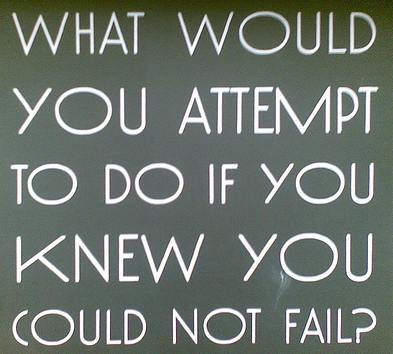

    Eloise Ristad

  • Shooting Oneself in the Foot… Again?

    Most of us can relate to the idiom about “shooting oneself in the foot.”

    We are painfully aware of those times when our efforts work against us instead of for us. Or we watch others in disbelief as they sabotage their own best plans and intentions.

    Ideally we would serve as our own best friend. We naturally feel regret, embarrassment, and confusion when we find ourselves to be our own worst enemy.

    Imagine being betrayed by the one who should be our most trusted advocate. How do we build trust with ourselves again? Or do we slowly spiral downward in a cycle of mistakes, eroding self-confidence and further mistakes?

    Instead of focusing on eliminating mistakes (an unrealistic and futile goal), what if we worked on becoming better advocates for ourselves?

    What if, instead of interpreting errors as failure events, we viewed them as learning processes?

    1. What if you viewed your mistakes as the beginning of something constructive instead of the end of something disastrous? What might you learn from the situation? What might you do differently going forward? What needs to improve in your own thinking, your team’s communication, or your organization’s processes? What benefit going forward can you construct from this unfortunate situation?

    Mistakes can become new beginnings.

    2. What if you viewed errors as learning in motion instead of static grades on a report card. It’s the difference between a motion picture and a photograph. If you take an uncomplimentary driver’s license photo, that’s the image (more…)

  • Listen In -> Avoiding Success. Four Fears That Hold Us Back #2: Fear of Failure

    Even if the promotion is long overdue. No matter how qualified we believed we were before receiving the promotion, after we get the promotion the first ordinary fear that we have trouble owning is the possibility that we may not be able to perform.

    I identify the fear as “ordinary” precisely because it is so difficult to name in our culture of pseudo-alpha confidence. We feel we shouldn’t experience fear of failure if we’re ready for the professional challenge of advancement.

    The problem is not experiencing the fear of failure. The real problem is not being able to be honest with oneself about the fact that one is, in fact, feeling fear.

    As a result we sabotage our own success by putting on a false bravado and confidence. We use this superior knowledge of ours to talk ourselves out of accepting the promotion for other reasons. Not enough pay. Not enough budget. A booby trap. A bad boss.

    In this week’s show, Claudia and I look at this ordinary fear and find that we destroy its power by acknowledging its presence. Instead of making up excuses for refusing a challenging promotion, you can step into the challenge and succeed even if a bit nervous.

    Listen in.

    Just now joining the conversation? Catch up on the entire series here.
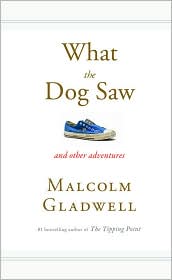
  • Thought Leaders Unpacked -> What the Dog Saw #13: Blowup

    thought-leadersHow do you approach thinking about the failure of large, complicated, systems like a nuclear reactor or a space shuttle disaster?
    Assigning blame is one goal. Understanding what happened and why is a similar but different approach. Fixing the specific failure so that it doesn’t happen again is another related goal.

    What-the-Dog-SawGladwell, are you getting used to this yet?, turns our usual frames of reference on their respective heads.

    It turns out that I’m probably a “normal accident” waiting to happen. Forget complex nuclear power plants or space shuttles for a moment.

    What about the complexities of a person’s life?!

    Work, family, relationships, projects, chores, play, and the unexpected all taking place simultaneously, consecutively, purposefully, randomly, wonderfully, and yes, every great once in a while, tragically.

    It should not come as a surprise that, through no one’s particular act of negligence or incompetence or poor judgment, there might eventually occur a horrible accident.

    In our narcissistic, litigious culture we survive and thrive on finding someone other than ourselves to blame and hold responsible for anything that harms us. But that may not always be either the case or even possible.

    What alternative interpretations of “normal accidents” can we use to help us not only cope, but come out healthier on the other side of that which most horribly rocks our worlds?

    What do you cope when the hard-to-explain brings harm into your life? What was your main take-away from this chapter?

    Each week I post my reflections from one chapter of What the Dog Saw by Malcolm Gladwell. If you are just joining the discussion now, welcome! Catch up on the entire series here.
  • Thought Leaders Unpacked -> What the Dog Saw #12: The Art of Failure

    thought-leadersEvery week I feel like I’m saying, “This is my favorite chapter.”

    So this week I’ll say, “This is my favorite chapter… so far.” Are men my age allowed to say, “OMG!” Earthquake to my soul.

    What-the-Dog-Saw

    The difference between choking and panicking. The difference between thinking too much and thinking too little. The difference between thinking when you don’t need to and not thinking when you do need to.

    The first sort of over-thinking interferes with your natural (or practiced) ability to do what you need to do, and tragically you don’t do what you ordinarily would be able to do. The second sort of under-thinking interferes with your ability to put your brain to work when you need it most, and tragically you never get the opportunity to do what your brain would have otherwise been able to help you choose.

    Choking or panicking.

    I almost never panic. I tend to remain calm in crisis, my thinking somehow becomes clearer, and my willingness to act decisively heightens. I’m not sure why that is. I’ll just be thankful.

    Choking, though, is another story altogether. And here is where this chapter was so enlightening for me. When faced with an important interview, for example, I respond to the importance by trying harder. That response has always made (more…)

  • Teddy Roosevelt on Getting Off the Sidelines

    quote-to-consider“It is not the critic who counts, not the man who points out how the strong man stumbled, or where the doer of deeds could have done better. The credit belongs to the man who is actually in the arena, whose face is marred by dust and sweat and blood, who strives valiantly, who errs and comes short again and again, who knows the sidelinesgreat enthusiasms, the great devotions, and spends himself in a worthy cause, who at best knows achievement and who at the worst if he fails at least fails while daring greatly so that his place shall never be with those cold and timid souls who know neither victory nor defeat.”

    Theodore Roosevelt

  • The Most Astounding Failure in Modern Business History

    Invisible PersonAs you know, one of my favorite questions for leaders is, “Does it matters who’s sitting in the chair?”

    The question helps tease out how well a leader knows who is on the team and what each person brings to the table.

    Most leaders look to their organizational charts and each specific job description to describe the make-up of their team. But such a view is only half the picture.

    Less than half the picture actually.

    How would you evaluate an employee who understood less than half of the issues related to their job? Who didn’t have an in depth knowledge of their firm’s assets?

    Negligent? Incompetent? A failure?

    Sadly, many leaders not only don’t know who is on their team, but boast of the fact. They call such intentional blindness “maintaining objectivity” and “staying focused on the bottom line.”

    It is, in fact, negligence. The most astounding failure in modern business history.

    These leaders are making decisions of huge significance without (more…)