Karl Edwards presents Working Matters

Tag: discipline

  • Listen In -> Employees… What Are They Good For? #4: The Problem of Poor Employee Performance

    I’d venture that for 90% of employee performance problems, supervisors focus their solution efforts on the problem employee.

    Helping the employee change. Demanding that the employee change. Talking to the employee. Writing up the employee. Training the employee. Disciplining the employee.
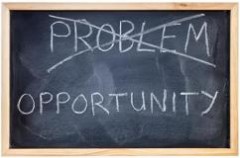
    What if, though, the employee was not the problem?

    What if problems elsewhere in the company were creating a situation in which no employee would look good?

    What if their negative attitude was a self-protective response to your harsh, arbitrary and/or imperious leadership style?

    What if their uncooperativeness was a response to the competitive bonus program in your compensation structure?

    In this week’s podcast discussion, Claudia and I take a closer look at the problem of poor employee performance.

    When acceptable performance becomes a problem, are we jumping too quickly to blame and punishment?

    Could there be aspects of your corporate structure, culture, or your own leadership methods that might be setting the stage for poor performance?

    Listen in.

    Just now joining the conversation? Catch up on the entire series here.
  • Quote to Consider: Getting to Virtue

    quote-to-consider“Virtue is what happens when wise and courageous choices have become ‘second nature’…

    “It doesn’t come by accident. It comes through the self-discipline required to do anything in life really well—to learn a musical instrument, to mend a tractor, to give a lecture, to run an orphanage. Or, indeed, to live as a wise human being.”

    N.T. Wright

  • Thought Leaders Unpacked -> Clutch #11: How to be Clutch in Sports

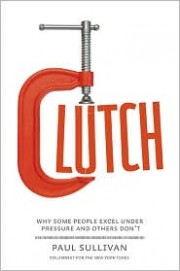
    thought-leadersWe close out our series on Clutch by Paul Sullivan with a look at, “How to be Clutch in Sports.”

    Sports stories have been a staple of the entire book, serving as a rich source of performance under pressure examples.

    With our focus now on sports themselves, I find the lessons and insights still broadly applicable.

    My main take-away was the return to fundamentals. Fundamental skills. Fundamental discipline in training, practicing and honing those skills.

    If I want to be able to rely on my skills under pressure, they need to be practiced to a degree that they are ingrained and feel natural.

    While I understand the principle, I must admit the lifestyle of discipline, focus and training required to get to where my skills are so well practiced that they feel natural feels a bit out of reach.

    I’m not sure if that out-of-reach feeling comes from never having been trained with the capacity to focus and work hard on a single skill like that. Or if the (more…)

  • Thought Leaders Unpacked -> Clutch #10: How to be Clutch with Your Money

    thought-leadersOuch.

    When it comes to straight-talking about money issues, the initial feeling is usually, “Ouch”.

    Downsizing one’s plans, shifting into a lower gear, or turning around and going back all feel nasty when money is on the line.

    When the money is coming in, there seems little need to evaluate one’s decisions. The inflow of cash is almost universally interpreted as validation.

    But what if you could have been making more? What if you could have been making the same amount, but having done so in such a way that built a sounder financial foundation and infrastructure?

    We usually don’t give a very thoughtful look at our finances until we run into trouble.

    It might be too late to respond well by the time the stitching is coming unraveled or the ship has sprung a leak.

    Hence the significance of being “clutch” with one’s money. In this chapter, Sullivan explores stories where people were and were not able to make crucial (more…)

  • Thought Leaders Unpacked -> Clutch #9: Overconfidence Starts The Fall

    thought-leadersThe problem with overconfidence is that, as easy as it is to spot in others, it is almost impossible to see in ourselves.

    The problem with overconfidence is that our focus has shifted from the task at hand to ourselves and our reputations and abilities.

    This chapter begs the question, what then is healthy confidence?

    My starting definition would be a grounded comfort in who I am and what I am capable that results in being free from thinking about myself at all.

    My attention is freed up to focus on others, on what is going on around me, on what I am doing at the moment.

    Humility is a virtue that fits well here.

    Neither a too high nor a too low estimation of myself. In fact, I’m not devoting any attention to assessing myself at all.

    I already know myself, and I have made my peace with who I am and who I am not. I am okay with what I can do and what I cannot yet do.

    I am not comparing myself to others. I am not trying to impress. I am simply not thinking about myself.

    I am free to focus on meeting the demands of the moment. In clutch situations, that freedom to focus is crucial to being able to perform under pressure. In clutch situations, there is not time for distractions like thinking that you’re the right person to meet this moment.

    What about for you? How much of your efforts to succeed have to do with thinking about yourself being successful instead of doing the actual work you want to succeed at?

    What are your personal overconfidence or lack of confidence distractions? How might you help yourself shift your focus back to the task at hand?

    What was your main take-away from this chapter? We would all love to learn from what you are learning.

    Each week I post my reflections from one chapter of Clutch: Why Some People Excel Under Pressure and Others Don’t by Paul Sullivan. My reflections are my own and are intended to generate conversation, catalyze additional thinking and encourage mutual learning.
    If you are just joining the discussion now, welcome! Catch up on the entire series here.
  • Thought Leaders Unpacked -> Clutch #8: The Perils of Overthinking

    thought-leadersHow many times have I imagined myself speaking in front of stadium crowds? If I had a nickel for every time I planned all I would be able to do when my business was big enough to have a full-time team of employees, I’d be rich.

    The time I’ve spent worrying about my great products being stolen instead of putting them out on the public table could have built twice as many.

    I find myself, again, personally challenged by Paul Sullivan’s insights into what does NOT result in “clutch” performance.

    Chapter 8 describes the perils of “overthinking.”

    To continue with myself as an example, when working on any given task my mind tends to jump ahead and begin anticipating a plethora of future issues, successes and/or problems that may arise.

    My attention and efforts then subtly shift to pre-addressing those issues. Yes, before they even become issues!

    It sounds funny and oddly obvious to say aloud, but that’s not how I am experiencing it at the time.

    Sullivan’s point is that such efforts are ultimately distracting, unproductive and sabotaging to the attention, focus and presence we need to be applying to the (more…)

  • Thought Leaders Unpacked -> Clutch #7: A Leader’s Responsibility

    thought-leadersA leader’s responsibility is to assume responsibility.

    Unfortunately, like a fair-weather friend, many leaders—while more than ready to publicly accept responsibility for positive results—quickly shift responsibility elsewhere when outcomes are not as expected.

    In this week’s chapter of Clutch, Paul Sullivan demonstrates that such a blaming tendency is linked more to failure than to success.

    “Clutch” leadership, the ability to perform under pressure with the effectiveness that you would normally exhibit, is not characteristic of the blame-shifter. In fact, crucial to clutch performance is the

    If you or I have a tendency to explain away our part in negative, difficult, or broken situations, we can pretty much count on choking. Instead of poised to face and work through the complexities that bedevil us, we will be presiding over our own unfolding ruin.

    That’s enough of the abstract principles.

    What about me? What about you? Do we dare hold up the spotlight of responsibility ownership to our own leadership practices? Our own choices, (more…)

  • Thought Leaders Unpacked -> Clutch #5: Fear and Desire

    thought-leadersThis chapter was a heart stopper for me. Fear and desire. Two ends of a spectrum that I have spent a lifetime trying to find the middle point. A mythical point that may not exist.

    Sullivan asserts that those with an articulate awareness of both what they want on the one hand and what they don’t want on the other possess a twin motivation that is more than the sum of the parts.

    I for my part instead of holding those twin motivations in steady tension with each other have probably been avoiding them.

    Standing in the middle is different than holding both extremes in tension. In the middle I have neither much I am working to avoid or much I am working to achieve. At the extremes I am working very hard to avoid certain fearful possibilities and to achieve certain very attractive dreams.

    My personal challenge out of this chapter is to adjust my strategy away from striving for the mythical middle point and toward the clear identification of where those powerful twin motivators of fear and desire find their expression in my story.

    Such reflection is going to require both courage and reflection. Self-awareness is a skill most of us spend a lifetime avoiding. And yet, even as I have advocated over the years for the unsurpassable value of self-awareness as a life and leadership core competency, I can feel the stakes go up when it comes to identifying what I fear and what I desire.

    Fear and desire can paralyze as easily as they can motivate. The status quo can feel safer than actively working against a negative line of outcomes or possibly failing at one’s efforts to achieve the positive line of outcomes.

    Can you articulate what you want? What you fear? Can you articulate them in such a way that they both become positive motivators for you to work toward?

    What was your main take-away from this chapter?

    On your side,

    – Karl Edwards

    Each week I post my reflections from one chapter of Clutch: Why Some People Excel Under Pressure and Others Don’t by Paul Sullivan. My reflections are my own and are intended to generate conversation, catalyze additional thinking and encourage mutual learning.
    If you are just joining the discussion now, welcome! Catch up on the entire series here.
  • Thought Leaders Unpacked -> Clutch #4: Being Present

    thought-leaders“Being present” is a term of great personal interest.

    Of all my professional traits and skills, the one I would describe as both my greatest strength and my favorite is my capacity to “be present.”

    For purposes of our discussion of Sullivan’s Clutch we need to be careful, because he uses the word slightly differently than you are used to hearing from me.

    Sullivan uses the theatre and stage acting to illustrate the characteristics of “being present.” When you are “on” you need to fully embody the character you portray. When you are “off” you are able to switch back and be yourself.

    Being present means the experience of each is an all-or-nothing affair. You are not thinking about acting, how you want to come across, your facial expressions, or the intensity of your voice. You simply become the character.

    It’s the self-consciousness that undermines the ability to be fully present in the role. It’s the extra thinking about what others are thinking, whether or not you’re effective, and what adjustments you might need to make that pulls you out of the role and sabotages your full engagement.

    As we translate the acting illustration into our own pressure-filled, time sensitive, clutch moments that require our being fully present, the key question (more…)

  • Thought Leaders Unpacked -> Clutch #3: Adapting

    thought-leaders“Fight the fight, don’t fight the plan.”

    Even while the subject of this chapter is “adapting,” it is interesting to me that we return to “focus” as the underlying capability that makes even adapting possible.

    Focusing on the outcome allows the decision-maker to adjust plans along the way without getting bogged down by a fallacious loyalty to the original plans.

    In other words, the issue is not implementing the plans as currently laid out, but achieving the outcome those plans were intended to achieve.

    As I have written elsewhere, the leader needs both proactive decision-making skills and reactive skills. The poised tennis player is as ready for whatever might come at them as they are prepared to execute their own game plan.

    In “clutch” situations (where ordinary skills need to be applied in extraordinary circumstances), pressure, immediacy, danger, the unexpected, and complexity conspire to muddle and/or overwhelm our senses.

    If we are not prepared or willing to pay attention to those complicating, unfolding realities, then our ability to make appropriate and relevant decisions will suffer.

    If we have the luxury of time, then we can take a step back and evaluate the data and adjust accordingly. If time is not available, we need to be able to make (more…)