Karl Edwards presents Working Matters

Category: Working Matters

  • Listen In -> Technology… When Less is More #3: Getting Organized

    Are you buried underneath your own organizational system?

    Do your categories, folders, tags, and lists confuse more than direct? When do all your organizational tools merely become your next mess?

    Organizational software can become the next mess to tend. As if you didn’t have enough to do already.

    When is it more work than help to add another tool to the tool chest?

    The answer is different for each of us depending on our working styles, relative affinity for technology, and our specific practical needs.

    Join Jorge Rosas and I as we discuss how to think about the interface between technology and getting organized.

    Listen in.

    Joining this series mid-stream? Catch up on the entire series here.
  • Loving Monday: Bright Open Spaces

    loving_mondayThe wind-swept skies jump-start my morning with their radiance. Amazing how powerfully beautiful they shine in their crystal clear bright blueness.

    My imagination wanders to images of those blistering winds sweeping through my office. Piles of clutter, stacks of minutiae, lists, books, files and forms go flying away.
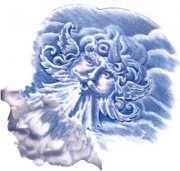
    Instead of the chaotic and overwhelming blur of stuff obscuring my vision and oppressing my spirit, there is only the sleek clean lines of my desk. There is open space in which to maneuver, to pace and think, maybe even to dance.

    What if…

    Why not?

    And so I grab three boxes. One I label, “Clutter.” One, “Delegate.” And the last one I label, “Tackle.”

    And being the wind god that I am, I don’t waste time pondering over the labels, but with broad strokes of my forearm I sweep across the ravaged surfaces of my domain and watch as the piles delightfully disappear into the “Clutter” box.

    Once in a while I notice an important item go flying from being lost on my desk to possibly being lost in the “Clutter” box, and I pause.

    It is practically impossible to hold onto, the wind is pounding so hard. The gale forces of this wind god’s focused fury insist that these important items be released nonetheless. And thus the “Delegate” box gets a small portion of this office’s hoard.

    Most rarely of all, as the storm continues, is the item so important that it can neither continue being lost nor be passed on to another. And any matter so exceptional and crucial can only be placed in the “Tackle” box. There is nothing to be done with these items except to do them. Right now. Before doing anything else. Tackle them.

    Now it’s time to step into your bright and refreshingly clean workspace…

    …and dance.

    – Karl Edwards

  • Quote to Consider: Getting Over It

    quote-to-consider“The best way out is always through.”

    Robert Frost

  • Thought Leaders Unpacked -> What the Dog Saw #11: Connecting the Dots

    thought-leaders20/20 hindsight is a boon for lazy and irresponsible journalists.

    While the intelligence services have to sift through thousands of clues, leads, chatter, patterns, and threats across a variety of agencies with diverse mandates and structures before any of an infinite number of possible futures unfolds, the journalist simply waits until after-the-fact and then follows the maze backwards to suggest (fallaciously) that the actual course of events was evident all along.

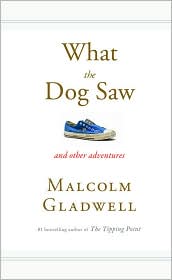
    What-the-Dog-SawI am growing in my appreciation for how deftly Gladwell is able to keep me intellectually honest.

    In example after example in this week’s chapter Gladwell gets into the shoes of those operating before-the-fact. From the perspective of those for whom the thousands of clues, (some legitimate, some not) may or may not in fact be connected radically impacts how we evaluate the efficacy of their work.

    The lazy journalist is able to accuse the intelligence services of failure (and make a lot of money doing so, I might add), because they did not see before-the-fact what seems so obvious after-the-fact.

    One set of professionals (intelligence services) gets accused of bungling their jobs because another set of professionals (journalists) actually bungles their job.

    If there is any dynamic that those of us in the writing professions should be the most aware, it is the power of perspective, point of view, and knowing full well how deeply the interpretation of the story is influenced by how you choose to tell the story.

    It’s a shame that in matters as grave as national security, some of our public story-tellers are lazy and irresponsible.

    Each Friday I post my reflections from one chapter of What the Dog Saw by Malcolm Gladwell. If you are just joining the discussion now, welcome! Catch up on the entire series here.
  • Listen In -> Technology… When Less is More #2: Getting Work Done

    More features does not mean getting more done.

    Do you spend more time writing your report or formatting it? More time using your software or learning how to use it?

    The point is, you’re trying to get work done. You’re looking for tools that will help to that end.

    Having all the features may or may not help get you there. And should those layers and layers of features, in fact, get in the way, then they have become your sabotaging enemy instead of your facilitating friend!

    How do we think about what tools we need to best get our work done?

    Listen in.

    Joining this series mid-stream? Catch up on the entire series here.
  • Routine as a Resource for the Imagination

    Could routine be a resource for the imagination?

    It’s a lot of work to pay attention to all things all of the time. In fact, there may be no room left over for anything else. Anything new. No room for the imagination. No free space for the unexpected solution or unanticipated brainstorm to emerge.

    Routine allows certain core components of your life to fall into the background without falling off the map by deciding at one point in time where and when you will take care of those components all of the time.

    By routinizing certain things you don’t have to pay so much attention to them anymore. Your mind is freed up. Freed up for other things. Freed up for new things.

    If you tend to resent your routines, this is your chance to turn it around and make them your friends. View them as on your side instead of against you.

    What other regular responsibility could you remove from your radar screen by putting it on your map? You’d have a shorter to-do list if you had a longer regularly-done list.

    Imagine where you could go with all the additional space you just created for your imagination!

    On your side,

    – Karl

  • Quote to Consider: Practice Makes Perfect

    quote-to-consider“We are what we repeatedly do.
    Excellence, therefore, is not an act but a habit.”

    Aristotle

  • Thought Leaders Unpacked -> What the Dog Saw #10: Something Borrowed

    thought-leadersWhen is stealing not stealing? What belongs to everyone even though a particular someone is the creator?

    For those of us who trade in words, believe in the power of words, and watch lives change on the turn of a phrase, it’s an important question.

    What-the-Dog-SawThis week’s chapter out of What the Dog Saw, wasn’t so much a mind-bending eye-opener for me as it was a thoughtful reflection on creativity, the propagation of ideas, and ownership rights for those who write.

    Continuing to stir in my mind is the inherent conflict between creating/owning an idea, which seeks to exclude everyone else; and propagating/influencing others with your ideas, which seeks to include everyone else.

    We both want our ideas to take hold on as wide a basis a possible, and we want to benefit ourselves from the recognition and revenue that their value earns.

    Keep it to ourselves where we keep control, or get it out there where we lose control?

    Copyright  laws are intended to give us a way to hold both extremes in tension. With the explosion of information and content on the internet, creativity, ownership and the value of content is getting more and more difficult to distinguish.

    To which end of the spectrum do you lean? Tightly control your content or disseminate it widely? What was you main take-away from this chapter?

    Each Friday I post my reflections from one chapter of What the Dog Saw by Malcolm Gladwell. If you are just joining the discussion now, welcome! Catch up on the entire series here.
  • Listen In -> Technology… When Less is More #1: Slave To Your Tools?

    Do you work for your tools or do they work for you?

    Imagine a hammer and a saw telling a carpenter how to build a house. Silly image?

    Not if the tools involved are your workplace technology.

    More often than not, our computers, our telephones, our word processors and databases are dictating the terms by which we can access their benefits.

    We become unwitting partners in this unfortunate role reversal by shopping for the latest, fastest, most versatile, most interconnected devices available. As if having the most features meant having the best tool.

    Not so.

    Join me and our special guest, Jorge Rosas, in a new series on Technology… When Less is More. Jorge is a passionate early adopter of all things tech, programmer, webmaster, musician, and producer of the Working Matters podcast.

    We dare to suggest that you are the carpenter, and it is the house that you want to build that determines what tools will best serve you and not the other way around.

    Technology… When Less is More
    Week #1: Slave to Your Tools?
    Week #2: Getting Work Done
    Week #3: Getting Organized
    Week #4: Communicating with Purpose
    Week #5: Collaborating Effectively

    Listen in.

  • Loving Tuesday: Where Did Monday Go?!

    loving_mondayWhere did Monday go?

    It was here a minute ago.

    Or so I thought. Next thing I know my calendar is telling me it’s Tuesday. What happened?

    Do you ever have weeks like that? You have the best of intentions. The plans are in place. You are going to hit the ground running. You are going in focused, intent, and prepared.

    And then reality hits.

    A scheduled delivery is missing. An important deadline gets moved up. An important client wants an impromptu meeting asap. Two team members call in sick.

    By the time you look up, the day is over and your beautiful plans are in shatters.

    It would not be uncommon to be thrown for a loop. Our focus turned to confusion. Our intent undermined by discouragement. Our preparations tossed into the air like a deck of playing cards.

    Or we can adjust.

    Key, though, is not letting the unexpected sabotage us completely.

    I recommend beginning by giving yourself permission to go outside and scream your heart out or pound your fist into the landscaping. Pretending you’re not frustrated when you clearly are is patently unproductive.

    Express your frustration (safely, please). Get it out. But then… shake it off.

    While probably not possible to merely start over as if it were Monday when it is now Tuesday, we can adjust.

    Determine to adjust.

    Take a fresh look at your focus, your intent and your plans. How can they benefit from what happened yesterday?

    It’s Tuesday now. Gotta love it. Time to go for it.

    What’s your alternative?