 “It takes your enemy and your friend, working together to hurt you to the heart; the one to slander you and the other to get the news to you.”
Mark Twain
“It takes your enemy and your friend, working together to hurt you to the heart; the one to slander you and the other to get the news to you.”
Mark Twain
 Are you as tired as I am of hearing leaders complain about resistance to change?!
The leader is always right and the people are always wrong. It’s the leader’s job to effect change by bringing the people running gratefully out of their “wrong” and into the leader’s “right.”
Anyone who voices any practical or conceptual problem with the leader’s vision is labeled, “resistant to change.” It’s as if the story was about the leader!
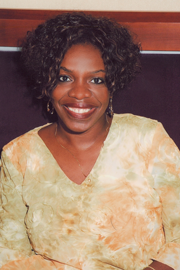 Enter Marion Skeete of LegacyMakers International for week three of our discussion on Visionary Leadership.
What if the story, in fact, belonged to the community?
What if the unfolding future was comprised of the real life unfolding stories of the individuals, families, teams and organizations that leaders serve?
What if the only conversations about the future that might really result in change were those conversations that included the people who were themselves maturing into those changes?
Vision would not be something dreamed up by the leader in isolation and announced one day, but something already transpiring that the leader observes and articulates in such a way that helps the community interact, engage, and embrace.
What if catalyzing change involved nurturing an already existing ember, rather than pouring fuel on a damp wood and striking a match?
Listen in.
 I find myself rethinking vision and leadership.
Who do you know who seems to see what no one else sees? Not because no one else has eyes, but because no one else is looking.
Visionary leadership is not about seeing something entirely new as much as it is about seeing what is already there unfolding in a way no one else yet expects. Just as our brains filter out most of the visual data in our field of vision so that we can pay attention to what is most important, so in our busy and complex lives many of us may not be able to see what is unfolding right in front of us.
The visionary leader is more rarely the source of brand new ideas. She or he is rather the highly aware and deeply reflective one for whom all persons, events, stories, dynamics, and trends are precious and meaning-laden data.
What distinguishes the visionary is the capacity to interpret this flood of information from a variety of vantage points. It is as if he or she is rearranging the tiles in a mosaic so that entirely different pictures emerge than the otherwise obvious one that everyone up until that point had been convinced was the only one.
What we encounter in many hierarchical organizations are positional leaders who aspire to be perceived as visionaries. (A common cultural bias.)Â They consequently “do vision” out of their hierarchical frame of reference, which is to act as the primary idea generator, strategy definer, and program creator.
The significance of distinguishing the personal skill from the organizational position lies in the very real possibility that the visionary leaders in your organization may not be the positional leaders. They may not even be on your radar screen. But they are there. Observant, reflective and influential.
Think about it. Think through the people on your team. Think through people in other departments. What if someone in the accounting department could see in the numbers new possibilities for how you went about your work which you couldn’t see from your vantage point in operations? What if your receptionist understood your clients’ needs better from his or her perspective of helping than your marketing team could from their perspective of selling?
And who has eyes and ears integrated enough with their heart and mind to watch these dynamics on a number of fronts and across a spectrum of personalities, roles, functions and processes? What kind of person does it take to see what ideas, directions and connections might be unfolding in enough time to participate in their emergence?
Maybe “mid-wife” would serve as a better metaphor for visionary leader than “captain.” I wonder.
What do you think?
I think the emerging mosaic deepens and sharpens a bit more.
On your side
– Karl Edwards
“I hold it, that a little rebellion now and then is a good thing, and as necessary in the political world as storms in the physical.”
Thomas Jefferson
How does a visionary leader communicate the “new thing” she or he sees when no one else sees it yet?
And what if this new thing is something this leader is merely observing emerge from within the community she or he leads?
In other words, how does one think outside of the box when much of the thinking is being done by others?
In this week’s show, Marion Skeete of LegacyMakers International and I discuss how visionary leaders help “the story” of the community unfold and emerge.
The story does not merely start over every time a power and control-based leader gets a new idea and starts shouting orders.
Hence the importance of the empowering, listening visionary leader who can articulate where the story of the community needs to go next in terms of where the story of the community has been so far.
Newness out of the old. A future integrated with the past. A maturing, developing, unfolding process of change.
Listen in.
How well does your team know what your priorities for them are?
 Just call me, “Cézanne.”
Having enjoyed a multi-faceted career, I could easily buy into any of the many interpretations others have provided to make sense of the diversity of roles I have held through the years. Interpretations, that is, that come from a particular frame of reference that Malcolm Gladwell explores in this week’s chapter on “Late Bloomers.”
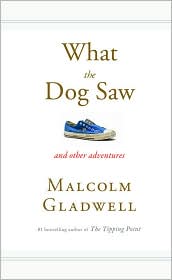 Multiple roles could be a symptom of being lost. Unable to find my way, my calling, my destiny, I could be moving from role to role in search of something that feels like home.
I could be a loser of sorts. Kidding myself into believing that I am God’s gift to humanity. I don’t see that my personality grates, my skills are archaic, and my working style is neither productive nor helpful.
I could have my priorities mixed up. Preferring to inaugurate entirely new visions of capitalism for the 21st century, I neglect being a stable, domestic provider who makes sure that each week’s expenses corresponds with a particular paycheck that covers them.
What if, though, I were exactly where I belonged during each stage of my professional journey so far? What if the only way forward is to take another step? What about uncharted territory where the path only becomes visible when looking back at where we have been?
When experience is one of life’s teachers, then the knowledge, experience and connections needed to see which path to take can only be found in actually proceeding down a path. In the doing is the learning, the adjusting, the maturing.
Gladwell’s insight into our culture’s fallacious assumption that genius comes early and easily is a breath of fresh air to those of us who experience the world so startlingly different that we struggle to find vocabulary, context and/or means to communicate, persuade and create all that burns deep within.
This week’s chapter seemed written especially for me. Give it a read. It might be especially for you too.
You never know. You or I may be the next, “Cézanne.”
Join the conversation. What was your main take-away from this chapter?
 This is the day when we Americans remember that we enjoy peace at home, not because we have eschewed violence, but because we have been willing to stand up to those who would use violence against us and our children.
This is the day that we remember that protecting most of our children has resulted in the loss of many of our children.
While world peace is a goal worthy of sincere and dedicated efforts, in the mean time there will be those who hate, those who insist on wielding power at any cost, and those who are too proud, too narrow, too scared, or with too much at stake to put down the sword.
All of human history until now has been, “in the mean time.”
We will not close our eyes to this tragic reality, however tempting it might be to believe that we could merely will it away if only we opposed war or the military or governments or defense contractors loudly enough.
All of human history… until now.
Yes, we must strive for different, more peaceful, more accepting, more collaborative, more respectful, and more creative ways to share the planet. In the mean time, though, we will not under any circumstance allow anyone to harm our children.
Thank you to our service men and women whose task it is to stand in harm’s way so that we can work and play and love and live… in the mean time.
– Karl Edwards
“There go the people. I must follow them for I am their leader.”
Alexandre Ledru-Rollin
 Few genre of literature can tweek our sensibilities, reframe our outlooks, or engage the soul as poetry can.
Few writers are as profoundly insightful, authentically sensitive or refreshingly honest as Marcus Goodyear is.
I am captivated by his new collection of poems, Barbies at Communion.
From the introduction:
“Poetry is waiting for us just around the corner, in a book on the coffee table, in a phrase from the pulpit, in the wag of a dog’s tail, in Barbie dolls and quantum physics and vacations and rituals and work and play.
“Wherever we go, poetry is playing hide-and-seek with us. Whenever we sit still enough and quiet enough, we can hear poetry shuffling in its hiding place, trying not to make too much noise.”
If you even remotely enjoy poetry, then you will love these poems that peek and poke and play without ever needing to pontificate or preach.
Goodyear’s verse repeatedly catches me off-guard as he makes me chuckle, challenges my assumptions and gives me occasion to pause and reflect.
Barbies at Communion belongs squarely at the top of your “Must Read” list.
– Karl Edwards