Karl Edwards presents Working Matters

Author: Karl Edwards

  • Loving Monday: Dreading Monday

    loving_mondaySome Mondays don’t seem worth getting up for.

    Some Mondays hold nothing but dread for us. It could be the dread of facing a seemingly insurmountable problem. It could be the dread of enduring another day of intolerable boredom. It could be the dread of overwhelming volumes of work.

    In apparent contrast to all this column stands for, a reality no amount of perspective, wisdom, or encouragement can erase is that some days simply feel impossible.

    What does one do? From what source do we muster the courage to show up in spite of how we feel?

    I’m not going to even pretend there is an easy answer. But I will dare to suggest a two-pronged approach.

    1. Give yourself permission to feel crappy.
    Instead of talking yourself out of these feelings… Instead of pushing your way through these feelings… Instead of judging these feelings as immature, pathetic, weak, or any other put-down you tend to use…

    Instead of fighting the dread, acknowledge it. Affirm it. Congratulate yourself for recognizing it. Pat yourself on the back for being honest with yourself.

    2. Pick one thing you will address today.
    Give yourself the gift of focus. Take one thing at a time. If everything is overwhelming you, then select something.

    Yes, maybe in an ideal world you would be able to sort and prioritize, multi-task and juggle. But today is not ideal. You are dreading today. So you need an (more…)


  • Quote to Consider: The Difficult Curriculum of Courage

    quote-to-consider“You don’t develop courage by being happy in your relationships everyday. You develop it by surviving difficult times and challenging adversity.”

    Barbara De Angelis

  • Tip the Desk: Simplifying the Cathartic Way

    A fun gift the less organized among us should give ourselves occasionally is to “tip the desk.”

    Not only is it a lot of fun (yes, I have indulged), the combination of a clean desk and the catharsis of acting out so dramatically makes for a powerful attitude boost.

    A bit impractical you figure, until, of course, you realize that your piles could not become any less organized on the floor than they are already on top of your desk.

    After prudently removing breakable items like the computer, telephone, and paper-clip sculpture your son made for you, plant your feet firmly, hold your back erect, and lift the desk to that precise angle where the mountains of paper go careening onto the floor.

    As you set your perfectly clean desk down and settle back into your chair, you will notice that those unseemly mounds now lie conveniently out of view.

    After reacquainting yourself with its sleek, smooth surface, step around the desk, select one item from the “differently organized” piles on the floor, and return to your seat to enjoy an uncluttered, focused effort.

    On your side,

    – Karl Edwards

    The Simplify Journey

    Cheryl Smith hosts a wonderful blog over at CultureSmith. If you aren’t a regular visitor start today.

    Today’s post is in response to her “The Simplify Journey” column and call for contributions.

    Join the conversation.

  • Karl Shares Six Words… #14


    All backs to the intruding executive.


    Karl Edwards

  • Listen In -> Why We Hate Meetings #1: Death by Drivel

    How can an opportunity so important be so regularly squandered?

    Boring, unplanned, endless and usually pointless, meetings have become a stereotypical waste of time and resources.

    Sometimes it’s an insecure leader who, any time someone else begins to speak, hurriedly repeats everything they just said because obviously if there is a question, objection or different perspective, further elaboration on their part is needed.

    Sometimes it is watching the valuable time inadvertently spent discussing minutiae or pet peeves while the most important issues get squeezed into the last five minutes.

    We feel our time is being unfairly wasted by those who will eventually be holding us accountable for what we weren’t able to accomplish because we were tied up in the meeting they called.

    Join Claudia and I as we launch a new discussion series on Why We Hate Meetings. Not only will we be poking fun at the silly ways we waste these regular gatherings, but we will offer simple tips for bringing focus, direction, participation and results to your meetings.

    Find out how easily a few adjustments can turn this around for the meetings you lead.

    Why We Hate Meetings
    Week #1: Death by Drivel
    Week #2: Not Guided by an Agenda
    Week #3: Not Focused toward Outcomes
    Week #4: Not Resourced by Participation
    Week #5: Not Acted On through Follow-Up

    Don’t forget to check out our Meeting Planner. A simple workbook for planning meetings that make a difference!

    Listen in.

    Just now joining the conversation? Catch up on the entire series here.
  • Thought Leaders Unpacked -> Clutch #5: Fear and Desire

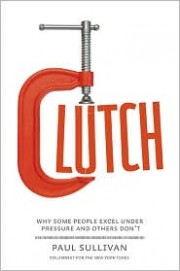
    thought-leadersThis chapter was a heart stopper for me. Fear and desire. Two ends of a spectrum that I have spent a lifetime trying to find the middle point. A mythical point that may not exist.

    Sullivan asserts that those with an articulate awareness of both what they want on the one hand and what they don’t want on the other possess a twin motivation that is more than the sum of the parts.

    I for my part instead of holding those twin motivations in steady tension with each other have probably been avoiding them.

    Standing in the middle is different than holding both extremes in tension. In the middle I have neither much I am working to avoid or much I am working to achieve. At the extremes I am working very hard to avoid certain fearful possibilities and to achieve certain very attractive dreams.

    My personal challenge out of this chapter is to adjust my strategy away from striving for the mythical middle point and toward the clear identification of where those powerful twin motivators of fear and desire find their expression in my story.

    Such reflection is going to require both courage and reflection. Self-awareness is a skill most of us spend a lifetime avoiding. And yet, even as I have advocated over the years for the unsurpassable value of self-awareness as a life and leadership core competency, I can feel the stakes go up when it comes to identifying what I fear and what I desire.

    Fear and desire can paralyze as easily as they can motivate. The status quo can feel safer than actively working against a negative line of outcomes or possibly failing at one’s efforts to achieve the positive line of outcomes.

    Can you articulate what you want? What you fear? Can you articulate them in such a way that they both become positive motivators for you to work toward?

    What was your main take-away from this chapter?

    On your side,

    – Karl Edwards

    Each week I post my reflections from one chapter of Clutch: Why Some People Excel Under Pressure and Others Don’t by Paul Sullivan. My reflections are my own and are intended to generate conversation, catalyze additional thinking and encourage mutual learning.
    If you are just joining the discussion now, welcome! Catch up on the entire series here.
  • Loving Monday: Bring It

    loving_mondayFew things are more frustrating than the obvious oversights of those with whom we work. Even more frustrating is when those oversights, blind spots, or shortcomings are with those who have more power than us on the organizational chart.

    They create unworkable situations and then blame us for them not working out.

    We kick the wall, curse the gods, and accuse the incompetents around us of making our jobs impossible. Yes, we blame them right back.
    What if, though, you had eyes to see something that they were blind to? What if you had an ability or capacity that they did not have?

    What if they needed you to bring your eyes and ability to that problematic situation, and all you did was stand back and blame them for not being able to (more…)

  • Karl Shares Six Words… #13


    Awkward stares suggest vivid meeting dream.


    Karl Edwards

  • Listen In -> Paying Attention to Attentiveness #5: Attentive to Ideas and Trends

    You remember the LP? The cassette? The 8-track tape? The compact disc?

    What if your entire business model was structured around a 10-year plan that included one of those now sidelined technologies? What if it was six years into that plan that the iPod emerged and your entire industry almost or completely disappeared?

    The speed with which fashions, fads, and technologies come and go is dizzying. Which brings us to this week’s show.

    Five and ten-year plans cannot be made—much less implemented—without paying attention to ideas and trends.

    How many leading industries did not even exist ten years ago? How many have disappeared altogether in the same period?

    How do you pay attention to ideas and trends? Your viability as a business may depend on it.

    Listen in.

    Just now joining the conversation? Catch up on the entire series here.
  • Question of the Week #25

    What difficult conversation have you been avoiding?

    The Question of the Week is offered to increase awareness of one’s personal leadership practices and encourage experimentation with creative alternatives.