
Karl Edwards presents Working Matters

Tag: systems

  • Clippings from Don: Who Needs a Desk When You Have a Lap?

    Office workspace is shrinking. So observes Roger Vincent in Wednesday’s Los Angeles Times.

    Vincent does his best to observe an insightful emerging trend, but I can’t help suspect a desperate cost-cutting ploy.

    With the rapid embrace of mobile technology and the integrated lifestyles of the young emerging professional, the need for dedicated office real estate for each individual’s private usage may not be a valid starting assumption for planning purposes.

    On the other hand, we must recognize that there exist leaders who consider employees an unfortunate and painfully necessary expense; and who upon any excuse whatsoever will eliminate, minimize and/or squeeze any outlay related to them.

    One set of leaders observes the changing nature of work, communications, lifestyles, and office space and sees an opportunity to redesign workspace to make the office an even more useful, productive and appropriate source of resources.

    The other set of leaders hears of these developments and discovers a source of excuses to use in their quest to squeeze as much as possible from every employee for as little as possible, whether or not it results in actual benefits to the bottom line.

    Which type of leader are you? In one case, you stand to increase employee loyalty and company results designing office space around actual usage. In the other case you risk alienating the very people you need to succeed in your desperation to save a buck or two cutting wherever and whenever possible.

    Read Vincent’s full article here.

    Voracious reader friend Don Silver always has an eye out for what interests me. Clippings from Don is a column where I pass on some of these articles, stories and resources to you.
  • Thought Leaders Unpacked -> What the Dog Saw #17: The Talent Myth

    thought-leadersPretty sobering to read that the company which believed in and practiced talent-based hiring and promoting was Enron.
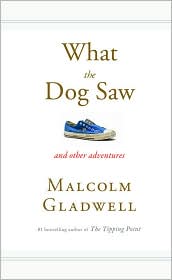
    Assessing performance instead of potential. But performance cannot be measured when promotions are taking place within the span of an evaluation cycle.

    What-the-Dog-Saw

    We tend to describe ourselves by the categories used by those with power. But those categories do not always (if even very often) either help us describe or understand reality accurately.

    Gladwell suggests that the system is the star in companies that consistently thrive.

    Different systems serve different strategic needs better. Whether highly centralized or decentralized, there is no one-size-fits-all “best” management system.

    What intrigues me most is our enduring desire to find the “magic” answer. Which is the “correct” or “best” management system? What leadership style is most effective? Tell me, expert, tell me. Don’t make me think. Don’t make me choose. Give me another book. Find me a more authoritative guru.

    This chapter makes me feel a bit proud that we at Bold Enterprises help leaders discover and develop their own individual “leadership poise.” The stance from which and out of which you observe, reflect, act and adjust on an on-going, non-formulaic basis.

    Instead of searching for “the right answer” we become proficient at raising the right questions. The way forward through uncharted territory (the future) is not going to be found on any map. Becoming better map readers is not the skills leaders need in these times of rapid change.

    How does one become a better explorer in a culture of competence, perfection and short-term measurements?

    What do you think? What was your main take-away from this chapter?

    Each week I post my reflections from one chapter of What the Dog Saw by Malcolm Gladwell. If you are just joining the discussion now, welcome! Catch up on the entire series here.
  • Thought Leaders Unpacked -> What the Dog Saw #15: Most Likely to Succeed

    thought-leaders“The school system has a quarterback problem.” And so Malcolm Gladwell draws us into a conundrum that haunts the various interest groups and stakeholders fighting over education in America.

    The perennial fight over scarce resources, institutional power, and job security—all in the name of putting children “first,” of course—overlooks a very interesting problem. We don’t use what we know about what makes a good teacher in our training and choosing of teachers.

    What-the-Dog-Saw

    As being a good quarterback in college football is not, interestingly enough, a good indicator of how well one will play in the pros, so for teachers having the education, credentials and years of experience are not necessarily indicators of being a good teacher.

    And even though we know better, we still base teacher selection, pay and retention on anachronistic metrics such as college degrees received before ever teaching and seniority unrelated to the quality or effectiveness of teaching.

    Fascinating to me is the ability and willingness of the various stakeholders, from unions to school administrators to parents to politicians, to permit their interests to supersede all that is known about what makes a good teacher, what motivates a good teacher and what rewards good teaching.

    Gladwell has several ideas for attracting, training and culling those best suited to teaching children, which you’ll see as you read this chapter. But for my reflection, I’m stuck on the damage we are willing to inflict on those we purport to serve—especially when they are those who cannot defend their own interests—in order to defend our own interests.

    There isn’t really a quarterback problem in teaching. There’s an initial intake and on-going culling problem in teaching. The system is too entrenched to experiment with change, or even to adjust toward what would not be an experiment at all!

    What do you think? What was your main take-away from this chapter?

    Each week I post my reflections from one chapter of What the Dog Saw by Malcolm Gladwell. If you are just joining the discussion now, welcome! Catch up on the entire series here.
  • Question of the Week

    How often to you review procedures to evaluate for continued relevance or effectiveness?

    The Question of the Week is offered to increase awareness of one’s personal leadership practices and encourage experimentation with creative alternatives.