Karl Edwards presents Working Matters

Tag: teams

  • The Most Astounding Failure in Modern Business History

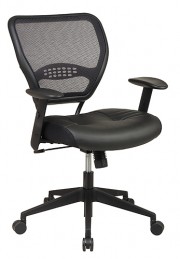
    Invisible PersonAs you know, one of my favorite questions for leaders is, “Does it matters who’s sitting in the chair?”

    The question helps tease out how well a leader knows who is on the team and what each person brings to the table.

    Most leaders look to their organizational charts and each specific job description to describe the make-up of their team. But such a view is only half the picture.

    Less than half the picture actually.

    How would you evaluate an employee who understood less than half of the issues related to their job? Who didn’t have an in depth knowledge of their firm’s assets?

    Negligent? Incompetent? A failure?

    Sadly, many leaders not only don’t know who is on their team, but boast of the fact. They call such intentional blindness “maintaining objectivity” and “staying focused on the bottom line.”

    It is, in fact, negligence. The most astounding failure in modern business history.

    These leaders are making decisions of huge significance without (more…)

  • My Guest Appearance on “Management Tips”

    wooden-nickel-management-tips-4Nick McCormick, author of Lead Well and Prosper, interviews me on his podcast, “Joe and Wanda on Management.”

    I share my three “Hard Facts of Working with People.”

    If you want your team to come alive and give 110% on the job, they need an opportunity to:

    1. Contribute and make a difference.
    2. Learn and develop.
    3. Connect and belong.

    Listen in and join the conversation.

  • Question of the Week

    How well does your team know what your priorities for them are?

    The Question of the Week is offered to increase awareness of one’s personal leadership practices and encourage experimentation with creative alternatives.
  • Question of the Week

    How do you authorize and equip employees to be creative in their problem solving, product development, and approaches to their work?

    The Question of the Week is offered to increase awareness of one’s personal leadership practices and encourage experimentation with creative alternatives.
  • Should I Be Firing Myself?

    Insightful LinkIn the best spirit of No Excuses Leadershipâ„¢, I’m delighted to find Lisa Haneberg over at Management Craft suggesting that leaders might recognize for themselves when it’s time to move on.

    My favorite Question of the Week for leaders to ask themselves is: “How might you be a part of the problem that won’t go away?” I like it so much because it points to the heart of leadership effectiveness, which is self-awareness. Knowing how you show up at work and the impact your presence, actions and words have on others.

    “Be WITH the team, or change teams,” Lisa exhorts. So many of us make the mistake of making our own vantage point our sole frame of reference for evaluating the big picture. But a vantage point is just that… one point among many. Is it because we have more power that we get to let ourselves off the hook and blame the team for missed goals, petty in-fighting, or poor customer service?

    I think not. The leader is always ultimately responsible for what happens on the ground. No excuses.

    If we haven’t talked recently about the challenges you are currently facing, let’s do so. Give a call or shoot me an email. Your contribution is too important to ignore.

    On your side,

    – Karl

  • Question of the Week

    Are you as careful to stay ahead of the competition in your management practice as you are in your technical practice? What will any inattentiveness cost you?

    The Question of the Week is offered to increase awareness about personal leadership practices and encourage experimentation with creative alternatives.
  • Question of the Week

    What is involved in helping your team adjust to the loss or addition of key members?

  • Question of the Week

    How might others’ effectiveness increase if you chose to pause and chat with team members as you walk through the office?

  • People or Positions?

    Team PlanesWhen you look at someone on your team, do you see a person or their position?

    Are the unique characteristics of each employee the secret treasures that enhance or the troubling booby-traps that derail the effective performance of any given job description?

    Whether you get excited or annoyed when someone doesn’t fill their role as you defined it is an important clue to whether you believe the value comes from who is on the team, or from how you organize the team.

    It is not a simple either/or. Both are obviously significant. But in this age of professional empowerment, I’d err on the side of over-valuing my team members and letting their individual make-ups inform my organizational structure rather than the other way around.

    What do you think?

  • Who’s on Your Team?

    It’s crazy how some supervisors can’t see who they have on their teams. It’s like they’re blind to the mix of unique individuals that make up the group. It doesn’t matter who’s in the chair, just as long as every chair is filled.

    The problem with such impersonal, mechanistic thinking is that it is so impersonal and mechanistic. These leaders never learn what amazing talents, skills, styles and propensities these growing, developing people bring to the enterprise. And consequently they underestimate the moving, changing dynamic that makes up the human maturity and professional development processes.

    Such blindness leads to static job descriptions, rigid organizational charts and high turnover.

    Who is on your team?

    This week’s podcast: Building an Enterprising Team: Getting Exponential Results