Karl Edwards presents Working Matters

Tag: proactive

  • Loving Monday: Who’s Setting the Tone If You Aren’t?

    loving_mondayWho’s setting the tone at work today?

    Anyone?

    If someone isn’t setting the tone intentionally, then it is probably being set by the first three things that happen this morning.

    Should the first three things that happen be an unexpected deadline change, an angry client, and an assistant gone AWOL, you’re in for a rough day!

    What if, though, you set the tone for your day? What if you were to choose—before even arriving at work—what sort of attitude, perspective and demeanor with which you were going to approach your day?

    Instead of waiting to react to whatever might be going on at the office, you would be taking the initiative to be one of the actors that everyone else reacts to.

    You would be taking the initiative on your own behalf and also on the behalf of the entire office culture.

    In this scenario, when the unexpected deadline change gets announced, the angry client yells at you, or the assistant goes AWOL right when you needed their help, you will deal with these unfortunate and difficult experiences from the healthy, positive, and constructive frame of reference you chose earlier.

    It’s your choice either way you look at it.

    You can choose to let circumstances set the tone for you, or you can choose the tone from which you will set into the day’s circumstances.

    Which brings us back to the original question: Who’s setting the tone at work today if you aren’t?

    On your side,

    – Karl Edwards

    Loving Monday is a weekly column designed to encourage us to step into our weeks with an intention to show up authentically, engage fully, and choose to make it a good week for ourselves. Explore past columns here.
  • Question of the Week

    How often do you find yourself asking employees in retrospect, “How did that happen?” How often do you find yourself asking them during the process, “How is it going?”

    If you discover that you ask the first question more often than the second, how might you become more proactive about finding out what’s going on?

    The Question of the Week is offered to increase awareness of one’s personal leadership practices and encourage experimentation with creative alternatives.
  • Listen In -> Performance Management with Jeff Hunt #2: Managing

    Has it been an entire year since you’ve talked with anyone on your team about their job performance?

    Does it feel a bit awkward to bring up that negative encounter nine months ago?

    Did you miss an opportunity to provide needed resources simply because you didn’t know about the need at the time?

    We are in week 2 of our conversation with Jeff Hunt of Goalspan about performance management, and our topic this week is “managing.”

    After establishing expectations for results having planned, our next step is to establish an on-going conversation about how we work together. Instead of performance management being a single annual event, we are going to make it a process.

    Don’t miss Jeff’s insights into the three components of managing job performance:

    1. Coaching and feedback – Establishing the ongoing conversation.
    2. Supporting learning and development – Providing the resources and training.
    3. Proactively addressing issues as they arise instead of waiting 10 months to the next evaluation.

    What is your process? Do you engage early and often? Do your performance evaluations increase or decrease employee morale, motivation and engagement?

    Listen in.

  • Thought Leaders Unpacked -> Integrity #8: What People In Touch Look Like

    thought-leadersLots to chew on in this chapter.

    Being willing to face reality and deal with the facts on the ground is an important skill. A skill I’d say I either already have or am very open to enhancing.

    BUT… Cloud then goes and makes a distinction between being someone who actively searches out what reality is, and one who faces reality passively, as it presents itself.

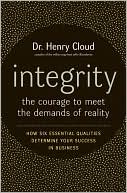
    Integrity, by Henry CloudTalk about a punch to the gut! Suddenly I’m not so sure. Being open to face the facts and turning the house upside down in order to uncover the facts are two very different stances. I don’t think I can lay claim to the second. That hurts. Give me a second to nurse my bruised ego.

    Ok, let’s keep going. I find Cloud’s question helpful, “Do I consider reality my friend?” If I don’t… if reality can harm me, diminish me, or discourage me, I am much less motivated to seek it out. If reality is my friend, however painful, I don’t have to protect myself from it. Instead of seeking out reality requiring heroic amounts of courage, it becomes intrinsically trustworthy and continuously welcome.

    Insightful here is the built-in protection being a seeker of reality provides against blindness. The horrible thing about blindness is when we don’t know that we’re blind. Horrible in the personal sense that I find the possibility terrifying. Few things frighten me more than not being aware of what I am not aware of.

    Only the passive person needs to be afraid, though. Once I become an active seeker out of reality, then I am doing everything I can to get in touch and stay in touch with the facts on the ground. The combination of the active approach and the welcoming stance means that I’m at minimal risk of simply missing out or inadvertently blocking out important information.

    Where do you find yourself on the spectrum between actively seeking and passively receiving reality? What do you think about the assertion that reality is our friend?

    Each Friday I post my reflections from one chapter of Integrity: The Courage to Meet the Demands of Reality by Henry Cloud. If you are just joining the discussion now, welcome! Catch up on the entire series here.
  • Controlling or Cruising?

    Toward which extreme would your planning approach tend? Controlling or cruising?

    Do you try to control more than may be possible, humanly speaking? Stick to tight schedules even if it means working nights and weekends. Keep everyone on task even if it means writing standard operating procedures for sharpening pencils. Coordinate activities across departments even if it means nagging people several times a day.

    Or have you given up on planning? Circumstances change too quickly on the ground for any plan to stand a chance of being implemented. Technology will change, a competitor will undercut your break even price, a key supplier will go out of business, an important team member will go on maternity leave at a crucial juncture. So you cruise. Go with the flow. Use your intuition. Shoot from the hip. Respond to issues as they arise.

    (If you haven’t listened to this week’s podcast, take ten minutes now as Claudia and I take on strategic planning as the second segment of our coaching regimen No Excuses Leadership.)

    As you’ve probably guessed, both sets of skills are crucial for successful strategic planning. They each address a stark reality leaders face. They each fail when adopted exclusively and universally. There is a vital proactive, aggressive, intentional component to planning. There is also a vital reactive, responsive, perceptive, discerning component.

    Where do you fall on the controlling versus cruising spectrum? What have you learned from veering too closely to either extreme?

  • Listen In -> Strategic Planning #1: The Tennis Player’s Stance

    On the balls of your feet.

    Both ready to implement your own plan of attack and ready to respond to whatever comes at you.

    We begin a new series on strategic planning this week with the metaphor of the tennis player’s stance. We hope you will join the discussion. (This series is the second of three series that will make up our No Excuses Leadershipâ„¢ course. Watch for news about your opportunity to join this new online learning community!)

    After the specifics of decision-making, we are going to begin thinking more broadly about where we’re going and how we’re going to get there. We want to develop both proactive and reactive planning skills.

    Proactively we want to be choosing ambitious outcomes, developing concrete goals, setting guiding priorities and making the specific plans that will achieve our outcomes.

    But we are naive to assume that we have as much control as we’d hope. We have to be ready to respond to what is happening around us. Technology changes, our competitors shift unexpectedly, the economy slows down while we’re expanding. The list could go on.

    How do you both maintain a determined, intentional, plan of our own and a stance of attentiveness, readiness and awareness of what is going on around you?

    The series will include:

    1. The Tennis Player’s Stance
    2. Shaping the Future
    3. Learning from the Past
    4. Focusing in the Present
    5. The Advantage Vantage Point

    Join the conversation. Begin by listening in.

    powered by ODEO

  • Question of the Week

    How might you better direct your anger at the unacceptable as a proactive leadership strategy rather than a reactive emotional explosion?