 “When you cannot make up your mind between two evenly balanced courses of action, choose the bolder.”
W. J. Slim
“When you cannot make up your mind between two evenly balanced courses of action, choose the bolder.”
W. J. Slim
 Decisions.
It’s common and not an entirely bad thing to want to make the “right” decision instead of the “wrong” decision.
We all want our decisions to be validated in the crucible of reality.
But it is fallacious to assume either that there are only two alternatives (the right one or the wrong one), or that the reason that some decisions don’t work out has to do with a fatal flaw in the original decision.
Let’s take the two problems one at a time.
First, that there is a “right” decision to be made and all other decisions are flatly “wrong”.
This either-or, blank-and-white thinking is naive at best if not outright dangerous.

Instead of a fork in the road, imagine a chess board. There are many possible moves to make. There are multiple strategies one might select and/or switch between. There is also another player involved who is making decisions with varying degrees of precision, shrewdness and finesse of their own.
Imagine then an (as yet not invented) eight-person chess game with an octagonal gigantic chess board. Multiple decision-makers and multiple dynamics (more…)
 Some issues come up in meetings week after week. The discussion picks up where it left off and no resolution or decision ever gets made.
And again you want to kill yourself (or at least the leader). Because again you are not busy doing the many important tasks waiting for you at your desk in order to be at this meeting. This meeting that is rehashing and rethinking and repeating what has been discussed on many previous occasions.

Open discussions are a good thing. Hearing all sides to a complex issue is a good thing. Playing out various scenarios is, yes, a good thing.
But when these thinking exercises have served their purpose, there needs to be movement toward a decision, toward a plan, or toward an clearly identified outcome.
We waste our own and everyone else’s time when we discuss for discussion’s sake. We must discuss for the sake of making the best possible decision. We must think together for the sake of achieving the optimum plan of action.
We hate meetings when they are missing a clear trajectory toward particular decisions and concrete action.
Find out what a simple set of expected outcomes can do for your meeting.
Listen in.
 Every week I feel like I’m saying, “This is my favorite chapter.”
So this week I’ll say, “This is my favorite chapter… so far.” Are men my age allowed to say, “OMG!” Earthquake to my soul.
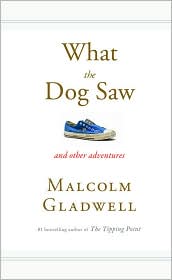
The difference between choking and panicking. The difference between thinking too much and thinking too little. The difference between thinking when you don’t need to and not thinking when you do need to.
The first sort of over-thinking interferes with your natural (or practiced) ability to do what you need to do, and tragically you don’t do what you ordinarily would be able to do. The second sort of under-thinking interferes with your ability to put your brain to work when you need it most, and tragically you never get the opportunity to do what your brain would have otherwise been able to help you choose.
Choking or panicking.
I almost never panic. I tend to remain calm in crisis, my thinking somehow becomes clearer, and my willingness to act decisively heightens. I’m not sure why that is. I’ll just be thankful.
Choking, though, is another story altogether. And here is where this chapter was so enlightening for me. When faced with an important interview, for example, I respond to the importance by trying harder. That response has always made (more…)
 It’s the last week of school for the kids. Nothing is normal.
My high school senior needs to be at school at a different time for a different purpose every day this week. My middle school senior—yes two graduations this year—still needs to be dropped off at the crack of dawn.
Am I supposed to be effective at work with all this stopping and starting, coming and going, switching between contexts and roles like a comic book super hero?
We all wear a variety of hats and assume a range of identities for the many roles we play at work, home, in our faith communities, and in our various social networks. But the willingness, agility and poise to make these sudden shifts are not always as simple as they seem to be for the comic book superheroes.
But is the real life superhero, the one for whom their instant, often sacrificial choices saved the day in the end? Or is the real life hero the person simply willing to make an instant, often sacrificial choice?
What validates the decisions we make in the midst of our complicated schedules, competing priorities, and unexpected demands, is not that the complicated becomes straightforward or the competing become ordered or the unexpected becomes regular. What validates our decisions is that we step to the plate and make them.
We don’t get to know ahead of time the outcome of all we choose. But such uncertainty doesn’t release us from still having to make the choice. Choose and choose again. And as soon as we see a choice not working out as we intended, adjust and choose again.
And so my schedule is undergoing its biannual massive shift around the school schedule. Life might be easier and my work might be more effective if such were not my situation. But my reality involves change, so I must face the change and adjust accordingly. Maybe not with the agility of a comic book superhero, but to the extent that I face the facts and deal with them… a hero nonetheless.
How will postponing this decision—in order to gather more information—really improve the decision you end up making?
 Marcus Goodyear solicits a story from me about an odd job I’ve had.
As ordinary as the job might normally have been, it became an extremely odd one the day I had to tell 10% of the firm that they were being laid off… effective immediately.
How it became my job to fulfill this grievous and thankless task, I’m not quite sure. I remember dreading it for days. I remember the look of shock on each person’s face. I remember every question about their future well-being, for which I had no answer.
Life and work collide in strange ways at times. Decisions ensuring the well-being of the whole result in harm for more than a few. Short term harm, we hope and trust. But we do not know.
Once the employment relationship is severed, other forms of relationship feel awkward… even inappropriate. Who am I to ask about their feelings, when I have just upended their world from my position of power and security?
It’s the difficult decisions that make us think most deeply; feel most intensely; and, hopefully, choose most courageously. We don’t get to track the future implications, consequences, and eventualities that came of that fateful day. I am left holding neither all the responsibility nor no responsibility for all the choices by all the people involved from that point on.
It’s life and work in real time. Often it involves the oddest jobs.