Karl Edwards presents Working Matters

Blog

  • Loving Monday: Super Bowl XLV Hangover

    loving_mondayIt was a great game. An even better game if you were a Green Bay fan.

    The markets were jammed all morning. The roads were cluttered immediately after.

    And those of us watching the were enjoying family, friends and food with an abandon we seldom get to experience on most weekends.

    It was a great game.

    Now it’s Monday and we’re back at work… Sort of.

    Not really.

    No, not at all.

    We’re either still celebrating or still depressed.

    We could suggest something inane to the winners like, “Don’t gloat.” Or we could recommend something preposterous to the losers like, “Be good sports.”

    The fact of the matter is those of us who were rooting for Green Bay are going to be strutting and celebrating and rubbing it in every way imaginable.

    And those who were short-sighted enough to root for Pittsburgh are going to be glum, whining, making excuses, and otherwise going out of their way to be very unpleasant today.

    So how to get back to work? (more…)

  • Quote to Consider: Self-Competition

    quote-to-consider“Put yourself in competition with yourself each day. Each morning look back upon your work of yesterday and then try to beat it.”

    Charles M. Sheldon

  • Karl Shares Six Words… #12


    Inner blush over the backwards compliment.


    Karl Edwards

  • Question of the Week #24

    How are others affected when you come under pressure?

    The Question of the Week is offered to increase awareness of one’s personal leadership practices and encourage experimentation with creative alternatives.
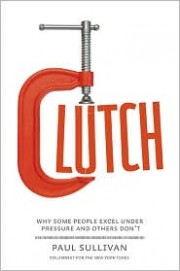
  • Thought Leaders Unpacked -> Clutch #4: Being Present

    thought-leaders“Being present” is a term of great personal interest.

    Of all my professional traits and skills, the one I would describe as both my greatest strength and my favorite is my capacity to “be present.”

    For purposes of our discussion of Sullivan’s Clutch we need to be careful, because he uses the word slightly differently than you are used to hearing from me.

    Sullivan uses the theatre and stage acting to illustrate the characteristics of “being present.” When you are “on” you need to fully embody the character you portray. When you are “off” you are able to switch back and be yourself.

    Being present means the experience of each is an all-or-nothing affair. You are not thinking about acting, how you want to come across, your facial expressions, or the intensity of your voice. You simply become the character.

    It’s the self-consciousness that undermines the ability to be fully present in the role. It’s the extra thinking about what others are thinking, whether or not you’re effective, and what adjustments you might need to make that pulls you out of the role and sabotages your full engagement.

    As we translate the acting illustration into our own pressure-filled, time sensitive, clutch moments that require our being fully present, the key question (more…)

  • Quote to Consider: Selfish or Unselfish?

    quote-to-consider“A woman means by unselfishness chiefly taking trouble for others; a man means not giving trouble to others. Thus each sex regards the other as basically selfish.”

    C.S. Lewis

  • Karl Shares Six Words… #11


    Skeptical about the training retreat bribe.


    Karl Edwards

  • Listen In -> Paying Attention to Attentiveness #4: Attentive to People

    People change. It’s the first rule of working with others.

    People change from moment to moment depending on mood, attitude, and circumstance. People change over time as a part of growing up, maturing and developing.

    Professionally, when people develop their skills and grow in their interests and capabilities their jobs, roles and responsibilities need to change as well.

    If we assume that the people who work for us do not change and we are not paying attention, we risk losing these valuable assets.

    Do people have a way to grow and mature in their roles where you work? Is anyone paying attention to how people are behaving, engaging and/or changing both in the short term and the longer term?

    If not you could be in for more than a few rude surprises!

    Listen in.

    Just now joining the conversation? Catch up on the entire series here.
  • Thought Leaders Unpacked -> Clutch #3: Adapting

    thought-leaders“Fight the fight, don’t fight the plan.”

    Even while the subject of this chapter is “adapting,” it is interesting to me that we return to “focus” as the underlying capability that makes even adapting possible.

    Focusing on the outcome allows the decision-maker to adjust plans along the way without getting bogged down by a fallacious loyalty to the original plans.

    In other words, the issue is not implementing the plans as currently laid out, but achieving the outcome those plans were intended to achieve.

    As I have written elsewhere, the leader needs both proactive decision-making skills and reactive skills. The poised tennis player is as ready for whatever might come at them as they are prepared to execute their own game plan.

    In “clutch” situations (where ordinary skills need to be applied in extraordinary circumstances), pressure, immediacy, danger, the unexpected, and complexity conspire to muddle and/or overwhelm our senses.

    If we are not prepared or willing to pay attention to those complicating, unfolding realities, then our ability to make appropriate and relevant decisions will suffer.

    If we have the luxury of time, then we can take a step back and evaluate the data and adjust accordingly. If time is not available, we need to be able to make (more…)

  • Loving Monday: Today You Must Growl

    loving_mondayEver get tired of being told to have a good attitude?

    You know it’s a good idea. But not today. You know attitude is important. But if one more person points that out to you, you’ll scream. Today you need to be in a bad mood. Today you can barely muster the energy to pick up a pencil. Today you must growl.

    The idea behind Loving Monday is not to superficially encourage us to put on a false front and pretend to be happier, more engaged, or more dedicated than we really are.

    On the other hand, when we are authentically tired, bored, or discouraged, the solution in not necessarily to act out those feelings all over everyone else.

    Are there any other options available than stuffing our emotions or giving in to them? Is there another way forward besides either wearing a mask at your own expense or spewing venom everywhere at everyone else’s expense?

    My thought is why not have some fun with it?

    Put a sign on your door that warns, “Grumpy soldier inside, enter at your own risk.” Or, “Tie a rope around your waist before descending into this pit of exhaustion, or you may get sucked down yourself.”

    Put a peace offering of treats near your desk as a humorous way to pre-pay for their forgiveness.

    By acknowledging that you’re in a bad space, you are letting people know ahead of time what they are about to experience! How different than being ambushed by someone’s bad mood! This frees them to be cautious and more sensitive to you.

    You also create a safe atmosphere for them to give the gift of encouragement, compassion, and/or support to you on a difficult day.

    In the long term, you’ll have a better chance of returning to a more engaged, enthusiastic attitude sooner if you are honest about how far away from that attitude you are right now.

    How do you deal with a bad start to the week when you’re tired, overwhelmed or down?

    On your side,

    – Karl Edwards

    Loving Monday is a weekly column designed to encourage us to step into our weeks with an intention to show up authentically, engage fully, and choose to make it a good week for ourselves. Explore past columns here.