Karl Edwards presents Working Matters

Author: Karl Edwards

  • People or Positions?

    Team PlanesWhen you look at someone on your team, do you see a person or their position?

    Are the unique characteristics of each employee the secret treasures that enhance or the troubling booby-traps that derail the effective performance of any given job description?

    Whether you get excited or annoyed when someone doesn’t fill their role as you defined it is an important clue to whether you believe the value comes from who is on the team, or from how you organize the team.

    It is not a simple either/or. Both are obviously significant. But in this age of professional empowerment, I’d err on the side of over-valuing my team members and letting their individual make-ups inform my organizational structure rather than the other way around.

    What do you think?

  • Navigating Leadership Fog

    Foggy NightShivering in the night fog, I find myself at the crossroads of decision and…

    I can’t bring myself to say the other word. Too many internal messages suggesting only the weak use it… or admit to it.

    Is the word, “fear?” Is it, “failure?” Or possibly, “doubt?”

    As many leaders do, I could choose to disconnect with myself. Plow ahead. Ignore this noise. Pretend what I want into existence.

    Or I could risk challenging the negative slant associated with this leadership unmentionable. I might choose to view it as a source of information. A potential clue to my way forward.

    Maybe curiosity is a more effective way through the fog than bluster. Could it be I’m looking for a better question more than a better answer?

    How do you navigate the fog?

  • Question of the Week

    What are two examples of when being flexible has served you well? Let you down? What leadership lessons can be garnered from each?

  • Out-of-Contact Doesn’t Have To Mean Out-of-Touch

    If your working rhythm thrives on extended periods of concentration and focus, you need to turn off the phone, close your email browser, quit all your messaging programs and close the door. No question about it. No question, that is, from your perspective.

    Continuing our discussion of this week’s podcast interview with software developer Jorge Rosas, from the perspective of others (clients, team members, supervisors) a complete communication cut-off can be quite disconcerting, if not problem-causing.

    What we want is for others to feel that we are accessible without having instant accessibility be the only form contact can take.

    All communication technologies include a means to notify others of how and when you will respond to their contact. I have found that as long as others hear:

    1. That their message is important to you, and
    2. A time frame for when you will get back to them, they will be satisfied.

    Now your communication “absence” serves both your working needs and others’ contact needs.

    Please don’t sacrifice your own effectiveness in order to stay in touch with others. Those are not mutually exclusive outcomes.

    How do you get things done while remaining accessible 24/7?

  • Listen In -> Swamped by the Communication Tidal Wave?

    How available should you be when communication access is 24/7?

    Who orders your day, when messages, calls, and emails continually interrupt?

    This week’s podcast interview with software developer Jorge Rosas is a great conversation about avoiding overwhelm without having to avoid people.

    Listen in.

    powered by ODEO

  • Question of the Week

    What constructive and acceptable means do your employees have to give you feedback about your leadership effectiveness?

  • Decision-Making Drives Report-Making

    The leader’s subject is neither data nor databases. The subject is decision-making.

    Continuing our discussion of this week’s podcast, what information will help you make the best decision in the most timely manner? Forget “perfect” decisions or being “right.” We don’t need ALL the information viewed from EVERY perspective in order to take action. Nor can we look to the data to make our decisions for us.

    Beware of information gluttony… it leads to decision paralysis.

    As a rule of thumb, then, no report should be either designed or generated for which the specific decision that you are trying to make cannot be identified. Think about it. Imagine what else you could be working on once unchained from database hell.

    Knowing what decision(s) you are trying to make will transform your relationships with your technical and administrative staffs as well. Instead of telling them what data or report you want to see, describe to them what decision you are trying to make. You will benefit from their expertise, and they will become more invested in their jobs.

    How do you avoid information overload?

    Have you listened to this week’s podcast interview with software developer Jorge Rosas yet? Click on the player in the right column. Or to hear the entire series so far, click here.

  • Resource Find! Concrete Goals Tracker

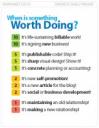
    Concrete Goals TrackerCheck out this Concrete Goals Tracker. David Seah has put together an easy-to-use tool for prioritizing and encouraging progress on the tasks most important to you.

    We’re always looking for ways to move away from overwhelmed busyness and move toward satisfying effectiveness. (Without, of course, needing to be divine first.) I like his priority categories for weighting the value of the various outcomes of our efforts.

    Here is a simple tool I am going to try right away. I thought you’d like to know.

    On your side,

    – Karl

  • Listen In -> Tech Changes #4: Leaders in Database Hell

    When does information become the leader’s enemy?

    When the sifting and sorting of data overwhelms the timely decisions that need to result.

    In this week’s podcast interview with software developer, Jorge Rosas, we look at database hell. Have you ever wondered how so many leaders get trapped in the quicksand of endless information and reports grasping for the perfect decision?

    Sound decision-making need not be such a perilous and overwhelming process.

    Listen in.

    powered by ODEO

  • Leadership Essentials

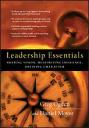
    Leadership EssentialsGreg Ogden. Intervarsity Press. Downers Grove, IL 2007.

    If I could trace the most significant influences in my personal and professional journey, Greg Ogden would be at the top of the list.

    And so I am especially excited that he is back with another formation tool, Leadership Essentials. Focused on developing emerging leaders in character, influence and vision, this new tool provides a simple structure for anyone wanting to build into the life of another.

    Instead of imposing an ideal (read unattainable) model of leadership on us, he lays out a process which engages our individual formation stories.

    The process provides structure and content for the personal and relational dynamics to take on a power all of their own. The benefits to each person’s leadership maturity increase directly and exponentially with the level of energy and love invested.

    Designed for those who share a Christian spirituality and find the Bible a vital resource for life direction, personal health and vocational reflection.

    If you find yourself resorting to the “over commit the good-hearted” method of leadership development, here is your ticket to change.

    It was precisely such a personal and dynamic investment that transformed my own life. I recommend you find another leader or two and accompany each other on this experience.