Karl Edwards presents Working Matters

Author: Karl Edwards

  • Listen In -> Leadership B#llsh&t in a Tough Economy #4: Fear & Panic on Main Street

    Hey, check it out… It’s the proverbial ostrich with its head in the sand. It just looks like an executive.

    Ah, the ostrich. As if by hiding its head, the rest of its body would no longer be exposed to danger. As if the danger that existed when looking, would somehow cease to exist when hiding. Such is the response of many leaders to our current economic crisis.

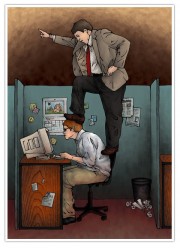
    bossInstead of calmly taking a step back, getting some perspective and investing in some expert assistance, these leaders function out of their fear and panic. They are afraid to spend any money, ask for help, or experiment with new ways of doing things.

    In this week’s show, Claudia and I discuss the upside-down and backwards thinking that takes place when leaders function out of fear and panic.

    Listen in.

  • Loving Monday: Especially When It’s a Day Off

    loving_mondayI somewhat violate the spirit of this column to be so excited about having a day off. After all, we’re trying to find work we love where we can apply ourselves with enthusiasm and love going to work each Monday morning.

    Having said that, though, “All work and no play…” You know how the saying goes. (And even if you don’t, you probably have no problem filling in the rest of that phrase.)

    Hence the importance of enjoying our holidays and other days off.

    Jumping for JoyFor those of us who feel guilty, we need to cut ourselves some slack! It’s not human to value work higher than all other aspects of life. The best part of a day off is the culture-wide permission to do something for yourself. Far from being selfish, enjoying a day off is the very best form of self-care.

    For those of us who are work-aholics, we need to expand our repertoires of validation, value and self-care. Leaving work at work is a helpful tool to force us to practice doing something else. Built right into the system, we have these holidays where so many around us are thrilled to be anywhere but the one place that we cannot imagine not being. The new forms of activity, relationship, and interest will serve our souls well.

    So what do you have planned for your day off today? Something personally rewarding, I hope.

  • Quote to Consider: Looking for a Virtue to Develop?

    quote-to-consider“Courage is the most important of all virtues, because without it we can’t practice any other virtue with consistency.”

    Maya Angelou

  • Question of the Week #5

    Who would benefit from you verbalizing your appreciation today?

    The Question of the Week is offered to increase awareness of one’s personal leadership practices and encourage experimentation with creative alternatives.
  • Listen In -> Leadership B#llsh&t in a Tough Economy #3: The Fine Art of Blaming

    When a leader lashses out, “Who’s responsible for this mess?”, they are not thinking that one of the most likely answers should be, “You are!”

    Instead of owning their participation and co-responsibility in any problem at hand, these leaders blame down the organizational chart (never up) and conveniently let themselves off the hook when business doesn’t go as intended.

    bossClaudia and I set our sites on this type of leadership bullshit on the show this week.

    A combination of blindness, insecurity and lack of self-awareness conspire to handicap many leaders when problems arise.

    Blaming seldom accomplishes anything constructive when addressing plans gone awry. Then why do so many of us resort to it?

    Listen in.

  • Thought Leaders Unpacked -> What the Dog Saw #5: John Rock’s Error

    thought-leadersScience, while purportedly the objective study of what is natural, is by its very structure anything but.

    Yosemite Falls plummets 2,420 feet in a series of seven parts. What you observe about Yosemite Falls depends entirely on whether you are standing at the bottom, the top, near the middle cascades or on the other side of the valley.
    What-the-Dog-Saw

    That these various observations are different from each other, (for example, from the bottom you would not know that any middle cascades existed), would not make any one of them inaccurate. But if you based your climbing plans on that one perspective—however accurate it might be—you would draw incorrect conclusions about how best to reach the top.

    That science takes its observations from particular and possibly limited perspectives, means that its findings don’t form the necessarily adequate basis for the conclusions we draw and/or the subsequent courses of action we choose.

    Hence the fascinating story that looking back with 20/20 hindsight at the conclusions about whether the birth control pill was a natural or unnatural contribution makes.

    Viewed from the “bottom of the falls,” as a means to prevent ovulation (the natural process being observed from this perspective), the birth control pill has been opposed by the Catholic church, in Gladstone’s example, as unnatural.

    But if upon its introduction the pill was viewed from the “top of the falls,” so to speak, as a means to help women’s bodies menstruate on a more “natural” cycle, i.e. less frequently, there may have been no opposition. Instead of opposing something unnatural, quite possible the Church might have been quite willing to support something that supported the health and well-being of women everywhere.

    Same pill. All science. But limited information seen from different perspectives led to different conclusions. So much for the objectivity of science. All we can do is wonder what might have been if the information was presented the other way around.

    What was your main take-away from this chapter? Where might you be basing decisions on a limited perspective?

    Each week I post my reflections from one chapter of What the Dog Saw by Malcolm Gladwell. If you are just joining the discussion now, welcome! Catch up on the entire series here.

  • Distinguishing Between Voices

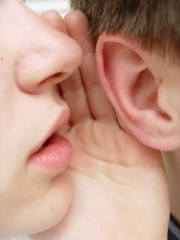
    whisperingFriend or foe?

    Sometimes it’s not so easy to tell. When it comes to voices, some of the most damaging words we hear come from those closest to us. And it isn’t uncommon, on the other hand, for the harsh criticism of those opposed to us to be the most helpful of all.

    Yes, it’s important to distinguish between friend and foe. The acceptance, loyalty, and faithfulness of friends is an irreplaceable foundation for survival, much less success.

    Also important, though, is to be able to distinguish between voices. Even the well-intended input of those most committed to our well-being may be misplaced. Just as the substance underlying the input of our opponents cannot be dismissed or disregarded simply because they have ulterior motives.

    How do you listen for the nuggets of substance hidden within the insecure and harsh attacks of those who do not understand how to wield power?

    How do you hold your ground against the misplaced kindness of those who, while intending good for you, are in fact diminishing, second-guessing and/or undermining you?

    It’s not as black-and-white as trusting the nice people and avoiding the mean people, is it?!

  • Listen In -> Leadership B#llsh&t in a Tough Economy #2: The HR Cop-Out

    Instead of explaining their difficult decisions themselves, these leaders hide in their offices and delegate one of their most important responsibilities to the Human Resources department.

    It’s as if having other people on the team is an annoying necessity, which these leaders would gladly forego if only they had enough arms and legs to do everything themselves.

    boss

    Far from being considered multi-faceted assets to be appreciated and valued, employees are expensive resources from whose passions, ambitions, and preferences the responsible leader must protect the company.

    In this week’s audio conversation, Claudia and I explore what we are terming, “The HR Cop-Out.”

    How do you treat those who work for you? As assets full of untapped potential or expenses full of hidden dangers?

    How might you be hiding behind your Human Resources department?

    Listen in.

  • Loving Monday: February 1st… Let’s Get Started!

    loving_mondayFebruary 1st is the real beginning of the year.

    January 1st is the calendar start of the year. February 1st is the practical beginning of the year.

    The holiday festivities and hangovers are finally behind us. Our idealistic New Year’s Resolutions are a distant memory.

    Desk-CalendarSome of us are startled by how February was able to sneak up on us. “Oh <insert your favorite expletive here>!” we blast. “Where did January go?”

    Instead of condemning ourselves for letting an entire month slip by, I suggest simply designating February the official beginning of the “practical year.”

    Oh yes, some of you are well into your year, and you are to be congratulated. (However begrudgingly.) This reflection is not intended for you.

    For many of us, though, the beginning of February marks an opportunity to turn the “I shoulds” and “I wants” of January into the concrete “I wills” of February.

    February 1st offers the opportunity to make and own a new decision… the decision to turn our ideas into action. Our goals into plans. Our to-do lists into accomplishments. Our “I’ll start it tomorrow” into “I’ll finish it today.”

    It’s the beginning of a new month. It’s also Monday. The perfect combination to make just such an adjustment. Given that February is the “practical” beginning of the year, let’s get started!

    On your side,

    – Karl Edwards

  • Listen In -> Leadership B#llsh&t in a Tough Economy #1: Brainless Downsizing

    Brainless downsizing. Instead of creatively rethinking how to do business, brainless downsizing involves simply firing 20-30% of your staff, have the remaining staff do that work on top of their own, and then waiting until the economy recovers.

    bossAn exaggeration? I’m afraid not.

    When the evidence (the worst economic crisis in 50 years) that our business practices are seriously and deeply flawed, this knee-jerk response amounts to sticking our heads in the sand and hoping everything is will somehow turn out okay whenever it is that we muster the courage to peek out again.

    If any time called for a thoughtful rethink of business practices it is now. But our business leaders are failing us.

    Claudia and I begin our discussion of Leadership Bullshit with a conversation about this naive and lazy, if not outright negligent, response.

    What about you? How are you thinking critically and creatively about how your business is structured?

    Listen in.