Karl Edwards presents Working Matters

Author: Karl Edwards

  • Routine as a Resource for the Imagination

    Could routine be a resource for the imagination?

    It’s a lot of work to pay attention to all things all of the time. In fact, there may be no room left over for anything else. Anything new. No room for the imagination. No free space for the unexpected solution or unanticipated brainstorm to emerge.

    Routine allows certain core components of your life to fall into the background without falling off the map by deciding at one point in time where and when you will take care of those components all of the time.

    By routinizing certain things you don’t have to pay so much attention to them anymore. Your mind is freed up. Freed up for other things. Freed up for new things.

    If you tend to resent your routines, this is your chance to turn it around and make them your friends. View them as on your side instead of against you.

    What other regular responsibility could you remove from your radar screen by putting it on your map? You’d have a shorter to-do list if you had a longer regularly-done list.

    Imagine where you could go with all the additional space you just created for your imagination!

    On your side,

    – Karl

  • Quote to Consider: Practice Makes Perfect

    quote-to-consider“We are what we repeatedly do.
    Excellence, therefore, is not an act but a habit.”

    Aristotle

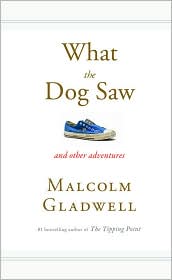
  • Thought Leaders Unpacked -> What the Dog Saw #10: Something Borrowed

    thought-leadersWhen is stealing not stealing? What belongs to everyone even though a particular someone is the creator?

    For those of us who trade in words, believe in the power of words, and watch lives change on the turn of a phrase, it’s an important question.

    What-the-Dog-SawThis week’s chapter out of What the Dog Saw, wasn’t so much a mind-bending eye-opener for me as it was a thoughtful reflection on creativity, the propagation of ideas, and ownership rights for those who write.

    Continuing to stir in my mind is the inherent conflict between creating/owning an idea, which seeks to exclude everyone else; and propagating/influencing others with your ideas, which seeks to include everyone else.

    We both want our ideas to take hold on as wide a basis a possible, and we want to benefit ourselves from the recognition and revenue that their value earns.

    Keep it to ourselves where we keep control, or get it out there where we lose control?

    Copyright  laws are intended to give us a way to hold both extremes in tension. With the explosion of information and content on the internet, creativity, ownership and the value of content is getting more and more difficult to distinguish.

    To which end of the spectrum do you lean? Tightly control your content or disseminate it widely? What was you main take-away from this chapter?

    Each Friday I post my reflections from one chapter of What the Dog Saw by Malcolm Gladwell. If you are just joining the discussion now, welcome! Catch up on the entire series here.
  • Question of the Week #11

    What might you be doing that almost invites others to treat you the way they do?

    The Question of the Week is offered to increase awareness of one’s personal leadership practices and encourage experimentation with creative alternatives.
  • Listen In -> Technology… When Less is More #1: Slave To Your Tools?

    Do you work for your tools or do they work for you?

    Imagine a hammer and a saw telling a carpenter how to build a house. Silly image?

    Not if the tools involved are your workplace technology.

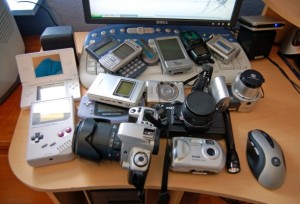
    More often than not, our computers, our telephones, our word processors and databases are dictating the terms by which we can access their benefits.

    We become unwitting partners in this unfortunate role reversal by shopping for the latest, fastest, most versatile, most interconnected devices available. As if having the most features meant having the best tool.

    Not so.

    Join me and our special guest, Jorge Rosas, in a new series on Technology… When Less is More. Jorge is a passionate early adopter of all things tech, programmer, webmaster, musician, and producer of the Working Matters podcast.

    We dare to suggest that you are the carpenter, and it is the house that you want to build that determines what tools will best serve you and not the other way around.

    Technology… When Less is More
    Week #1: Slave to Your Tools?
    Week #2: Getting Work Done
    Week #3: Getting Organized
    Week #4: Communicating with Purpose
    Week #5: Collaborating Effectively

    Listen in.

  • Loving Tuesday: Where Did Monday Go?!

    loving_mondayWhere did Monday go?

    It was here a minute ago.

    Or so I thought. Next thing I know my calendar is telling me it’s Tuesday. What happened?

    Do you ever have weeks like that? You have the best of intentions. The plans are in place. You are going to hit the ground running. You are going in focused, intent, and prepared.

    And then reality hits.

    A scheduled delivery is missing. An important deadline gets moved up. An important client wants an impromptu meeting asap. Two team members call in sick.

    By the time you look up, the day is over and your beautiful plans are in shatters.

    It would not be uncommon to be thrown for a loop. Our focus turned to confusion. Our intent undermined by discouragement. Our preparations tossed into the air like a deck of playing cards.

    Or we can adjust.

    Key, though, is not letting the unexpected sabotage us completely.

    I recommend beginning by giving yourself permission to go outside and scream your heart out or pound your fist into the landscaping. Pretending you’re not frustrated when you clearly are is patently unproductive.

    Express your frustration (safely, please). Get it out. But then… shake it off.

    While probably not possible to merely start over as if it were Monday when it is now Tuesday, we can adjust.

    Determine to adjust.

    Take a fresh look at your focus, your intent and your plans. How can they benefit from what happened yesterday?

    It’s Tuesday now. Gotta love it. Time to go for it.

    What’s your alternative?

  • Quote to Consider: Always Learning

    quote-to-consider“Employ your time in improving yourself by other men’s writings so that you shall come easily by what others have labored hard for.”

    Socrates

  • Thought Leaders Unpacked -> What the Dog Saw #9: The Picture Problem

    thought-leadersDo my eyes deceive me? Can my eyes deceive me? Of course not, it’s right there in the picture!

    The observation that we often put too much faith in pictures is fascinating. We assume seeing more and more clearly is always better.

    What-the-Dog-Saw

    We trust our eyes. We trust our eyes more than our other senses. We trust our eyes to the extent that we are willing to suspend our brain’s ability to discriminate and discern.

    In this week’s chapter, “The Picture Problem,” Gladwell raises this interesting conundrum with his looks at mammography and satellite imagery.

    This issue has to do with context. Interpreting a picture out of context, no matter how clear the image, is a risky and uncertain effort. Is the human shadow falling across your picture there because the sun in behind the photographer’s back or because a predator is sneaking up on you? The picture of the shadow can’t answer the question.

    What’s interesting about this chapter is that our tendency is actually the opposite. If we have a clear picture, our confidence in our interpretation increases when it might need to decrease. Instead of asking more questions we ask less, shutting down vital inquiry when the conclusion seems so obvious because we saw a single thing clearly.

    Pictures have value. Great value. But beware if they result in a willingness to think less instead of more, to jump to conclusions earlier than later, or to make the complex seem simple.

    Where do you find yourself prematurely jumping to conclusions merely because you saw something? What was your main take-away from this chapter?

    Each week I post my reflections from one chapter of What the Dog Saw by Malcolm Gladwell. If you are just joining the discussion now, welcome! Catch up on the entire series here.
  • Question of the Week #10

    How clearly do you articulate the outcomes you expect your team to accomplish?

    The Question of the Week is offered to increase awareness of one’s personal leadership practices and encourage experimentation with creative alternatives.
  • Loving Monday: Threat or Promise?

    loving_mondayHurtling westbound on the Santa Monica Freeway my daughter and I had an unexpected view fill our horizon this morning. Storm clouds and a rainbow.

    Living in sunny Southern California, rain storms are always half blessing half nuisance events that you usually can count on your fingers.

    To look out over the ocean and see both storm clouds and a rainbow was an unusual treat.

    Threat and promise at the same moment. Would the storm make its way inland and vent its pent up fury on us? Or was the rainbow a harbinger of what would become the sun’s ultimate triumph?

    Perception is a powerful tool. Whether we see the threat or promise in any given circumstance depends largely on the eyes we have chosen to wear that day.

    What sort of eyes did you put on this morning?

    Monday is the perfect opportunity to be as intentional about what eyes we will look through as we are about what clothes we will wear.

    Threat or promise? Danger or opportunity? Fear or hope? Not all circumstances, of course, fall so neatly at one end of the spectrum or the other. Most circumstances are ambiguous, or neutral, or a raw mix of complexities.

    We run into trouble when we unthinkingly assume that we interpret correctly, when, in fact, we are merely looking through either rose-colored or gloom-shrouded glasses.

    The danger runs both directions. We can be needlessly cautious, seeing danger around every corner, and, as a result, miss out on key opportunities. We can also be naively hopeful, and wait patiently for an opportunity that will never materialize, in spite of what we’ve been promised.

    This Monday, take an intentional and conscious look at what glasses you’ve put on. Through what interpretive lens will you be experiencing the day? What adjustments might be wise to make? What other “glasses” can you try on?

    On your side,

    – Karl