
Karl Edwards presents Working Matters

Tag: creativity

  • Sustainable Excellence at Milken Institute Forum

    The Milken Institute Forum last night was excellent. Aron Cramer and Zachary Karabell were there discussing their new book, Sustainable Excellence: The Future of Business in a Fast-Changing World.
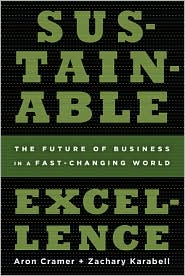
    Theirs was not a morality play. That is, they did not discuss sustainability as a moral precept on behalf the planet’s survival, humanity’s future and the kumbaya warmth of being good and doing better. So many activists rely on a liberal pseudo-religious elitism that manipulates conformity to one’s agenda based on threatening to label people something they would find horrible like, “ignorant,” “narrow-minded,” or “greedy.”

    Cramer and Karabell discussed sustainability from a business perspective.

    It makes business sense to integrate issues of sustainability into the heart of one’s business strategy. Good stewardship of one’s business goes hand in hand with good stewardship of our resources.

    While both authors were morally committed to sustainability, they did a good job of describing their research into a phenomenon of the last several years wherein leadership, creativity, and innovation in sustainability is coming from the business world, not the non-profit activist organizations or governments. They also described how they believe business is best positioned to both design and act upon meaningful change in an effective and timely manner.

    I look forward to this read. I have long believed that only the business context has the necessary combination of systemic financial motivations, human and capital resources, and decision-making flexibility to provide the sort of creative leadership necessary to give shape and form to the emerging future.

    Where and to whom do you look for meaningful change?

    On your side,

    – Karl Edwards

  • Thought Leaders Unpacked -> What the Dog Saw #10: Something Borrowed

    thought-leadersWhen is stealing not stealing? What belongs to everyone even though a particular someone is the creator?
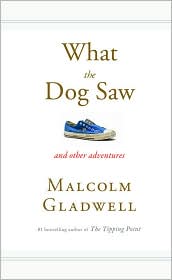


    For those of us who trade in words, believe in the power of words, and watch lives change on the turn of a phrase, it’s an important question.

    What-the-Dog-SawThis week’s chapter out of What the Dog Saw, wasn’t so much a mind-bending eye-opener for me as it was a thoughtful reflection on creativity, the propagation of ideas, and ownership rights for those who write.

    Continuing to stir in my mind is the inherent conflict between creating/owning an idea, which seeks to exclude everyone else; and propagating/influencing others with your ideas, which seeks to include everyone else.

    We both want our ideas to take hold on as wide a basis a possible, and we want to benefit ourselves from the recognition and revenue that their value earns.

    Keep it to ourselves where we keep control, or get it out there where we lose control?

    Copyright  laws are intended to give us a way to hold both extremes in tension. With the explosion of information and content on the internet, creativity, ownership and the value of content is getting more and more difficult to distinguish.

    To which end of the spectrum do you lean? Tightly control your content or disseminate it widely? What was you main take-away from this chapter?

    Each Friday I post my reflections from one chapter of What the Dog Saw by Malcolm Gladwell. If you are just joining the discussion now, welcome! Catch up on the entire series here.
  • Question of the Week

    How do you authorize and equip employees to be creative in their problem solving, product development, and approaches to their work?

    The Question of the Week is offered to increase awareness of one’s personal leadership practices and encourage experimentation with creative alternatives.
  • Quote to Consider: Leaders Are About Everyone Else

    Great leaders are obsessed with recognizing, resourcing and advancing the ideas of others in the organization, not their own.

    How do you go about…

    • Recognizing
    • Resourcing
    • Advancing

    the ideas of others?

    Pick one and let us know what you do.

    If you feel stuck in a “control others to enact your own ideas” model of leadership, let’s talk. There’s an exhilarating world of enterprising teams, engaged employees and explosive creativity waiting to be unleashed in your firm.
  • Boring Job Is Creativity and Motivational Challenge

    Surviving a boring job (when leaving isn’t an option) is a creativity and a motivational challenge.

    It’s a creativity challenge, because nothing in the job itself is stimulating, challenging or engaging you. You need a way to see what is currently not visible. You need a way to think outside the box.

    How can you look in unexpected places and to unexpected people for venues, connections and opportunities that aren’t currently making themselves known?

    It’s a motivational challenge, because once bored, energy levels plummet and inertia sets in. It can feel like trying to jump over a hurdle without the benefit of a running start. What you need are reasons and ways to get a running start.

    What in your life is important enough to you to rouse yourself for? Are other relationships starting to suffer? Energy not there for favorite hobbies or activities?

    Sparking creativity and mustering motivation when bored to death can seem impossible. But what is your alternative? Give into the boredom and let what little life is left in you get seep out?

    What works for you? What do you do to jump start either your creative juices or your motivation?

    Check out the entire discussion on Toughing Out a Tough Job
  • Question of the Week

    What unanticipated new ideas are being birthed as your team goes about their work?