
Karl Edwards presents Working Matters

Tag: character

  • Thought Leaders Unpacked -> Integrity #3: Integrity Itself

    thought-leadersRunning on all cylinders.

    What a great image. Fully engaged. Functioning as intended. No component sitting idle or causing problems.

    So many of our images of success are lifeless, driven, stressed, remote models of the meta-competent hero who is somehow better at everything than everyone else.

    Running on all cylinders is attractive, alive, and energetic. It is not necessarily connected with being in charge, on top, winning over others, or achieving celebrity status
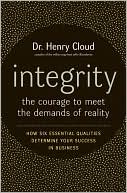
    Integrity, by Henry CloudWhat would it be like to be playing at the top of my game? What if that involved being more comfortable in my own skin? Instead of putting on the professional persona of what “everyone” thinks the successful leader looks like, I simply function out of a healthier, sounder, more fully developed, balanced and grounded sense of who I genuinely am myself.

    Very attractive.

    My primary take-away from this chapter is having my own desire to improve and learn aroused. Instead of feeling that character and integrity are lofty ideals that are out of my reach, I come away drawn to change and intrigued by the potential for effective performance emerging from a deeper, sounder place within myself.

    The challenge with any professional development process is to feel encouraged and energized by the potential for improvement instead of discouraged or defeated by the distance yet to travel.

    Where are you on the spectrum from feeling motivated and encouraged to improve yourself at one end to defeated and discouraged at the other end? What was your main take-away from this chapter?

    – Karl
    Each Friday I post my reflections from one chapter of Integrity: The Courage to Meet the Demands of Reality by Henry Cloud. If you are just joining the discussion now, welcome! Catch up on the entire series here.
  • Thought Leaders Unpacked -> Integrity #2: Character, Integrity and Reality

    thought-leadersImages don’t get any better than this. The wake a boat leaves as it plows through the water.

    We also leave a wake as we plow through our day at work. It’s an interesting fact to consider.

    Integrity, by Henry CloudWith this simple analogy Cloud equips us with a non-judgmental tool for thinking about our impact on others. I don’t know about you, but when I sense the “blame game” in the vicinity, my defenses go up and I shift out of learning mode and into self-protection mode.

    But that I leave a wake is just a fact. It raises the question that Cloud asks us to consider, which is “What sort of wake to I leave?” A question I am free to consider and learn from. Any learning or adjusting I do as a result of my reflection is my own. With this simple question I am empowered to coach myself.

    My second main take-away from this chapter is that the demands of reality determine the requirements of the design. By defining character as my ability to meet the demands of reality, Cloud switches up the motivational equation for me.

    I already want to be able to meet the demands of reality. No one has to convince me. There are no moral constructs someone else is asking me to adopt. I am by my own desire to fully engage with my own life predisposed to what might help prepare me for the journey ahead.

    When I hear that the depth, breadth, and substance of my character are key to meeting the demands of reality, I want to invest in the development, strengthening and exercise of my character.

    The pressures of a private consulting practice, a family experiencing a variety of transitions and a desire to develop a plethora of ideas for transforming the workplace in America, often leave me dizzy from spinning in so many directions. I want to engage of each of these fronts. I want to make the next set of choices required by each, and then the next set and the next.

    The quality and effectiveness of engagement will arise from within… from what sort of character I have… or don’t. Yet.

    What was your main take-away from Chapter 2?

    Each Friday I post my reflections from one chapter of Integrity: The Courage to Meet the Demands of Reality by Henry Cloud. If you are just joining the discussion now, welcome! Catch up on the entire series here.
  • Thought Leaders Unpacked -> Integrity #1: The Three Essentials

    thought-leadersCompetence. Alliances. Character. The “three essentials.”

    While affirming the crucial importance of the first two characteristics of successful people, Henry Cloud introduces his book, Integrity: The Courage to Meet the Demands of Reality, with the spotlight on character.

    Integrity, by Henry CloudThe significance of this insight to these times of economic turmoil is huge. I would suggest that it was competent, well-connected professionals who lacked the third essential, character, who got us into this mess. People who could carry out their functions and leverage the systems with spectacular agility, but who did not know for what or for whom (other than themselves) or to what end they worked so hard.

    The timing for such a book as this could not be more significant. The value of such a discussion (more…)

  • The Gift of Work -> Chapter 6: Training as a Disciple of Christ

    thought-leadersPrepare and tend the soil.

    The metaphor cuts across my tendency to complicate and over think my views on work and faith.

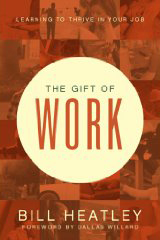
    gift-of-work1My best bet for contributing to a healthy and bountiful crop is to prepare and tend the soil. My best bet for contributing to a meaningful and productive workplace is to become a certain sort of person. Instead of attempting to control the production process (which by definition in this metaphor is out of my control), I should focus on becoming the sort of character who can participate well whatever the process. Becoming a certain kind of person is in my control.

    What sort of person? A learning person. An engaged person. An attentive person. A healthy person. A grounded person. A God-connected person. A maturing person.

    Instead of asking what sort of decisions does God want me to make, I’d be better off asking (more…)