

Karl Edwards presents Working Matters

Category: Working Matters

  • In~Verse: Brueggemann’s Sustained by Angels

    Maybe we have not thought much about Satan,
    either in glib self-regard,
    or in rejection of such silly speculation,
    or in a way more urbane and benign
    than to imagine such a character.

    Except that as we begin our strenuous Lenten trek,
    we are aware
    that the power of resistance is at work in our midst
    that the force of negation is alive and well,
    that our best will is contradicted
    by stuff that surges
    against our best selves,
    that we, even we, are prone to our
    several addictions that render us helpless.

    So we pray in the Lenten season,
    give us primitive freedom to
    take full stock of Satan and the power of
    evil still among us in our prosperity and
    wealth and sophistication,
    and give us primitive openness
    to your ministering angels
    who are present with care and gentleness
    and great nourishment.

    In the Lenten season, give us freedom
    to reconfigure our lives
    as a testing field between the force of Satan
    and the food of your angels.

    Enter our lives with power for newness,
    deliver us from a sense of naive mastery,
    and give us honest contact with our vulnerability.

    Enter the deep places of our life and claim us for your purposes.
    We would be more free than we are,
    more bold than we dare,
    more obedient than we choose.

    We wait for the gift of your large gift of life
    that will wrench us away from death
    to the miracle of Easter joy.

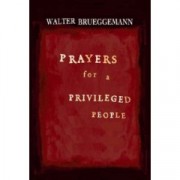
    PrayersWalter Brueggemann
    Prayers for a Privileged People
    Abingdon Press, Nashville, 2008
    (pp. 29, 30)

    (Good even if it’s not Lent.)
  • Deciding to Make Your Next Choice

    ChoicesDecision-making requires choices. But choices do not always suggest what decision needs to be made.

    We would like our options to lay themselves out neat and tidy as easy-to-compare alternatives where the pros and cons of each translated into a prioritized ranking with the clear winner presenting itself plainly.

    No such luck!

    Instead, a myriad of unrelated issues collide into incoherent and often contradictory alternatives from which every gain involves its share of setbacks.

    My suggestion is to give up trying to make the “right” choice and settle on making the next choice. The next choice can be made over and over again, with appropriate adjustments for learning from previous choices.

    Trying to discern the “right” or “correct” choice can quickly absorb a disproportionate amount of time and energy. The “next” choice can be incremental, experimental, and partial. You will be in motion making your “next” choice, which is far more productive than sitting still while searching for the “right” choice.

    Do you have trouble making choices when no clear alternative presents itself? I’d love to hear a story or two about a recent decision-making quandary you faced.

    On your side,

    – Karl

  • Courage to Face the Day

    Face the DaySome mornings it requires nothing less than courage to face the day.

    Our stresses are many. Pressure comes from unexpected quarters. Projects are not turning out the way we planned. Sabotage seems more common than support. The political winds shift against us. Money dries up and options seem scarce. No one answers when you shout, “Where’s the love?!”

    Some mornings we simply need to be our own best friend. Say to ourselves,

    “Hey friend. I believe in you. As daunting as the day threatens to be, it will be worse for all involved if you don’t show up.

    No one else can give the contribution that is yours to bring today. No one.

    I know you’re weary. I know you feel assaulted on multiple fronts. I know it’s not fair. But I know you. And you don’t give up. You can’t stop caring. You won’t allow those around you to settle for less than best, and you won’t allow yourself to in this case either.

    Someone, maybe even God, has given you to this day as much if not more than given this day to you. It’s time now to face it and engage it. I believe in you.”

    What do you say to yourself to muster the courage to face the day?

  • Want a More Inventive Workplace Culture?

    Build Invention into Your WorkplaceWe talk a lot about designing your own workplace culture.

    But where are the touch points where we can actually make a difference?

    Ellen Weber has an interesting post this morning on how to inject an inventive edge in your workplace culture.

    Jump over and check out Build Invention into Your Workplace.

    On your side,

    – Karl

  • Why Would I Trust You With My Future?

    We are asserting that your firm’s success might be deeply connected to the success of your individual team members. (Be sure to catch up on the entire series Influencing Others.)

    Imagine how much more committed to the company’s goals employees would be if they believed you were committed to helping them achieve their career goals. They’d go all-out for you.

    Let’s say you rewrote your job description to include a responsibility to help your key players reach their professional goals whether or not those goals involved staying in your employ. What a great leader you’d be, right?! You wouldn’t know what to do with all the loyalty and energy and dedication that would result.

    BUT

    And this is a big but.

    It’s not really safe to tell you
    my professional aspirations, is it?

    If you knew I was working my way toward a transfer to another department, a credential for another field, a transition to another part of the country, or a promotion that would complicate your own plans, would you really choose to use that knowledge for my benefit? Or would your commitment to yourself and the firm take over and ultimately use the information against me?

    Even if you could resist the temptation, is there any reason for me to trust you? After all, you have the power in the relationship. The risk of revealing my career aspirations is entirely mine.

    Think about it.

    What could you do to build trust and create a safe environment for everyone to celebrate and support each others’ career trajectories regardless whether they involve each other?

    Wouldn’t three to five years of over-the-top engagement be better than ten to fifteen years of squeezing out the-bare-minimum?

  • Listen In -> Influencing Others #4: Organizing for Trust and Results

    We close out our podcast series on Influencing Others with a conversation about organizing in such a way that builds trust and results.

    If you were to write out your company goals in one column and the professional goals of your team members in another, how much overlap or dove-tailing would you find?

    Could there be significant clues about the direction where your company might find the most success in the directions your key players are most passionate about?

    Listen in.

    powered by ODEO

  • President McCain or Obama? Insist on Substance over Rhetoric

    John McCainBarack ObamaWhen candidates say what they have to say in order to get elected, how can you know who you’re really voting for?

    How about insisting on substantive answers to meaningful questions? Check out this list of 15 questions developed by the Center for Public Leadership and the Ken Blanchard Companies. Link to this post or directly to the Center’s blog post and get your friends and associates insisting on substance over rhetoric.

    Who are You Really?

    1. Values: What are your five core values and how do they shape how you lead?

    2. Attributes & Competencies: What are the attributes and competencies you value most in yourself that will serve you well in the White House?

    3. Weaknesses & Mistakes: Recent American history has many examples of leaders whose weaknesses brought them down. What are your tendencies that could cause your presidency to fail?

    4. People I Have Learned From: What historical figure has exercised leadership in a way that you aspire to? What were their strengths? Tell us about a situation that tested their leadership.

    5. Multicultural Experience/World View: What experiences have helped you deeply understand the mindset and values of other cultures?

    Who Will Be at The Table With You?

    6. Building a Team: Tell us about a high performing team that you’ve built. What made it high-performing?

    7. Coalition Building: Can you share some examples of when you were a catalyst who brought groups with polarized opinions together so that all voices were at the table?

    8. Increasing Participation: The internet and technology have flattened the political playing field, allowing for more participation and collective decision making. How will you create a more participatory democracy and give people the opportunity to influence decision making?

    9. Increasing Participation: Young people have engaged in this election in greater numbers than ever before. Please give us some examples of how you have listened and responded to the next generation in your campaign. How will you keep the next generation engaged?

    How Will You Decide?

    10. Decision Making Style: The president’s role requires decisiveness. Please share some examples of your ability and willingness to be decisive. Can you tell us about a time when a lack of decisiveness got you into trouble. In retrospect, what would you have done differently?

    11. Judgment: Tell us about a time when your judgment was tested in crisis. What do you want us to appreciate about your judgment?

    How Will You Act? And What Will You Act On?

    12. Leading Change: Can you give us an example of how you have overcome resistance to bring about a needed change?

    13. Innovative Thinking: How will you create an environment for innovation within your leadership team?

    14. Building the Confidence of Others: What are the first few things you’ll do to raise confidence at home and abroad?

    15. Priorities Indicative of Values: The USA ranks 1st in incarceration and 18th in high school graduation. What leadership skills and values do you bring to the challenge of reversing these numbers? Can you point to three things in your past that will help us understand that you care about this challenge?
  • Entitlement Mentality is a Poor Excuse

    Some worry that organizing around the team will foster an entitlement mentality among employees that will backfire on the well-meaning leader. Empowerment will lead to unrealistic expectations that in turn will force the leader to buckle to ever-increasing demands that will eventually break the organization.

    I’m sorry, but I’m not sympathetic to this line of thinking. It’s what I call a leadership excuse. And, of course, since our hallmark is No Excuses Leadershipâ„¢, we don’t go there.

    There are unexpected complications, extenuating circumstances, and disingenuous employees everywhere. These are the leadership realities we face and never form the basis of a rationale for poor results, weak decisions or ineffective policies.

    Back to entitlement. How employees respond to radical empowerment varies. Hence the tight link with accountability for results.

    To forfeit the potential of an empowered, fully engaged team in order to avoid the occasional risk of destructive entitlement mentalities is like giving up the benefits of a regular exercise routine because there’s a risk of injury. The risk is real, sure, but the solution erased your only chance for success. What good is that?

    Where do your solutions remove more than the presenting problem and inadvertently undermine what you need to make progress?

    Catch up on the entire Influencing Others series here.

  • Listen In -> Influencing Others #3: Clarity and Commitment to the Team

    Does it matter who’s in the chair?

    In this week’s podcast, we discuss the hard fact that working with people requires knowing who those people are. Who they are and what they bring to the table. Their personalities, their strengths, their skills, their working styles and their professional passions to name a few.

    Most leaders use organizational charts and job descriptions as a basis for hiring. What if the job descriptions and organizational charts flowed from the make-up of the people chosen to be on the team?

    Think about it, and then listen in.

    powered by ODEO

  • 3 Keys to Securing Employee Buy-In

    If we’re going to hold people accountable to achieving the mission of the organization, they not only have to know what it is, they need to buy in. Unless their hearts are invested as much (if not more) than their heads and hands, we are squandering our most valuable resource.

    Employee buy-in cannot be commanded, coerced or manipulated. What options then does the leader have for winning the hearts of the team for the mission of the organization? In this weeks podcast, we discuss three keys to securing employee buy-in:

    1. Begin well by hiring well. Remember you’re hiring a person not a job description. These initial interviews are your chance to discuss the mission of the organization and gauge understanding, interest and passion. Don’t make the mistake of only looking for skill competence when hiring.
    2. Provide on-going perspective by continually articulating how an employee’s individual part fits into the organization’s whole. People can get absorbed in the details of their particular role and lose sight of its significance to the organization’s mission.
    3. Verbalize appreciation. Instead of a general word of thanks, try being more specific. “Thank you for (what was done in specific and concrete detail) because it (it made this beneficial and measurable difference).” What how people come alive and go the extra mile when they feel their contribution has been recognized and appreciated.

    You cannot purchase employee buy-in. You have to win it. Earn it. Nurture and sustain it.

    How do you go about winning the hearts of your team to your organization’s mission?