
Karl Edwards presents Working Matters

Tag: Hiring

  • Listen In -> Employees… What Are They Good For? #2: The Problem of Finding Good Employees

    We’ve all received them. The polite email thanking us for our job application, but with regrets declining the opportunity to meet us in person.

    The computer, it seems, decided that since the job requisition form specified a minimum of five years of experience and we only had four years of experience, that there would be no reason to explore our qualifications further. 

    Can such talent search methods be serving us well? Could it be that our standardized job descriptions, computerized key word searches, and the use of unformatted text-only resumes are eliminating valuable candidates before we even have a chance to meet them?

    In this week’s podcast discussion, Claudia and I look at the problem of finding good employees.

    The challenge in a tough economy—when we’re receiving possibly hundreds of applications for any given opening—is how to make sure we’re meeting the unique, real-life people who would be the best fit for our team.

    The options at either end of the spectrum aren’t practical. We cannot personally interview every single applicant.  The computerized culling cannot take into account important intangibles like industriousness, team spirit, creativity, working styles, or communication abilities.

    How do we make sure we’re meeting and hiring the best people available?

    Listen in.

    Just now joining the conversation? Catch up on the entire series here.
  • Listen In -> Bold Resolutions for the New Year #3: Build a Team, Not Fill a Job

    One of the great self-defeating strategies of team building is the practice of culling resumes with numeric and search engine based criteria.

    Thousands of talented, appropriate and possibly “best fit” candidates are never met, because their resumes were thrown in the trash based on missing “key words”, arbitrary experience requirements, and other impersonal and unhuman criteria.

    In this week’s show, Claudia discuss the need to build teams rather than fill job openings.

    The annual “All-Star” games in many team sports made up of the best players from all the teams, do not result in the two best teams.

    The order is important. We need thriving teams in order to function at the level necessary to create a way out of our economic doldrums.

    A job opening is merely the existing set of tasks that the former employee did. It does not consider what might be possible given what the new hire brings to the table.

    The question is, will you ever know? You may have just thrown the most promising resume in the trash because it showed six years of experience instead of seven.

    Listen in.

    Just now joining the conversation? Catch up on the entire series here.
  • Thought Leaders Unpacked -> What the Dog Saw #18: The New-Boy Network

    thought-leadersFirst impressions stick. While strangely enduring, these impressions are not necessarily accurate.
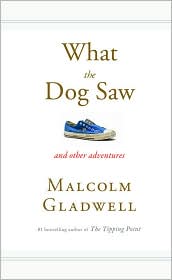
    In this week’s chapter of What the Dog Saw, Gladwell explores how much weight we give our first impressions and the misleading conclusions we too readily draw.

    What-the-Dog-Saw

    The result being, “we replace the obviously arbitrary with the not so obviously arbitrary.” This one quote is worth the price of the entire book.

    I have long advised that the traditional interview process of hiring is fraught with pitfalls given the brief and artificial nature of the structure.

    All involved are putting on their best social personas in order to make a positive impression. Interviewers usually omit disclosing anything negative about the working culture of the organization. Applicants are careful to use the wordings and examples that they have been told the employer wants to hear.

    Now on top of these practical limitations, Gladwell reveals how often most people don’t let any of this information inform their initial gut impressions anyway. We replace one set of fallacious information with another.

    Our lengthy interview processes don’t feel arbitrary, but if they aren’t providing valid or meaningful information that is resulting in any better hiring results, why should we bother?

    Is it all a waste? Should we conduct all our hiring at social mixers and simply select the people we enjoy the most?

    As Gladwell concludes, maybe all that is necessary to secure your next job, get your next promotion, or possibly even win your next date is to, “speak clearly and smile.”

    What do you think? What was your main take-away from this chapter?

    Each week I post my reflections from one chapter of What the Dog Saw by Malcolm Gladwell. If you are just joining the discussion now, welcome! Catch up on the entire series here.
  • Question of the Week

    When faced with unacceptable job performance, do you tend to fire people too quickly or endure too long? How well has this approach served you?

    The Question of the Week is offered to increase awareness of one’s personal leadership practices and encourage experimentation with creative alternatives.