Karl Edwards presents Working Matters

Tag: change

  • Loving Monday: Forgiving Yourself Creates a Way Forward

    loving_mondayWe are often our own biggest barrier to getting off to a good start each week.

    I am not referring to our foibles, mistakes, flaws, errors, shortcomings, or crimes.

    I am referring to our unwillingness to forgive ourselves for those foibles, mistakes, flaws, errors, shortcomings, and crimes.

    Sure, mistakes are costly. No doubt about it.

    But mistakes can be corrected and serve as a learning opportunity. In other words, there is a future worth pursuing on the other side of most problems we cause.

    If we beat up on ourselves for being less than perfect, feel we need to punish ourselves, or—worst of all—attribute negative or derogatory judgments about our characters, then we make it almost impossible to move forward, get going again, or jump back into the game with energy, determination and poise.

    The key is to notice whether we focus on the error and its solution, or we focus on ourselves and our deficiencies.

    In one case we participate powerfully in the creation of a constructive learning opportunity out of which we can adjust, experiment, and grow. In the other case we spin helplessly in a self-imposed quagmire of self-condemnation, perpetual second-guessing, and plummeting self-esteem.

    If you have messed up recently, even if in a big way, the way forward will not be found in beating up on yourself.

    The way forward lies in forgiving yourself. Only then will you be free enough inside to shift your focus constructively to the learning, adjusting and changes that will result in a new way forward.

    On your side.

    – Karl Edwards

    Loving Monday is a weekly column designed to encourage us to step into our weeks with an intention to show up authentically, engage fully, and choose to make it a good week for ourselves. Explore past columns here.
  • Loving Monday: Embattled or Embittered

    loving_mondayOffice politics sucks.

    One would think reasonably mature adults could work through most problems, misunderstandings, and challenges.

    But we are not all as mature as we’d like to think we are.

    We see very clearly where others lack maturity, but are less clear-sighted about our own shortcomings.


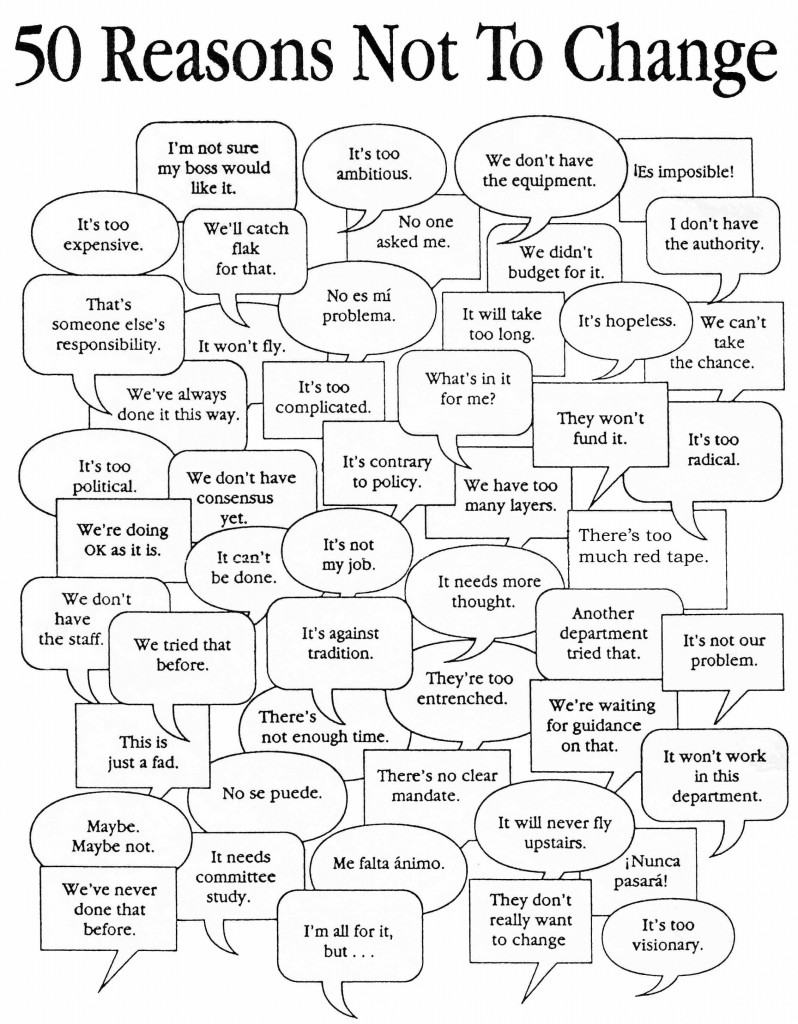
    We have lots of ideas how everyone else needs to change, but seldom see any need to explore viable alternatives for ourselves.

    Our only point of control, though, lies with what we can change about ourselves. We cannot change other people.

    We can accuse them. We can report them. We can instruct them. We can pray for them.

    But we cannot change them.

    If we are going to experience change, it will have to begin with us.

    The choice is ours… To continue embattled, to become embittered, or to take a good hard look at “how we might be a part of the problem that won’t go away.”

    What will you choose?

    Call me if you’d like to discuss the details of your particular situation.

    Loving Monday is a weekly column designed to encourage us to step into our weeks with an intention to show up authentically, engage fully, and choose to make it a good week for ourselves. Explore past columns here.
  • Listen In -> Playing Favorites #5: Favoring Certain Workplace Cultures

    Many leaders have good reason to be proud of the workplace cultures they have built in their companies.

    But times change, people change, teams turn over, and new generations bring new values and aspirations to their jobs.

    In this week’s show, Claudia and I look at the workplace culture itself.

    Yes, most of the time we are talking up the importance of having an a workplace culture period. We preach the value of having an intentionally designed workplace culture instead of simply slipping into one without thinking about it.

    When it comes to playing favorites, though, we want to look at the issue from the other end of the spectrum.

    Are you aware of how and where your workplace culture is serving you well and where it is not?

     Are you holding onto a culture whose effectiveness in the past is dissuading you from reevaluating it in the present?

    Do you have so much at stake personally that you’re having a difficult time thinking critically about what’s best for the future?

    Workplace cultures change slowly. Could playing favorites here be sowing the seeds of future problems?

    Listen in.

    Just now joining the conversation? Catch up on the entire series here.
  • If You Could Change One Thing About Yourself

    If you could change one thing about yourself, what would it be?

    Given our focus here on Working Matters, let’s forego the things that are not related to work like our appearance; things that are beyond our scope like our personality; or things that our out of our control like our popularity.

    I know, I just eliminated the best categories. I’m sorry.

    I realize there are many good reasons to avoid change. I realize that muddling through with the status quo is often preferable to risking the unknowns that come with change.

    But, for the sake of argument, let me ask again… If you could change one thing about yourself, what would it be?

    Is there a skill you want to learn? A capacity you would like to develop? An aspect of your working style that you would like to expand? An unhelpful (more…)

  • Listen In -> Paying Attention to Attentiveness #4: Attentive to People

    People change. It’s the first rule of working with others.

    People change from moment to moment depending on mood, attitude, and circumstance. People change over time as a part of growing up, maturing and developing.

    Professionally, when people develop their skills and grow in their interests and capabilities their jobs, roles and responsibilities need to change as well.

    If we assume that the people who work for us do not change and we are not paying attention, we risk losing these valuable assets.

    Do people have a way to grow and mature in their roles where you work? Is anyone paying attention to how people are behaving, engaging and/or changing both in the short term and the longer term?

    If not you could be in for more than a few rude surprises!

    Listen in.

    Just now joining the conversation? Catch up on the entire series here.
  • Listen In -> Paying Attention to Attentiveness #2: Attentive to Changes

    Imagine being in the vinyl records business and being caught off-guard by the advent of compact disks. Or being in the compact disk business and being caught off-guard by the mp3 player.

    If you weren’t paying attention, you’d simply be out of business now. In the first case, literally out of business because the vinyl record business has all but disappeared.

    In this week’s show, Claudia and I discuss the crucial importance of paying attention to change.

    You’ve heard the saying, “Change is the new constant.” When change is always happening, only the alert can adjust in a timely manner.

    Keep doing your 5- and 10-year planning, but by all means don’t ignore what going on around you in the mean time! Your may succeed in building a video rental store in every neighborhood right when someone else succeeded in connecting television sets directly to the internet.

    Listen in.

    Just now joining the conversation? Catch up on the entire series here.
  • Building a Distinct Approach to Your New Year’s Resolution

    For as widespread as the practice of setting New Year’s Resolutions is, almost more common is the expectation that these resolutions will not, in fact, be kept.
    Are we becoming too cynical? Or are we merely laughing at our own failings?

    The problem with how we traditionally approach New Year’s resolutions is that it’s such an all-or-nothing affair.

    Most of us set an ambitious goal for ourselves. So far so good. It’s helpful to have a goal and for that goal to be specific.

    But then we articulate the goal as an all-or-nothing proposition. In other words the only two options available are to keep it entirely or to fail it utterly.

    “I will lose 15 pounds.” “I will keep my desk clean.” “I will stop calling the Trojan (more…)

  • Question of the Week #23

    What is involved in helping your team adjust to the loss or addition of a key member?

    The Question of the Week is offered to increase awareness of one’s personal leadership practices and encourage experimentation with creative alternatives.
  • You Already Know How to Be Great by Alan Fine with Rebecca Merrill

    I do?

    The assumption Alan Fine’s title makes, You Already Know How to be Great, catches me off guard. And again I ask, “I do?” Because right now there’s a big disconnect between what I’m being told I know and what is actually true of my experience.

    Then comes the subtitle, “A Simple Way to Remove Interference and Unlock Your Greatest Potential.” Ah, so there is something blocking the way that needs removing, and there’s something locked away that needs releasing. Now I’m interested.

    Thus we find our way into a wonderful new resource by Alan Fine and Rebecca Merrill.

    Those of you who know me know I have little patience for coaches and “experts” who claim to have the formula for success. The line of thinking goes something like this, “If only you were different than you are, then you would be successful. We can help you become this entirely other person than you actually are.”

    Even if no consultant is so crass to verbalize it that way, that is the message nonetheless. “You are not enough, and you need our help to become someone else.”

    Enter Fine and Merrill who assert that you are indeed enough. In fact, the way forward has nothing to do with learning to be other than you are, but to be more (more…)

  • Loving Monday: Rearranging the Furniture

    loving_mondayErgonomics has its place. And that’s all I’m going to say.

    Efficiency is important, and yet it is only one factor among many. Variety is another. Neither is the whole story.

    Today I’m going to suggest that you rearrange the furniture.

    I’m going to suggest that you break out of the stultifying sameness of your static set-up. Give your brain the fun and refreshing challenge of seeing things differently. Of not being able to count on the same-ol’ same-ol’. Of being forced to bring to the conscious level what has been in the background.

    Doing things differently simply because the furniture is on the other side of the room from where it used to be, necessitates new perspectives, takes us to different vantage points and can bring to awareness assumptions about how and why we do certain things the way we do.

    Minimally, you’ll give your brains a visual treat and an energizing exercise. More significantly, you are creating opportunities to stumble upon new and better ways of experiencing work even as you avoid literally stumbling upon your work.

    Let’s start this week off by rearranging the furniture.

    On your side,

    – Karl Edwards