Karl Edwards presents Working Matters

Tag: trust

  • Loving Monday: Trusting Yourself

    loving_mondayIf you can’t trust yourself, who can you trust?

    For many things like confidentiality, favorite foods, and things to fear, most of us have no problem trusting ourselves above all other voices.

    But for other things, like working style, decision-making, creativity, and work quality, too many of us seem to believe that there exist standards, criteria and models of excellence to which we must aspire—and until we attain—we must in the mean time defer to those who do.

    The main problem is that these ones who do… do not exist either.

    In other words, we are comparing ourselves to standards and models who do not exist.

    Worse than that, the people, bosses, gurus, etc. who are judging us as inadequate, are faking it themselves.

    Faking it, though, is too strong a word. Some are faking it, to be sure. Others are simply going about their business being themselves. They are not pretending to be doing anything “right” or “best” or “successfully”. They are showing up, diving in, and leaving all that self-consciousness at the door.

    So when I title this article “Trusting Yourself”, I am not talking about putting on bravado, arrogance, elitism, or making decisions in a vacuum in order to demonstrate your competence.

    I am talking about an unforced and unrehearsed comfort in one’s skills, training, character and judgment. A calm confidence that who I am is enough.

    Comfortable with all that I do and do not bring to the table, I offer my opinions boldly, I listen attentively, I participate actively, I interact respectfully.

    My goal is to increasingly trust myself to be fully me. Do you trust yourself?

    Or are you haunted by the myths, standards, and messages of success, effectiveness and capabilities suggested by others?

    On your side,

    – Karl Edwards

    If you would like to discuss your situation in more detail, please don’t hesitate to contact me.

    Loving Monday is a weekly column designed to encourage us to step into our weeks with an intention to show up authentically, engage fully, and choose to make it a good week for ourselves. Explore past columns here.
  • Quote to Consider: The Greater Compliment

    quote-to-consider“To be trusted is a greater compliment than to be loved.”

    George Macdonald

  • Distinguishing Between Voices

    whisperingFriend or foe?

    Sometimes it’s not so easy to tell. When it comes to voices, some of the most damaging words we hear come from those closest to us. And it isn’t uncommon, on the other hand, for the harsh criticism of those opposed to us to be the most helpful of all.

    Yes, it’s important to distinguish between friend and foe. The acceptance, loyalty, and faithfulness of friends is an irreplaceable foundation for survival, much less success.

    Also important, though, is to be able to distinguish between voices. Even the well-intended input of those most committed to our well-being may be misplaced. Just as the substance underlying the input of our opponents cannot be dismissed or disregarded simply because they have ulterior motives.

    How do you listen for the nuggets of substance hidden within the insecure and harsh attacks of those who do not understand how to wield power?

    How do you hold your ground against the misplaced kindness of those who, while intending good for you, are in fact diminishing, second-guessing and/or undermining you?

    It’s not as black-and-white as trusting the nice people and avoiding the mean people, is it?!

  • Question of the Week

    For each of your high potential subordinates, what is a practical way you can extend trust before asking to be trusted?

    The Question of the Week is offered to increase awareness of one’s personal leadership practices and encourage experimentation with creative alternatives.
  • Thought Leaders Unpacked -> Integrity #6: Building Trust Through Vulnerability

    thought-leadersLeaders are people too.

    Sounds obvious, but many of us come across as if we have it all together, know everything and are always more competent that everyone who is unfortunate enough to be below us on the organizational chart.

    But that facade has two problems. One is that it is, in fact, not true. The other is that everyone who works for you knows it.

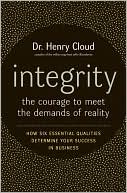
    Integrity, by Henry Cloud

    Being too strong is as much a credibility destroyer as being too weak.

    What do you think about Cloud’s assertion this week? Is there power in being real?

    His main example, though effective, came from childhood. I would have appreciated something from the workplace. I’m already a believer in vulnerable leadership models, but only up to a point.

    There’s a risk in undermining one’s effectiveness with “too much information” sorts of personal revelation. Knowing what’s appropriate and relevant to share about oneself is key to vulnerability serving as a trust builder rather than a trust buster.

    Vulnerability is a risk worth taking. Remember, the goal is for your team to come alive and voluntarily choose to invest deeply and energetically in their work. You cannot command or force that sort of effort.

    Cloud is pointing out that when people believe that you can relate to their challenges, they will be far more responsive to how you challenge them.

    Have you ever had a supervisor for whom you would try to move mountains if you could? What were characteristics of that person that we might learn from?

    Each Friday I post my reflections from one chapter of Integrity: The Courage to Meet the Demands of Reality by Henry Cloud. If you are just joining the discussion now, welcome! Catch up on the entire series here.
  • Thought Leaders Unpacked -> Integrity #4: Building Trust Through Connection

    thought-leadersRight off the bat we encounter a make-or-break chapter.

    “Please don’t make me face the fact that all those production resources out there walking around are distinct human persons.” “You can’t possibly expect me to take into account everyone’s feelings when making complex business decisions.”

    Integrity, by Henry CloudI have long suspected that many leaders secretly resent the fact that they can’t do everything themselves and have to rely on others to make things happen.

    But the reality these leaders must face is that their teams are, in fact, made up of human persons who function out of inner motivations, personal desires, and their own subjective perceptions. My term for this reality is, “The hard facts of working with people.” People are not the soft side of business in any way, shape, or form!

    Here is my key take-away from this chapter: There is a measurable and substantial difference between getting people’s compliance and winning their hearts.

    What sort of results are you hoping to obtain? We’re not talking about being liked. We’re talking about getting results. Making a difference. Making things happen. Meeting goals. Achieving great things.

    Is learning empathy on your leadership development curriculum? One of your personal goals?

    If we cannot relationally or emotionally connect with our team members, we cannot build the trust that sustained, focused, and passionate work efforts require. We undermine our own effectiveness. We sabotage our own results.

    What was your main take-away from this chapter? What is your learning edge when it comes to building trust with others?

    Each Friday I post my reflections from one chapter of Integrity: The Courage to Meet the Demands of Reality by Henry Cloud. If you are just joining the discussion now, welcome! Catch up on the entire series here.
  • Question of the Week

    Whose feedback can you trust as insightful, helpful and safe?

    The Question of the Week is offered to increase awareness of one’s personal leadership practices and encourage experimentation with creative alternatives.
  • Loving Monday: Who Brought The Donuts?

    loving_mondayOkay, maybe donuts aren’t the healthiest treat someone could bring into the office this morning. But talk about easy wins!

    If you’re looking for a low cost , low energy idea to give the team a simple morale boost, then donuts are the management secret you’ve been waiting for.

    It’s hard to explain why this one treat’s impact is so out of proportion with either the effort required to provide it or its nutritional value. But it’s hard to argue with the stampede to the lunch room when word gets out.

    Maybe the lesson donuts offer us is that showing appreciation, being kind, and/or changing things up at work is much simpler than we think. If you’re waiting until it’s time to award Christmas bonuses or until you can afford a knock-out company retreat, then you might be missing the myriad of simple, everyday expressions of acknowledgment, validation, attentiveness, interest, humor, sensitivity, and camaraderie that win hearts, build trust and renew spirits.

    While you’re at it, get a few extra glazed. They’re my favorite.

  • Listen In -> Making Peace with Work #3: Replacing Isolation with Collaboration

    It’s easier to do some things ourselves.

    The quality is better, we’re finished sooner, and the worry is eliminated.

    But it’s never easier to do everything ourselves.

    How did we end up all alone in the midst of a sea of people?

    This week Claudia and I discuss how we inadvertently isolate ourselves at work. We also suggest collaboration as a practical and achievable alternative.

    Don’t miss this episode! Listen in now.

  • Question of the Week

    Why is it more valuable to first earn the trust of your subordinates before asking them to earn yours?

    The Question of the Week is offered to increase awareness of one’s personal leadership practices and encourage experimentation with creative alternatives.