
Karl Edwards presents Working Matters

Tag: self-care

  • Loving Monday: Taking Your Cue

    loving_mondayI remember when I first caught myself taking my cues from others.

    I‘d be about to pass by someone walking the other way, and I would keep an sly eye peeled for whether or not they would greet me.

    If they did greet me, I’d instantaneously gauge their mood and respond appropriately. If I received a warm greeting, I’d respond warmly. If they were grumpy or stressed I would either keep my distance with a curt reply or engage with a sympathetic “How ya doing?” Or if no acknowledgment at all was extended, I would keep my focus elsewhere and carry on.

    Then it hit me like a ton of bricks. I was taking my cue from others. I was playing the passive, responsive role in the relationship.

    “What’s the big deal?” you might ask.

    Well, it’s a big deal if I’m in a great mood, ready for a good day of engaging work, and I let someone else’s mood determine mine.

    It’s a big deal if I want to greet and be greeted in the morning, and I miss out because I waited for the other person to initiate.

    It’s a big deal because others might be operating out of a perspective of caution or fear or anger or bitterness in any given situation, for example. If I take my cue from those people, then I’ll be interpreting and responding to them instead of to the situation. Not taking my cue from others, I may very well have chosen to respond to that situation in a very different way.

    By taking my cue from others I turn my brain, intuition and social skills off too early. I grant more credibility to other people’s discernment than my own.

    And so I have stopped taking my cue from others, so to speak. If I want to greet someone, then I do. And I let them greet me in return. I have more say in my own day, because people are responding to the mood, tone and subjects that I am putting forth instead of the other way around.

    Who are you taking your cue from?

    On your side,

    – Karl Edwards

    Loving Monday is a weekly column designed to encourage us to step into our weeks with an intention to show up authentically, engage fully, and choose to make it a good week for ourselves. Explore past columns here.


  • Loving Monday: You Are a Gift

    loving_mondayYou are a gift.

    This is one of the most important truths of work and life.

    If you don’t believe this one simple fact, you’re swimming upstream when there’s a current available to carry you.

    There is no one quite like you, and we need you.

    Do you believe that? Do you believe that this morning?

    You bring the gift of who you are to the workplace today. Your character, your skills, your cleverness, your passion, your insights, your experience, and the list goes on.

    This is no superficial pep talk. This belief (or disbelief) is a game changer.

    It can’t be faked. It can’t be bought. It can’t be wished into being.

    People who believe they are a gift behave differently. Their confidence is not a performance. Their confidence is a reflection of their inner calm.

    When you already believe at a deep level in the value you bring to the table, then you don’t have to expend any effort to prove it. You are freed up to be present in the moment with the people and issues at hand.

    You are not wondering if you should speak up in order to be seen as an active participant. You are not deciding how to modulate your voice in order to sound knowledgeable. You are not jockeying for a seat next to the manager. You are not interrupting others, criticizing others, or belittling others in order to appear powerful.

    You are free. Free to pay attention to the matters at hand. Free from having to establish to yourself what you already know at a deep deep level.

    To be a gift does not mean that you are everything. To be a gift does not mean you are perfect or the best.

    Because the gift is you. To be a gift is to be yourself. To believe you are a gift is to believe that you need to show up at work today. The real you. All of you. Nothing held back.

    I wish I worked with you. Because I know a real gift will be present and I want to be a part of the experience. The gift of you.

    You are a gift.

    On your side,

    – Karl Edwards

    Loving Monday is a weekly column designed to encourage us to step into our weeks with an intention to show up authentically, engage fully, and choose to make it a good week for ourselves. Explore past columns here.
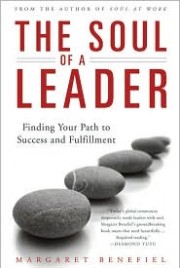
  • Thought Leaders Unpacked -> The Soul of a Leader #9: Finding Spiritual Guidance

    thought-leadersIt’s always difficult to conclude a series. Especially a series as rich as this one. Margaret Benefiel has given us a great gift with her book, The Soul of a Leader.

    She concludes by addressing one of the primary dysfunctions of leadership in America. I call it the myth of the strong, competent, and isolated leader.

    Unlike athletes, for example, leaders seem to believe that their work must be done alone in order to qualify as legitimate leadership. An athlete surrounds her or himself with coaches, doctors, advice, and support of all sorts. Athletes know they cannot learn, succeed or even survive on their own.

    Leaders, on the other hand, seem possessed by a demon that is ever threatening to expose them for the frauds they are afraid they might be. Consequently they direct all their energies to proving that they are completely competent, sufficiently strong and absolutely independent in their role.

    When Benefiel asserts that spiritual guidance is a crucial form of support for leaders in today’s business world I have to cheer.

    We need another set of eyes and ears in our life. We cannot remain focused, keep things in perspective, plan for the future, address emergencies, build enterprising teams, and sustain the energy, enthusiasm and spirit required to lead an business on an on-going basis. And that’s only a partial list of a leader’s role!

    The key in considering spiritual direction is believing that having someone else watching and listening with you will be of value. The spiritual dimension of life in (more…)

  • Thought Leaders Unpacked -> The Soul of a Leader #8: Persevering to the End

    thought-leadersWhen consistently engaging in practices of human wholeness and integrity something “subtle” takes place. Transformation.

    This has been my favorite and most challenging chapter of this book. I am still wrestling with the notion that the “dark night of the soul” has an impact on one’s business life as well as one’s spirituality.

    Of course, you say. Of course, I say!

    A big mistake of modernity has been to compartmentalize spirituality away from other categories of work, life and relationships.

    Of course one’s journey of personal maturity includes and impacts all areas of life. Even work. Especially work.

    Benefiel courageously takes on perseverance in light of those tumultuous, disorienting seasons of life when the assumptions that have guided us to date collide with a deeper, richer, larger reality.

    A medieval scholar, St. John of the Cross, is most famous for observing and describing how the spiritual journey includes seasons of such enormous disorientation that all ways seem dark, lonely, and impassable.

    But we live busy lives of work, family, community involvement, political activism, etc. How do we accommodate an extended season of difficult (more…)

  • Loving Monday: Shortcut to an Awful Day… A Crappy Attitude

    loving_mondayThe best case for an attitude adjustment is your own well-being.

    Sure I could go on and on about what practical wonders a good attitude will do for the team, your clients, and your boss.

    Except to do so would be essentially invalidating how frustrated, put upon, and undervalued you actually feel today.

    If you’re going to make a case for acting in any way contrary to how you’re feeling, then the case worth examining is the one related to your own happiness and effectiveness.

    If you want to have a crappy day, then let your attitude sink, wallow and fester. As accurate a reflection of your emotional state as such an indulgence might be, you’re the primary person who suffers.

    The others will simply avoid you. They have a method for reducing the impact you can have on them.

    You, though, have to be with you wherever you go. A fact of life and reality check that you should keep in mind next time you’re thinking of brandishing your mood like a weapon. The only person who has to experience all that darkness, stress and pain every single time is you.

    So do yourself a favor. Choose an attitude that helps you deal with the feelings instead of merely express them. Choose an attitude that confronts the frustration with creative alternatives instead of merely reciting the obvious injustice of it all. Choose an attitude that helps you get some perspective, reframe complexities, and experiment with constructive initiatives.

    Choose an attitude that serves your well-being.

    If you don’t, more than any harm or vengeance you feel your crappy attitude would be deservedly exacting on others, you’ll mostly be harming yourself.

    You’re smarter than that!

    On your side, (even if sometimes you aren’t)

    – Karl Edwards

    Loving Monday is a weekly column designed to encourage us to step into our weeks with an intention to show up authentically, engage fully, and choose to make it a good week for ourselves. Explore past columns here.

  • Thought Leaders Unpacked -> The Soul of a Leader #7: Breaking the Cycle of Violence

    thought-leaders“The question for leaders is not whether they will encounter violence but how they will encounter it.” (p. 119)

    I was initially caught off-guard that violence would figure so prominently in a leadership book about work, spirituality and “finding your path to success and fulfillment.”

    Unlike most penners of management manifestos, Benefiel courageously addresses a reality that takes many forms in every workplace. I myself am still a stranger to the experience of physical violence in the workplace, so I will let Benefiel’s insights stand on their own.

    But when it comes to other forms of violence: over-working people, under-paying people, belittling people, making people look bad, casting character aspersions, undermining authority, back-stabbing, doing as little as possible, spreading a bad attitude, etc. I have plenty to say.

    Benefiel’s three ways forward raise three challenging conundrums.

    In order to see compassionately, a leader has to understand, value and organize in light of the human factor in the workplace. And yet our culture’s myopic focus on the profitable bottom line divorced from all other factors and measures of success leads many to consider compassion a luxury to be indulged when convenient. In fact, though, we learn that compassion is crucial in order to reframe complex situations, issues and dynamics in more healthy and constructive ways.

    In order to interrupt the cycle, a leader has to be willing to put him or herself in (more…)

  • Thought Leaders Unpacked -> The Soul of a Leader #6: Battling for the Soul

    thought-leaders“When things aren’t going well, the temptation to allow the soul to erode is strong.” (p. 101) Aptly put.

    Considering that all businesses rely on people to get their work done, it always amazes me that so many leaders do not do everything in their power to make sure their teams are playing at the top of their professional games. In fact, many do not even factor the human component into their thinking and planning.

    Soul erosion.

    I have long taught that there are three “hard facts” about working with people that any leader must come to terms with if they want their teams to succeed. One is that people need to contribute and make a difference. Second, people need to grow and develop. And third, people need to connect and belong.

    Ignore any one of these three “hard facts” and you are merely erecting your own obstacles.

    Margaret Benefiel is calling for this sort of honest assessment of one’s commitment to people. It’s not lip service. It’s looking at one’s practices, policies and behaviors, and assessing the effect they have on those in your professional care. If the effect is negative, harmful, or even dismissive, then you are—like it or not—fostering “soul erosion.”

    Fact. People add value when they get to show up as people. Diminish the human (more…)

  • Thought Leaders Unpacked -> The Soul of a Leader #5: Practicing Gratitude

    thought-leadersThe pressures of work and leadership are many. The tough economy merely compounds and complicates these concerns.

    I believe the leader is responsible for maintaining perspective in the midst of all these pressures. Keeping things in perspective for him or herself, and keeping things in perspective for the team.

    While a variety of means are available to the leader, Benefiel reminds us in this week’s chapter of the importance of gratitude as a perspective provider.

    The beauty and power of this insight lies in its integrity. Gratitude is good for the soul, good for bringing valuable perspective to a situation, and good for building of trust and collaboration into relationships. Gratitude is correcting, restorative, renewing, and generative.

    Of all the gifts a leader can bring to the team, gratitude belongs at the core. No other leadership function can endure without it. Not focus, not direction, not vision, not organization, not team building, not accountability, not confrontation, not planning, not communication… you get the idea.

    Being a workplace culture builder myself, I’m partial to Benefiel’s (more…)

  • Thought Leaders Unpacked -> The Soul of a Leader #4: Keeping Mission at the Fore

    thought-leadersIncreasing the bottom line isn’t a big enough mission.

    It’s not that the profit motive is categorically bad in some way or less than foundational for the best of capitalism to flourish. It is simply too small.

    Great for accountability. Great for measurement and quantification. No other system in human history has resulted in raising the standards of living for so many so quickly. Not even close.

    Still, the profit motive is too small.

    The human heart needs a bigger, fuller, more dynamic, more wholistic, more generative mission to invest itself into.

    When an organization doesn’t articulate a mission, doesn’t reinforce its mission, or strays from its mission, people lose three vital components of successful engagement with their work. We lose a vital source of inspiration, a vital source of direction, and a vital source of integration.

    Without inspiration, direction or integration work becomes an inhuman—maybe even robotic—race to do as much as possible in the least amount of time as possible. This race has no finish line because more is never enough. Work soon devolves into a meaningless grind. The exchange of one’s life for the profit of someone else. Small wonder so many people end up barely offering the minimal requirement in the maximum amount of time.

    Hence Benefiel’s exhortation to leaders to focus on something more, share that something more widely and repeatedly, and keep returning to that something more. It’s literally the difference between life and death in the workplace.

    What “something more” is your organization working for? How do you provide inspiration, direction and integration for the work efforts of your team? What was your main take-away from this chapter?

    Each week I post my reflections from one chapter of The Soul of a Leader by Margaret Benefiel. My reflections are my own and are intended to generate conversation, catalyze additional thinking and encourage mutual learning.
    If you are just joining the discussion now, welcome! Catch up on the entire series here.
  • Thought Leaders Unpacked -> The Soul of a Leader #3: Daring to Dream

    thought-leaders“While many people think of reality as the enemy of dreaming, in fact, hard-headed reality must ground dreaming.” (p. 53)

    I‘ve long struggled with the tendency of dreamers to begin their process with tidy utopian ideals disconnected from the complex and messy realities of human frailty and inevitable systemic dysfunctions.

    The approach, (while the bread and butter of political campaigns,) is naive. Noble maybe some of the time… naive all of the time.

    The implementation of utopian ideals cannot help but be as messy and broken as the people and systems that embody them.

    While other thinkers have observed the importance of beginning the dream with a frank assessment of one’s presenting realities (e.g. Peter Senge, The Fifth Discipline), core to the Christian worldview is the possibility that such honesty need never be the end of the story. Problems are never a death sentence, fate, or doom. They are simply facts.

    As mere facts, they can be brought out into the light and examined. Turned over and over and looked at from a variety of angles. Underlying causes can be explored. Complicating circumstances, personalities, and effects can be examined.

    No matter how disastrous, disappointing or desperate the results of our (more…)